Clear Sky Science · en
AI-based chest X-ray prioritization in the lung cancer diagnostic pathway: the LungIMPACT randomized controlled trial
Why this study matters to patients
Lung cancer is one of the deadliest cancers partly because it is often found late. Many hope that artificial intelligence can quickly flag worrying chest X-rays so people get the scans and treatment they need sooner. This large trial tested whether using AI to move suspicious X-rays to the front of the queue in the United Kingdom’s National Health Service would actually speed up lung cancer diagnosis. The answer provides an important reality check for how AI should be used in everyday healthcare.
How lung cancer is usually found
For many people, the first step toward a lung cancer diagnosis is a chest X-ray requested by a family doctor. If the X-ray looks abnormal or a patient is at high risk, they should then have a more detailed scan called a CT scan and see specialists quickly. National guidelines in England recommend that a CT scan should ideally happen within three days of a suspicious X-ray, but pressure on scanners and staff often causes delays. These waits can worsen outcomes and cause great anxiety for patients who are left wondering about their results.
What the AI system was supposed to do
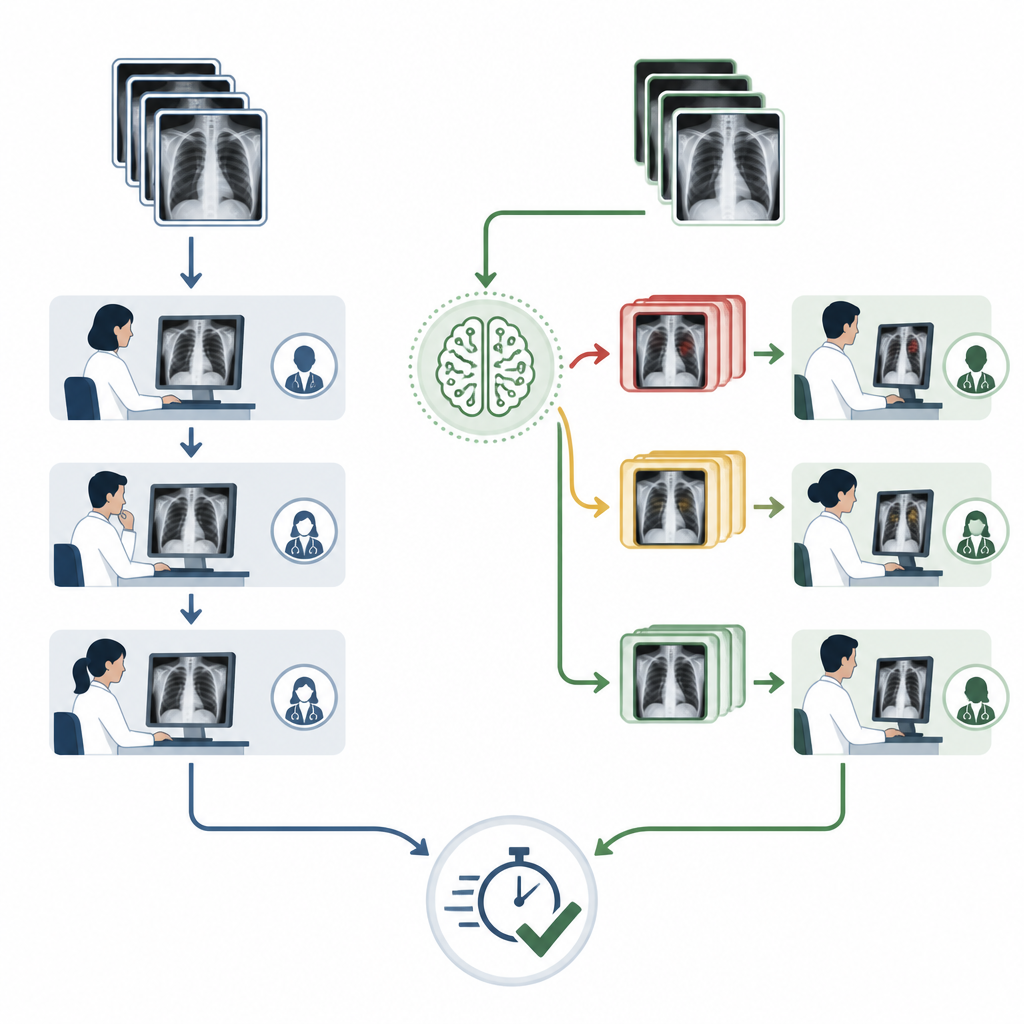
The researchers tested an AI program that examines chest X-rays as soon as they are taken. On some days, if the AI thought an X-ray might be abnormal, that case was pushed to the top of the radiology worklist for rapid human review. On other days, the AI’s markings were still visible to staff, but there was no special prioritization. More than 93,000 X-rays from almost 87,000 adults across five NHS hospital groups were included. The main questions were whether AI prioritization shortened the time to CT scans and to confirmed lung cancer diagnoses compared with usual practice.
What the trial actually found
Despite the scale of the study, AI prioritization did not speed up key steps in the lung cancer pathway. Among over 13,000 people who went on to have a CT scan, the typical wait from X-ray to CT was 53 days whether or not AI prioritization was used. Among the 558 people diagnosed with lung cancer, the median time from X-ray to diagnosis was about a month and a half in both groups. There were also no meaningful differences in how quickly people were urgently referred, when treatment started, or the stage at which lung cancers were found. The AI did help shorten the time from X-ray to written report, but this reduction was not large enough to change what happened next for patients.
What AI got right and wrong
The team looked closely at cases where the AI and human readers disagreed. Such mismatches happened in about one in three X-rays. Expert reviewers judged that in almost a quarter of these discordant cases there were important findings that required some action, including many later cancers. Overall, the AI detected most cancers in categories such as obvious shadows, but it also produced a notable number of false alarms and missed a small fraction of cancers, especially subtle nodules. These extra checks can add work for busy staff and risk alert fatigue, where frequent warnings make people less responsive over time.
What this means for the future of AI in clinics
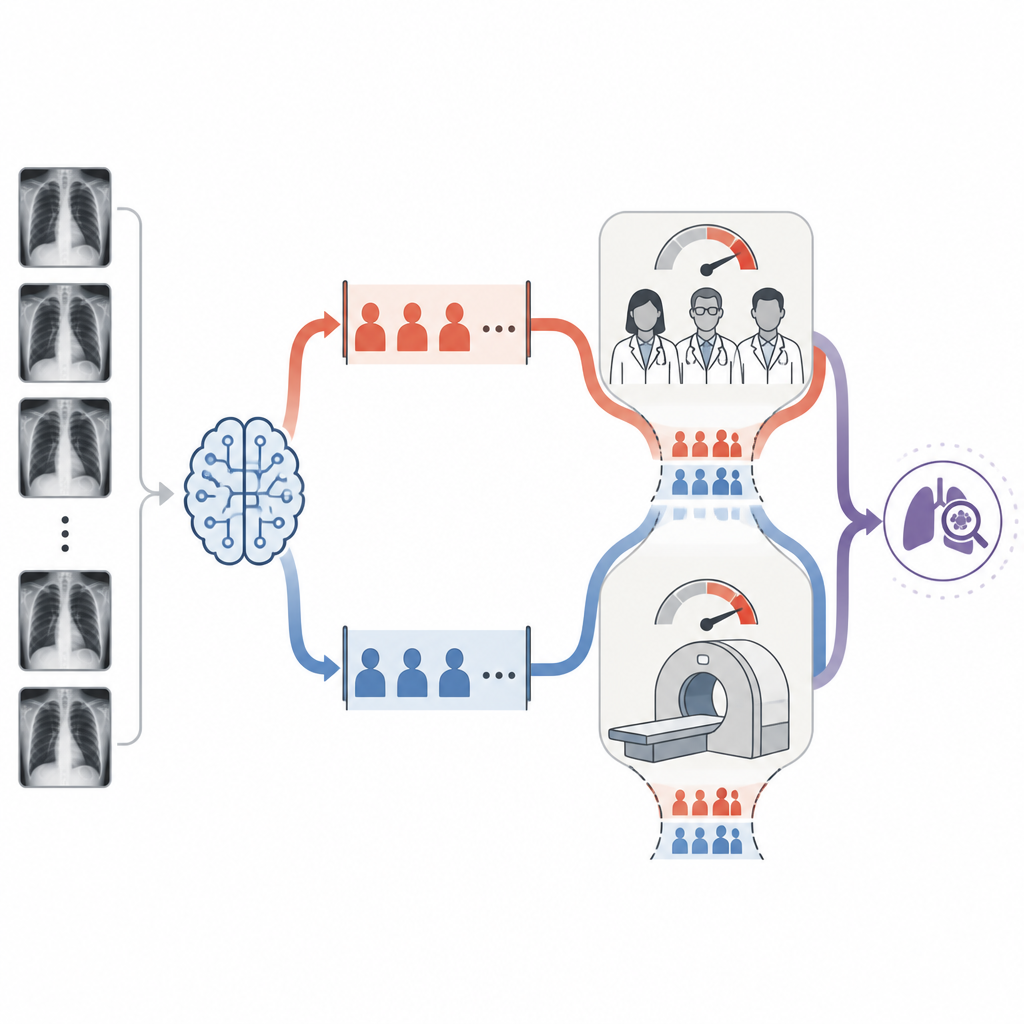
The main message from this trial is that simply using AI to shuffle X-rays in the reporting queue does not, on its own, speed lung cancer diagnosis in an already established healthcare pathway. Any benefit from faster computer reads was limited by real-world bottlenecks such as scanner availability and clinic capacity. The authors conclude that chest X-ray AI tools should not be rolled out for worklist prioritization alone in this setting. Instead, future efforts need to look at how AI can be combined with broader pathway changes, such as same day decisions and bundled tests, and how it can best support rather than replace careful human judgment.
Citation: Woznitza, N., Smith, L., Rawlinson, J. et al. AI-based chest X-ray prioritization in the lung cancer diagnostic pathway: the LungIMPACT randomized controlled trial. Nat Med 32, 1737–1744 (2026). https://doi.org/10.1038/s41591-026-04253-5
Keywords: lung cancer, chest X-ray, medical AI, diagnostic pathways, clinical trials