Clear Sky Science · en
Improved VSV-Ebola-GP booster vaccination approach promotes antibody affinity maturation and durable anti-Ebola immunity in humans
Why timing matters for Ebola protection
Ebola virus disease is one of the deadliest infections known, and a single-dose Ebola vaccine is already used to protect health workers and communities during outbreaks. Yet doctors have seen people fall ill with Ebola even after vaccination, raising a pressing question: can we make that protection last longer and work better? This study followed volunteers for three years to test whether giving a second dose of the same Ebola vaccine much later—not just weeks, but a year and a half after the first shot—could sharpen and extend the body’s defenses.
A closer look at a delayed second shot
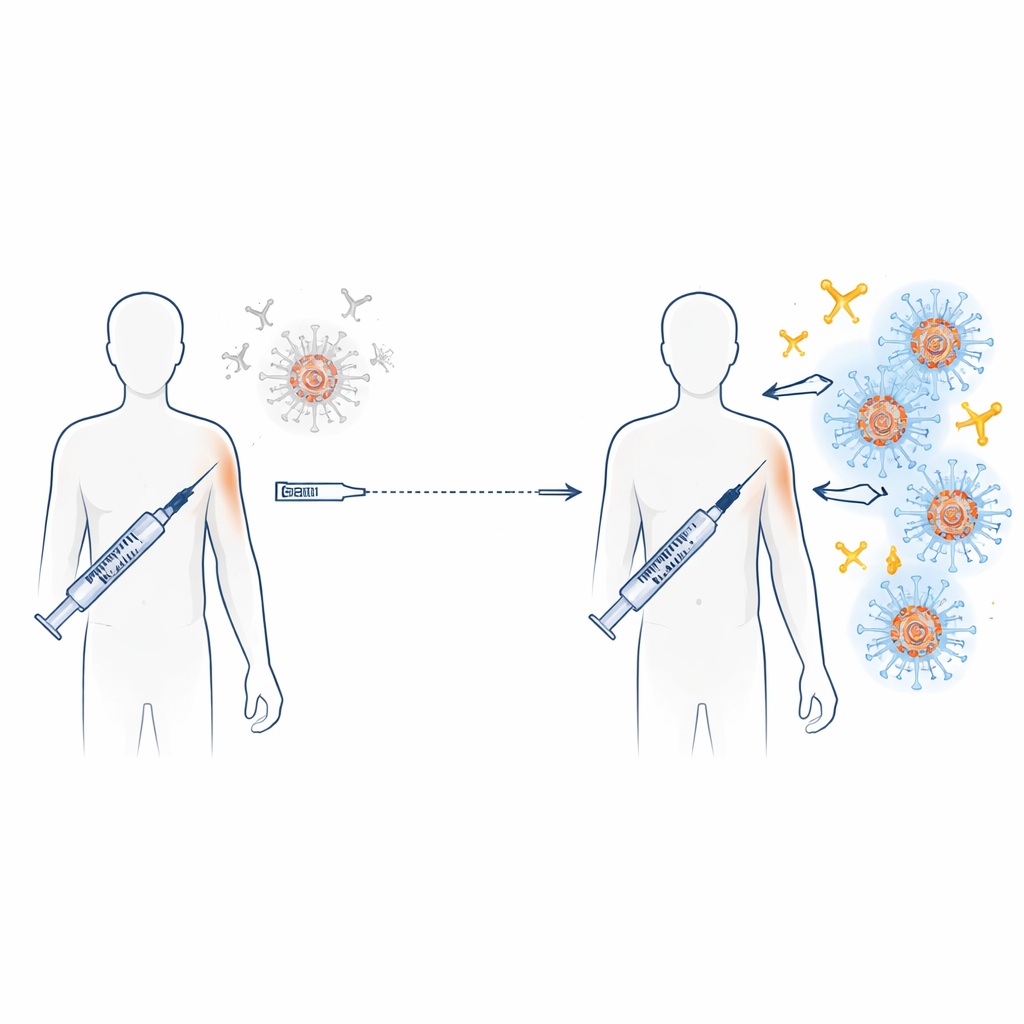
The researchers studied adults who received the licensed rVSV Ebola vaccine, which uses a harmless virus to display Ebola’s surface protein to the immune system. Everyone got one dose at the start. After 18 months, half the participants received a booster dose, while the others did not. Blood samples were collected repeatedly over three years. In these samples, the team measured how well antibodies could neutralize Ebola-like virus, how strongly and broadly they attached to the Ebola surface protein, and how long they persisted. They also examined B cells—the white blood cells that make antibodies—to see how the vaccine shaped the memory of the immune system.
From short-lived spark to long-lasting shield
After the first shot, participants quickly developed antibodies that could block Ebola virus, but these responses slowly faded over time. When the booster was given 18 months later, neutralizing antibody levels didn’t just bounce back—they surged to about twenty times higher than what was seen after the first dose and were still strong 18 months after the booster. In contrast, people who never received a second dose showed only modest, plateaued antibody levels. Early on, most antibodies belonged to a form that tends to be short lived. The delayed booster flipped this pattern, generating a response dominated by IgG antibodies, which are better suited for long-term protection and were able to recognize different strains of Ebola Zaire.
Sharper aim and added ways to fight the virus
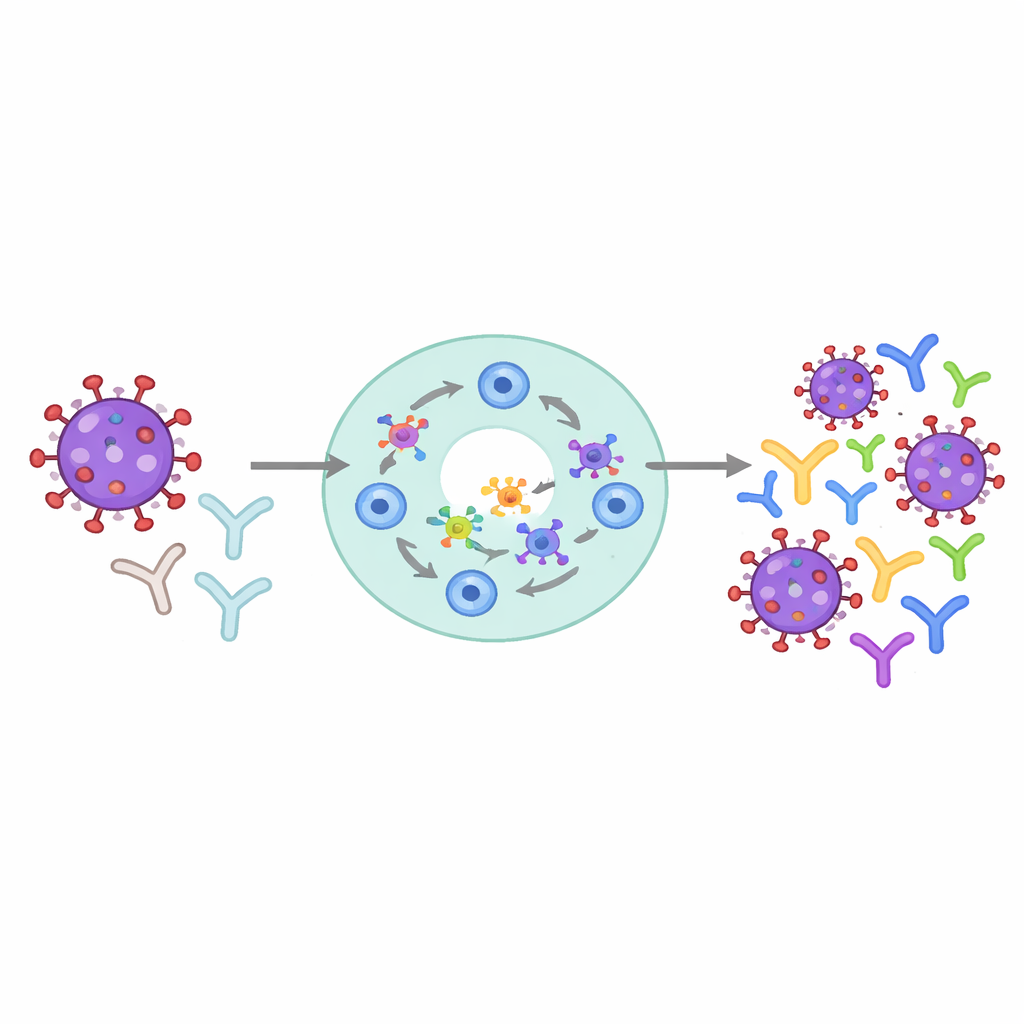
Protection is not just about how many antibodies are present, but how well they latch onto their target. Using a sensitive binding technique, the investigators showed that antibodies gradually improved in quality after the first vaccination, then improved dramatically after the delayed booster. Antibodies in boosted volunteers bound the Ebola surface protein about ten to thirteen times more tightly than antibodies from a single dose, and this high affinity was maintained for at least a year and a half. The team also found that booster-induced antibodies could better recruit other parts of the immune system. They attached more strongly to cell receptors that drive functions like antibody-dependent cellular cytotoxicity and phagocytosis—processes that help immune cells kill infected cells and clear virus particles.
What the study revealed about immune memory
Detailed analysis of B cells showed that the first vaccine dose mainly awakened cells that produce quick, short-lived antibodies. By the time the booster was given, many of these cells had quieted down, allowing the second shot to reactivate a more mature pool of cells and push them toward making high-quality IgG antibodies. Interestingly, the booster seemed to favor the generation of plasma cells, which continuously secrete antibodies, more than the long-lived memory B cells typically seen after some other vaccines. Even so, the net effect was a durable, high-level antibody shield capable of recognizing many parts of the Ebola surface protein, including regions targeted by known therapeutic antibodies.
What this means for future Ebola outbreaks
To a layperson, the main message is that when it comes to this Ebola vaccine, waiting longer before giving a second dose can turn a temporary umbrella into a sturdier roof. An 18-month delayed booster produced more abundant, longer-lasting, and better-aimed antibodies than a single shot, and these antibodies could call in extra immune help to attack the virus. While more work is needed in larger and more diverse populations, this study suggests that carefully timed booster strategies could greatly improve how well existing Ebola vaccines protect frontline workers and people living in outbreak-prone regions, potentially reducing severe illness and deaths during future epidemics.
Citation: Khurana, S., Posadas, O., Kardava, L. et al. Improved VSV-Ebola-GP booster vaccination approach promotes antibody affinity maturation and durable anti-Ebola immunity in humans. Nat Immunol 27, 1053–1065 (2026). https://doi.org/10.1038/s41590-026-02459-w
Keywords: Ebola vaccine, booster dose, antibody affinity, long-term immunity, viral outbreaks