Clear Sky Science · en
Autologous neutralizing antibodies and polyfunctional T cells contribute to long-term HIV-1 post-intervention control
Why Some People Can Pause HIV Drugs and Stay Healthy
Today, people living with HIV usually need to take daily pills for life to keep the virus under control. Yet a few rare individuals can stop treatment and still keep the virus at bay for years. This study follows three such people and asks a hopeful question: what is special about their immune systems, and can those clues guide us toward a lasting HIV cure?
A Rare Group Living Off the Meds
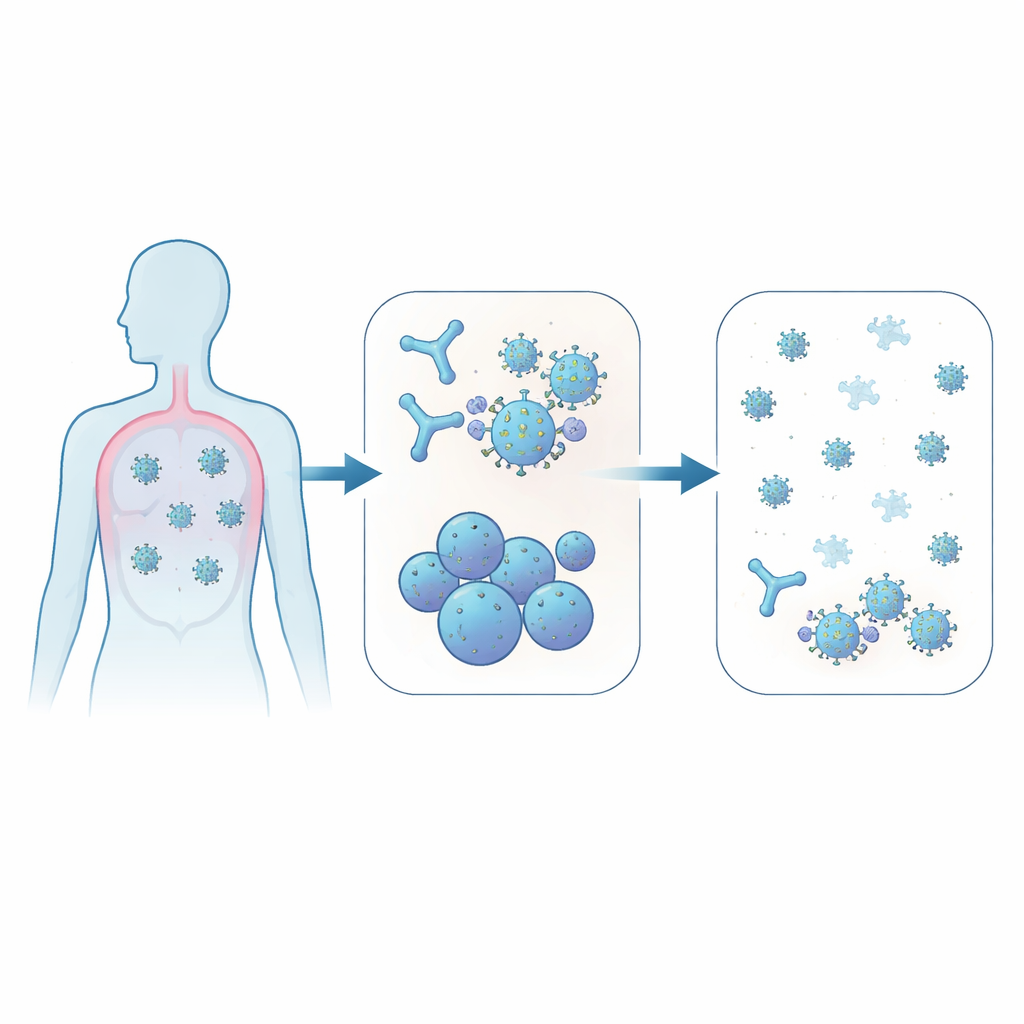
The researchers focused on three men who had started standard HIV drug treatment fairly soon after infection and later received powerful laboratory-made antibodies against HIV. Under careful medical monitoring, they then paused their pills. Two of them have kept the virus undetectable in the blood for more than six and seven years, and the third remained controlled for two and a half years before the virus eventually surged back. These “post-intervention controllers” are unusual: most people see virus levels rebound within a few weeks of stopping therapy. Understanding how these three managed long-term control offers a real-world glimpse of what an HIV cure might look like.
Hidden Virus That Is Harder to Wake Up
Stopping HIV drugs does not mean the virus is gone. HIV hides by stitching its genetic material into the DNA of long-lived immune cells. The team showed that all three men still carried many intact copies of the virus that could, in principle, wake up and start new infections. Over time, however, those viral copies tended to cluster in stretches of human DNA that are naturally quiet—especially in dense, central parts of chromosomes. Viruses sitting in these “silent neighborhoods” are less likely to turn on spontaneously. Yet when the scientists forced the cells to wake up in the lab, they could still coax live virus out, proving that the threat was real even if mostly contained.
Antibodies Sharpened Against Each Person’s Own Virus
A major line of defense in these men was an unusually strong wave of antibodies made by their own immune systems. These antibodies were highly tuned to recognize the particular strains of HIV each man carried. In test-tube experiments, adding small amounts of a person’s purified antibodies almost completely blocked the growth of their own virus, at levels of potency comparable to modern drug combinations. In one participant, this strong protection held for years. In the man who eventually lost control, the virus that reappeared had accumulated subtle changes in its outer coat, allowing it to slip past his existing antibodies. This showed how powerful the antibody pressure had been—and how the virus can sometimes evolve its way out.
T Cells Ready to Pounce
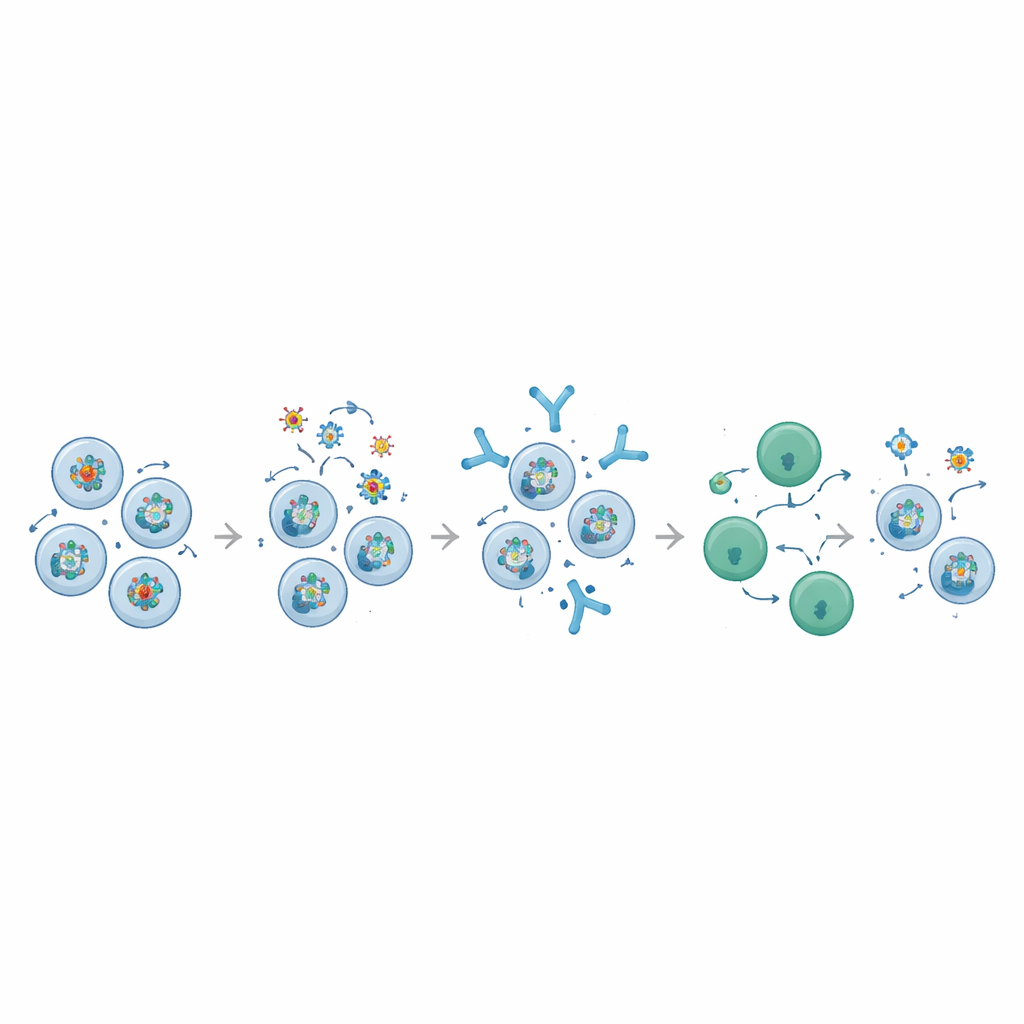
Antibodies were only part of the story. The researchers also found that these men had unusually vigorous HIV-specific T cells—white blood cells that can spot and destroy infected cells. Before stopping treatment, they already carried a sizable pool of T cells that could perform several jobs at once: releasing multiple alarm signals, mobilizing other immune cells, and directly killing infected targets. Single-cell genetic analyses revealed a distinct subset of killer T cells primed for rapid action and expansion as soon as they sensed viral proteins. In a mouse model built from one participant’s cells, adding his memory T cells after infection caused the virus level to plunge more than a thousand-fold, showing that these cells alone could exert powerful control.
When the Virus Finally Breaks Free
The third man offered a cautionary tale. For more than two years off drugs, his strong antibodies and T cells held the virus in check. Eventually, however, a slightly different version of HIV—likely a tiny member of his original viral swarm—rose to dominance. Genetic sequencing showed multiple changes in regions of the virus targeted by both antibodies and killer T cells. These “escape mutations” made the new virus harder for his immune system to recognize and block. Once that happened, virus levels in his blood spiked sharply and treatment had to be restarted.
What This Means for Future HIV Cures
Taken together, the study suggests that long-term control of HIV without daily drugs is possible when three conditions align: the remaining virus is restricted to quieter corners of the genome, the body produces potent antibodies precisely tuned to that virus, and specialized T cells stand ready to attack any infected cells that stir. Early treatment and carefully timed infusions of lab-made antibodies may help build this ideal state. While only a few people currently reach such control, mapping out how their immune systems succeed gives researchers a concrete blueprint for future vaccines and therapies aimed not just at managing HIV, but potentially freeing people from lifelong medication.
Citation: Fisher, K., Garcia, M.A., Frattari, G.S. et al. Autologous neutralizing antibodies and polyfunctional T cells contribute to long-term HIV-1 post-intervention control. Nat Immunol 27, 812–826 (2026). https://doi.org/10.1038/s41590-026-02448-z
Keywords: HIV remission, immune control, neutralizing antibodies, T cell responses, post-treatment controllers