Clear Sky Science · en
A family portrait of lanmodulin selectivity for enhanced rare-earth separations
Why better metal sorting matters
Smartphones, wind turbines and electric cars all depend on rare-earth elements, a group of metals that are difficult to separate from one another once mined. Today, industry uses long, solvent-heavy processes that are costly and hard on the environment to purify these metals. This study explores how nature-made proteins can act like highly selective "sorting machines" for rare-earths, and introduces a new lab method that can rapidly test hundreds of such proteins at once—potentially opening the door to cleaner, cheaper supplies of critical materials.
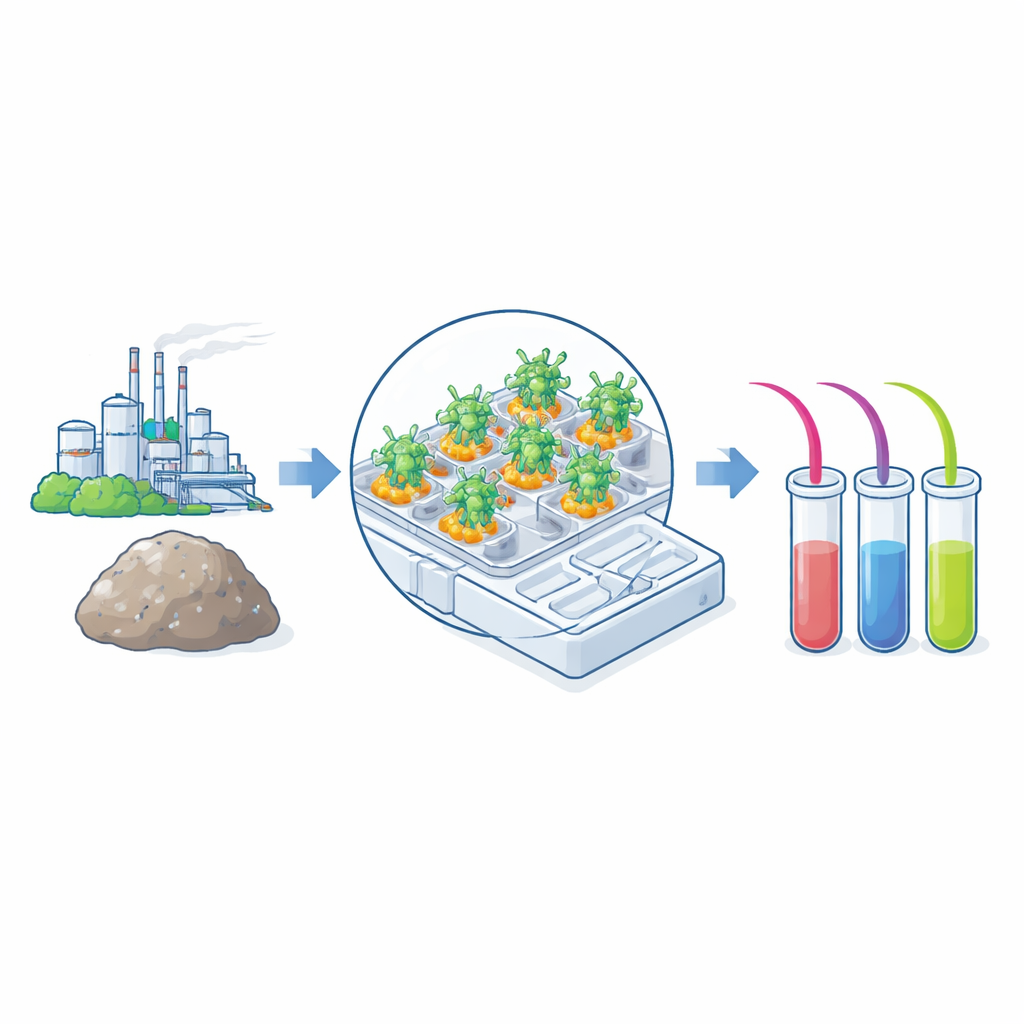
A protein that loves rare-earth metals
Scientists have been fascinated by a bacterial protein called lanmodulin, which naturally latches onto rare-earth ions with remarkable strength and selectivity. Earlier work showed that one version of this protein, from the microbe Methylobacterium extorquens, can help separate some rare-earth pairs but struggles to distinguish between several of the lighter metals such as lanthanum, cerium and praseodymium. Another natural variant, nicknamed Hans-LanM, favors certain light rare-earths and can improve some separations. These hints suggested that the wider lanmodulin family might contain many different “personalities” in how they sort metals—but existing testing methods were far too slow to explore this diversity in a systematic way.
A high-throughput metal sorting assay
The authors invented a new assay called SpyCI-LAMBS that shrinks a traditional column-based metal separation experiment into a 96-well format suitable for rapid screening. They used a pair of biological “Velcro” partners, SpyTag and SpyCatcher, to snap lanmodulin proteins directly out of crude bacterial extracts onto tiny porous glass beads, eliminating the need for laborious purification. These loaded beads were then exposed to a carefully mixed solution of 15 rare-earth elements, washed, and finally stripped of bound metals with acid. By measuring how much of each metal came off the beads using sensitive mass spectrometry, the team could calculate how strongly each lanmodulin variant preferred one rare-earth over another.
Mapping a family of metal sorters
Armed with SpyCI-LAMBS, the researchers examined 621 natural lanmodulin-like proteins drawn from many microbial genomes. Statistical analysis of the resulting “fingerprints” of metal preference revealed eight distinct clusters of behavior. Some proteins behaved much like the original lanmodulin, while others showed flatter, less selective profiles or strong biases toward either lighter or heavier rare-earths. When the team overlaid these patterns on an evolutionary tree of the proteins, they found that selectivity tended to track with microbial family lineages and ecological niches, suggesting that different environments may have shaped how microbes evolved to handle the local mix of rare-earths.
A standout protein that rejects lanthanum
One cluster, dominated by proteins from Methylobacterium and related soil bacteria, stood out for its sharp discrimination against lanthanum, a relatively low-value metal that often dominates rare-earth ores. A representative from this group, dubbed Melba-LanM, showed particularly steep rejection of lanthanum compared with valuable neighbors like praseodymium, neodymium and samarium. When Melba-LanM was immobilized on a conventional chromatography column and challenged with mixed-metal solutions, it performed demanding separations in a single step—most notably isolating praseodymium from lanthanum at more than 99.9 mol% purity and high yield, using only modest pH changes in water.
How structure and mechanism play together
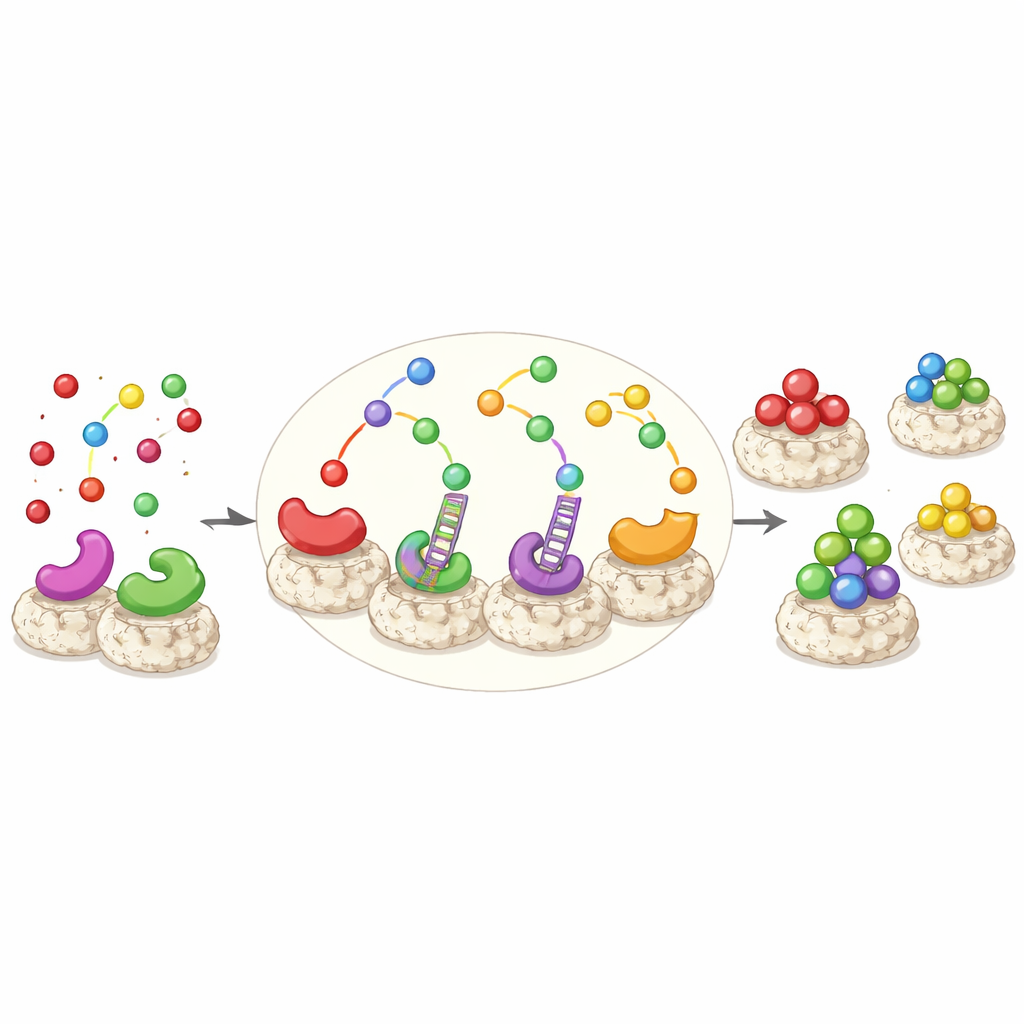
The team also probed why different lanmodulin relatives favor different metals. They compared conserved sequence motifs in the protein’s metal-gripping loops with three-dimensional structural information and made targeted mutations in promising variants. Surprisingly, swapping key amino acids in these loops often had only modest effects on selectivity, implying that more distant parts of the protein, and the way they constrain the metal-binding sites, play major roles. Additional experiments confirmed that the selectivity patterns measured on beads match those seen for the same proteins freely dissolved in solution, supporting the idea that SpyCI-LAMBS captures their inherent behavior rather than artifacts of immobilization.
What this means for cleaner rare-earths
By combining a clever immobilization trick with sensitive metal detection, the SpyCI-LAMBS assay turns a week-long, low-throughput process into a platform that can survey hundreds of metal-binding proteins in parallel. This first wide-angle look at the lanmodulin family uncovered new classes of metal sorters, including Melba-LanM, which can efficiently strip valuable rare-earths from lanthanum-rich mixtures in a single aqueous step. Beyond offering immediate candidates for greener separation technologies, the rich data set provides fodder for machine-learning models that could help design next-generation proteins tailored to specific metal recovery challenges.
Citation: Diep, P., Madsen, C.S., Choi, W. et al. A family portrait of lanmodulin selectivity for enhanced rare-earth separations. Nat Chem Biol 22, 829–839 (2026). https://doi.org/10.1038/s41589-026-02176-3
Keywords: rare earth separation, lanmodulin proteins, biometallurgy, protein-based extraction, metal-binding selectivity