Clear Sky Science · en
Telomere-to-telomere genome assemblies and population resequencing of diploid and allotetraploid peanut varieties
Why peanut DNA matters to your table
Peanuts are more than a snack; they are a vital source of cooking oil, protein and farm income around the world. Yet the genetic instruction book that shapes peanut yield, flavor and nutrition has long been riddled with gaps. This study delivers the first gap-free, end‑to‑end DNA maps for key peanut types and shows how differences in their genomes help determine seed size, oil content and even seed coat color. These insights could guide breeders toward tastier, more nutritious and more resilient peanuts.
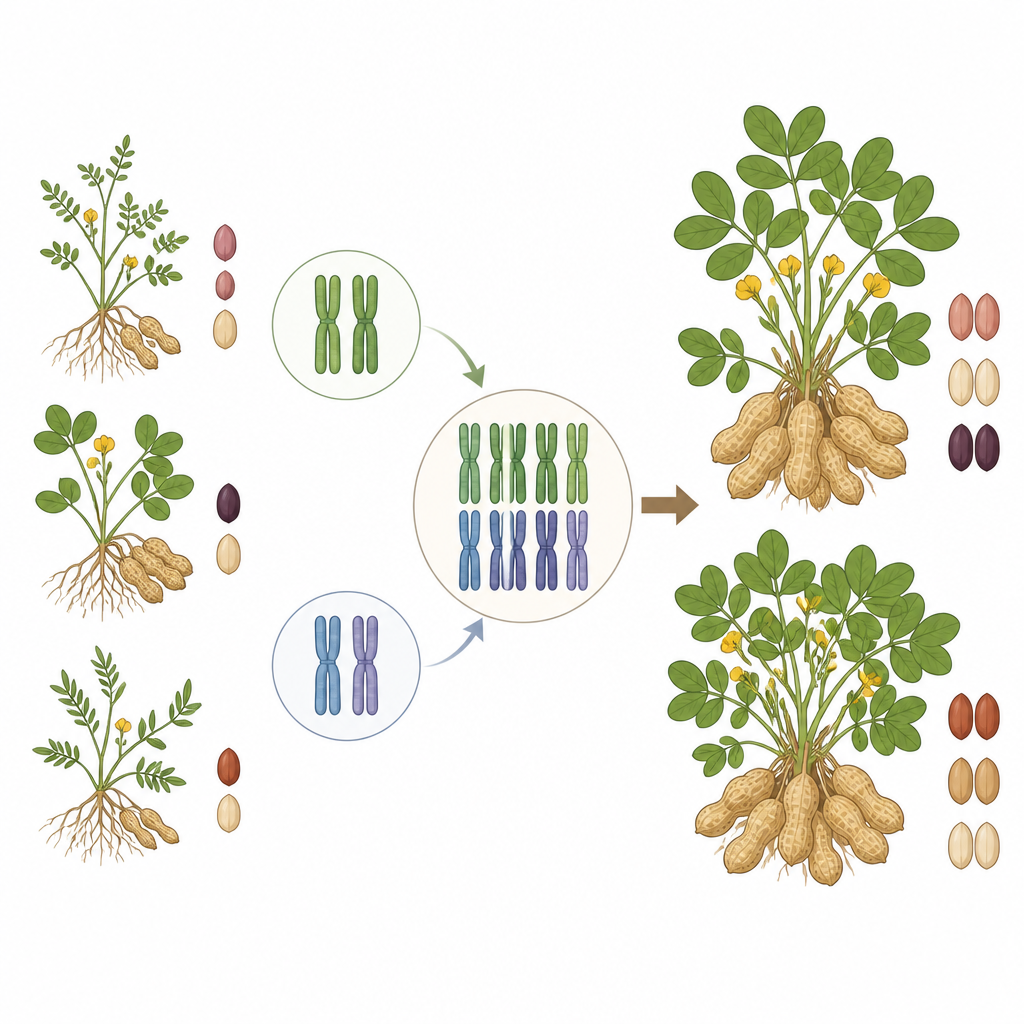
Mapping the peanut family tree
The researchers assembled complete genomes for two wild peanut ancestors and four cultivated varieties that differ in branching style, seed size and seed color. Using a combination of cutting‑edge sequencing technologies, they stitched each chromosome from tip to tip, including regions that are usually hard to decode. They then compared these reference genomes with DNA from 521 peanut lines collected worldwide. This allowed them to trace how ancient hybridization between two wild species produced today’s cultivated peanut and how farmers’ selections over thousands of years shaped modern varieties.
Hidden jumps and twists in peanut chromosomes
Inside each genome, the team found that mobile DNA segments, known as jumping elements, make up more than three‑quarters of the peanut DNA. These elements have not behaved the same way in the two sub‑genomes that coexist inside cultivated peanuts. One sub‑genome shows signs of more recent bursts of activity and changes in the central chromosome regions that help chromosomes separate during cell division. The study also uncovered many insertions, deletions and rearrangements of DNA, some of which are shared across all cultivated types and others that are unique to particular varieties. Together, these changes reveal an uneven evolutionary journey between the two sub‑genomes that likely influenced how peanuts adapted to farms and climates.
Genetic clues to oil‑rich and bigger seeds
By scanning the genomes of hundreds of lines and linking DNA differences to measured traits, the scientists pinpointed genes that help determine peanut oil content and seed size. One gene, called AhWRI1, acts as a master switch for building fatty molecules. A tiny change in its control region alters how strongly it is turned on in developing seeds, and varieties carrying the more active version tend to have higher oil content. Another gene, AhGSA1, affects how big seeds grow. A small insertion or deletion in its control region changes its activity, with one version associated with heavier seeds. These findings help explain why some peanut groups have traditionally had smaller but oilier seeds, and how breeding has recently combined high yield with high oil.
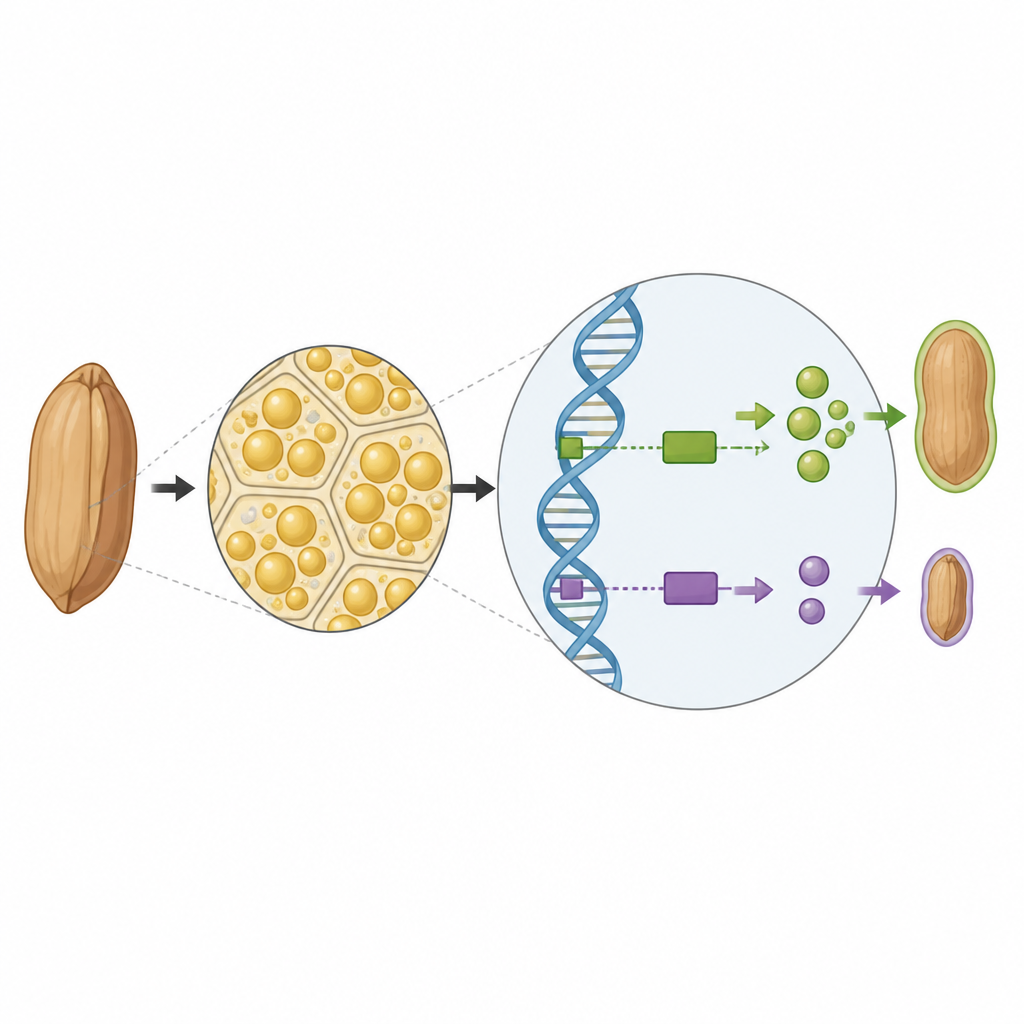
Colors and chemistry inside growing seeds
To see how genes play out during seed development, the team followed changes in both gene activity and chemical composition in two contrasting varieties across five growth stages. One variety consistently built up more oils, while the other showed different patterns of colored pigments in the seed coat. The analyses highlighted networks of genes that work together to produce oils and anthocyanins, the pigments responsible for red, purple and other hues. In particular, families of regulator genes known to control plant colors were linked to differences in peanut testa shades, tying visible traits on the surface to molecular events deep inside the seed.
What this means for future peanuts
By delivering complete peanut genomes and tying specific DNA changes to important traits, this study turns a once‑fragmented genetic puzzle into a usable blueprint. Breeders can now more easily track versions of genes that boost oil content, increase seed size or shape seed coat color, and combine them in new varieties. For consumers, this could translate into peanuts and peanut oils that are more nutritious and better suited to different climates and farming systems, all built on a clearer understanding of how this familiar crop evolved.
Citation: Bian, J., Zhang, Y., Ding, S. et al. Telomere-to-telomere genome assemblies and population resequencing of diploid and allotetraploid peanut varieties. Nat Genet 58, 1151–1163 (2026). https://doi.org/10.1038/s41588-026-02577-z
Keywords: peanut genomics, seed oil content, crop domestication, structural variation, plant breeding