Clear Sky Science · en
Pangenomic analyses of rose uncover widespread structure variation and empower genomics-directed breeding
Why roses matter to more than gardeners
Roses are not just classic garden favorites and popular cut flowers; they also support a global industry that spans perfume, cosmetics and medicine. Yet despite centuries of breeding for color, scent and bloom shape, breeders have only scratched the surface of the genetic richness hidden inside wild and traditional roses. This study maps that hidden diversity at an unprecedented scale, showing how a deeper look at rose DNA can guide the creation of future varieties with new colors, longer flowering seasons and better resilience.
Looking inside many roses instead of just one
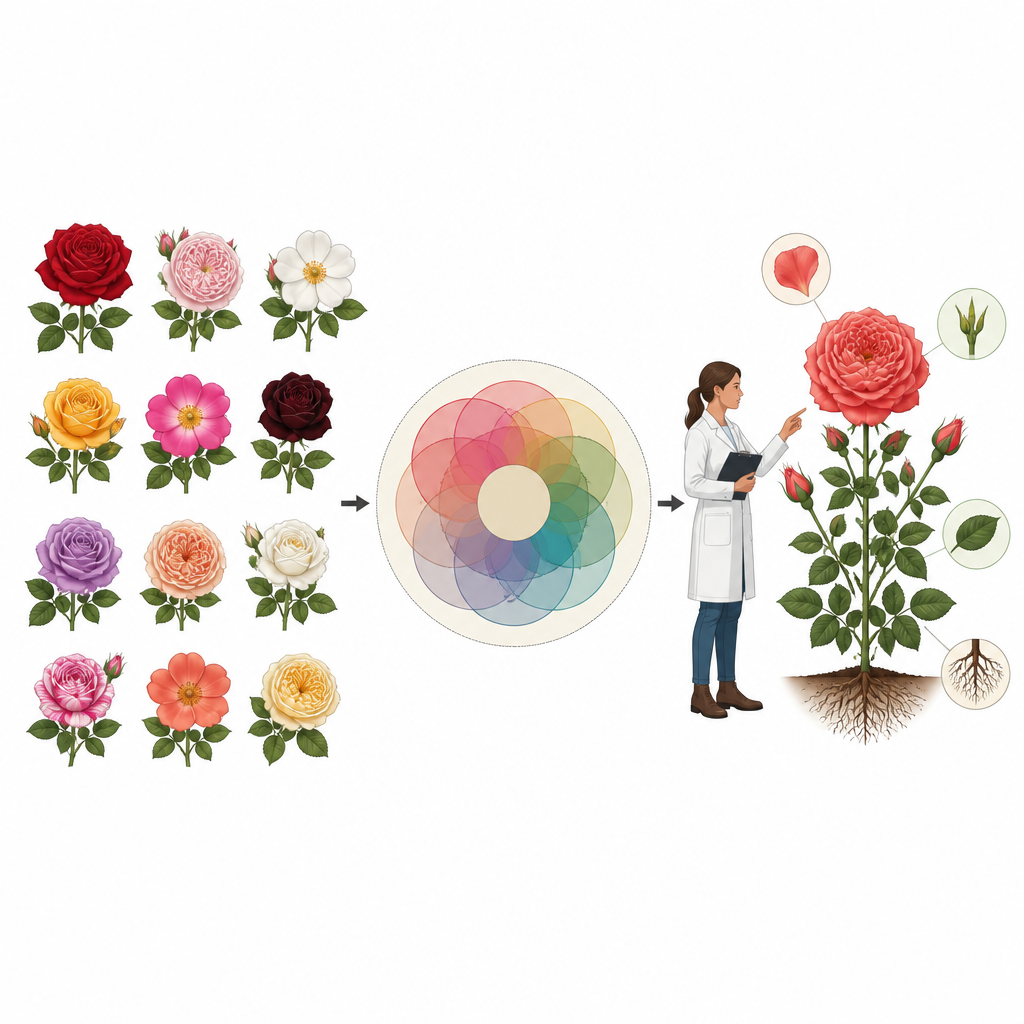
Most previous genetic work treated a single rose genome as a reference, like relying on one recipe book to understand a whole cuisine. The authors instead built a “pangenome” by decoding high quality genomes from 23 carefully chosen roses from China, Europe and the Middle East, and combining them with three earlier genomes. These plants include ancient Chinese cultivars that gave modern roses their repeat flowering habit, wild species with tough, fragrant or unusual flowers, and historic hybrids that shaped today’s commercial roses. In total they assembled 51 complete chromosome sets, capturing the rich natural variation that traditional breeding has not fully used.
How rose families and gene sharing shaped today’s flowers
With these genomes, the team reconstructed the family tree of the rose subgenus that contains most cultivated types. They found that different wild species split from each other at distinct times, and that many of their gene families expanded or shrank in ways that line up with visible traits, such as strong fragrance or drought tolerance. They also detected extensive “introgression” gene flow between roses from different taxonomic groups, especially involving Chinese roses. This mixing helped spread useful traits across lineages and mirrors the long history of human driven crossbreeding. For key old varieties like the four petaled Rosa gallica and the famous hybrid La France, the data reveal their mixed ancestry and how multiple parental species contributed to their genomes.
The rose pangenome and hidden structural changes
By comparing all genomes together, the researchers grouped more than fifty thousand gene families into those shared by nearly all roses and those found only in some lines. The shared genes tend to be more active and more strictly preserved, suggesting that they handle basic cell functions, while rarer genes are often tied to signaling and cell structure and may help create distinctive traits. Beyond simple mutations, the team cataloged over 1.8 million structural changes in the DNA, such as pieces that are inserted, missing, flipped or moved. Many of these changes overlap genes and are frequently linked to mobile DNA elements, making them powerful drivers of differences in how roses grow, flower and respond to their environment.
Genes behind repeat blooms, double petals and changing colors
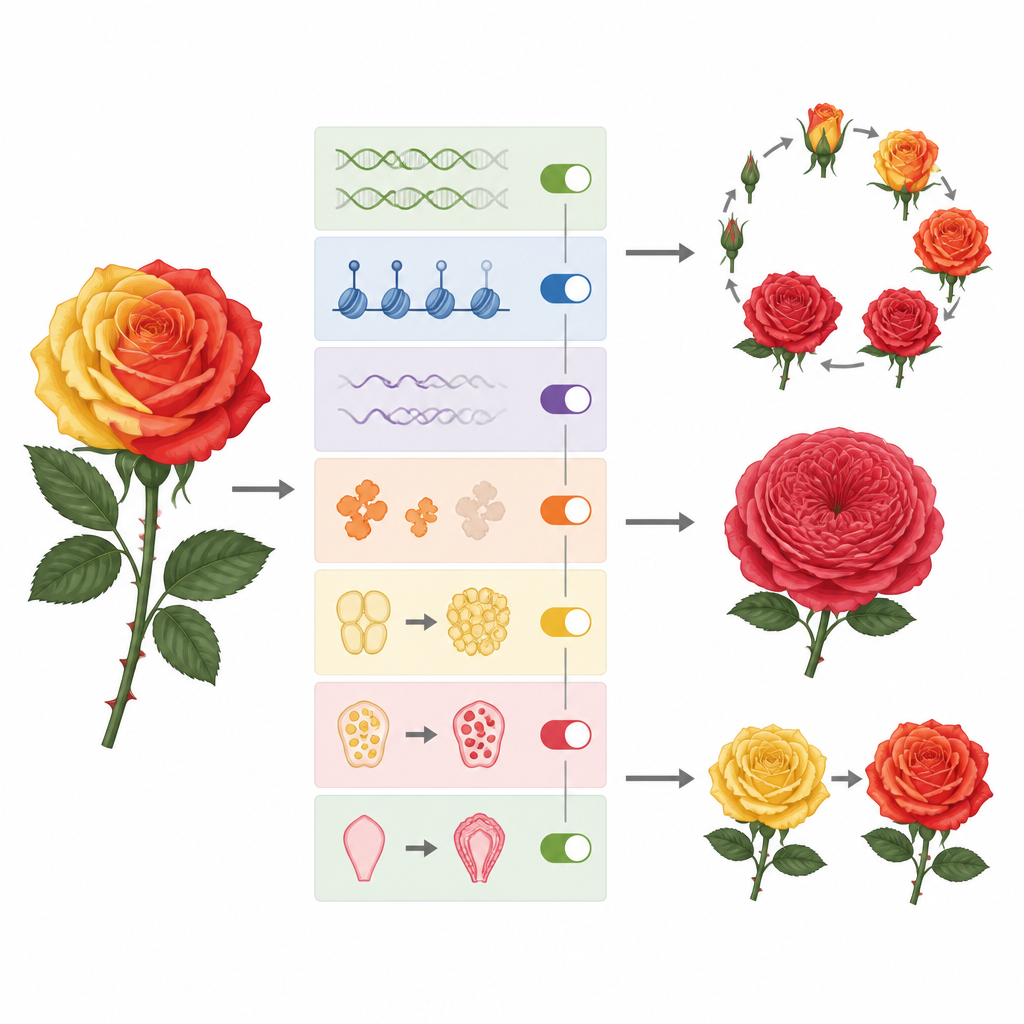
The study zooms in on three ornamental traits that matter to breeders and flower lovers alike. For continuous flowering, they examined a known control gene and found that specific large DNA flips and transposable element insertions near this gene help explain why some roses bloom only once while others flower repeatedly. For double flowers packed with extra petals, they traced a key gene shared across the rose family in which different species have distinct DNA rearrangements that alter how a regulatory RNA can bind, often removing this control and allowing extra petals to form. In Chinese double roses, a large insertion within this gene creates a special version that bypasses the usual brake. The team also investigated roses whose petals change color as they open, showing that shifting levels of red anthocyanin pigments and orange carotenoids are coordinated through the timing and strength of several pigment related genes, including a carotenoid cutting enzyme called CCD4 that helps fade orange tones.
What this means for the roses of tomorrow
For non specialists, the takeaway is that the beauty and variety seen in rose gardens arise from a complex but now increasingly readable genetic script. By mapping where important genes lie, how they differ among wild and cultivated roses and how large DNA rearrangements switch traits on or off, this pangenome gives breeders a practical toolkit. Instead of relying only on appearance and trial and error, they can now use DNA markers tied to continuous flowering, double petals, color change and potentially disease resistance or drought tolerance. In time, this knowledge should make it easier to revive lost features from old roses, combine them with modern qualities like long vase life and create new varieties that keep rose lovers and industries supplied with ever more diverse blooms.
Citation: Zhang, X., Lan, L., Yang, Y. et al. Pangenomic analyses of rose uncover widespread structure variation and empower genomics-directed breeding. Nat Genet 58, 1164–1175 (2026). https://doi.org/10.1038/s41588-026-02569-z
Keywords: rose genomics, pangenome, flowering traits, petal color, structural variation