Clear Sky Science · en
Genomic, phenomic and geographic associations of leukocyte telomere length in the United States
Why tiny chromosome caps matter to everyday health
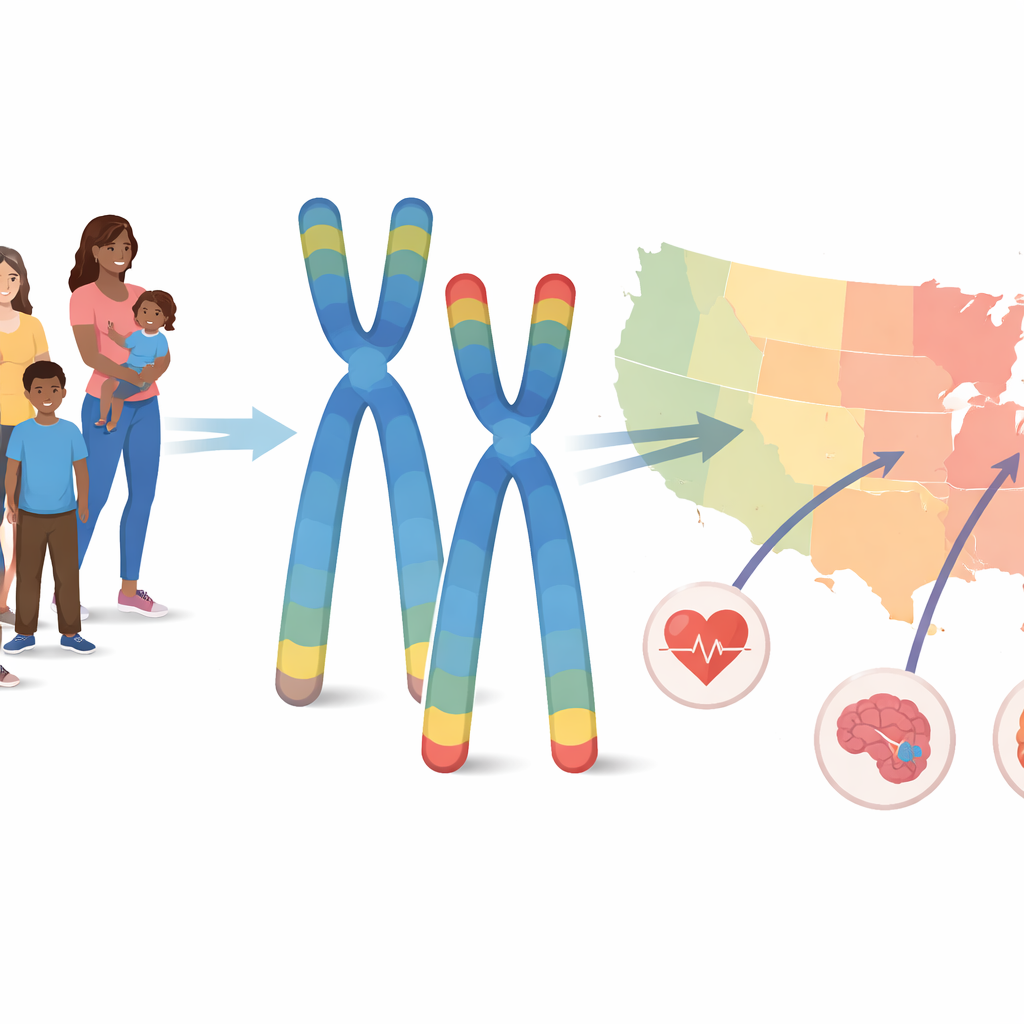
Deep inside our blood cells, the tips of our chromosomes carry tiny protective caps called telomeres. These structures have been promoted as a kind of biological clock, thought to tick down as we age and possibly reflect how our lifestyles and environments affect our bodies. This study asks a simple but far-reaching question: how do these telomere caps, measured in white blood cells across hundreds of thousands of people in the United States, relate to our genes, our health, and even the places we live?
Measuring the body’s “chromosome caps” at scale
The researchers focused on telomere length in leukocytes, a type of white blood cell, as a widely used stand-in for overall telomere length in the body. Instead of using older laboratory methods, they estimated telomere length directly from whole-genome DNA sequencing in more than 240,000 participants from the National Institutes of Health All of Us research program. This large project intentionally recruits people from many ancestries and regions across the United States, providing a rare opportunity to look beyond mostly European-descent samples. The team confirmed that telomeres are generally shorter in older adults, somewhat longer in women than in men, and differ on average across ancestry groups, patterns that line up with earlier studies.
Lifestyle, social circumstances, and a patchwork of disease links
Using these measurements, the scientists scanned a wide range of traits and medical conditions recorded in electronic health records and surveys. They found that people with shorter telomeres were more likely to have many common, noncancer illnesses, including heart and kidney disease, diabetes, and chronic lung problems. In contrast, longer telomeres were more often seen in connection with many types of tumors and other cell overgrowth conditions, echoing evidence that extra cell divisions can both promote cancer and be supported by longer telomeres. Everyday factors also mattered: higher body weight, heavy drinking, smoking, and living in more deprived neighborhoods tended to go along with shorter telomeres, whereas more favorable social and lifestyle profiles were associated with longer ones. Crucially, these links were not uniform. The strength and sometimes even the presence of these associations varied by genetic ancestry and by sex, suggesting that context shapes how telomere length aligns with health.
Telomere patterns on the map of the United States
The team then asked whether telomere length forms geographic patterns. Grouping participants by the first three digits of their ZIP codes, they found that average telomere length is not evenly distributed across the country. Regions along the West Coast and parts of the Central Midwest tended to have longer average telomeres, while the Southeast showed shorter ones. These broad patterns persisted even after accounting for age, sex, genetic background, body mass index, smoking, and neighborhood deprivation. The geographic differences broadly mirror known regional gaps in life expectancy and chronic disease burden, hinting that telomere length may capture aspects of local environments and social conditions that shape health over the life course.
What our genes reveal about telomere biology
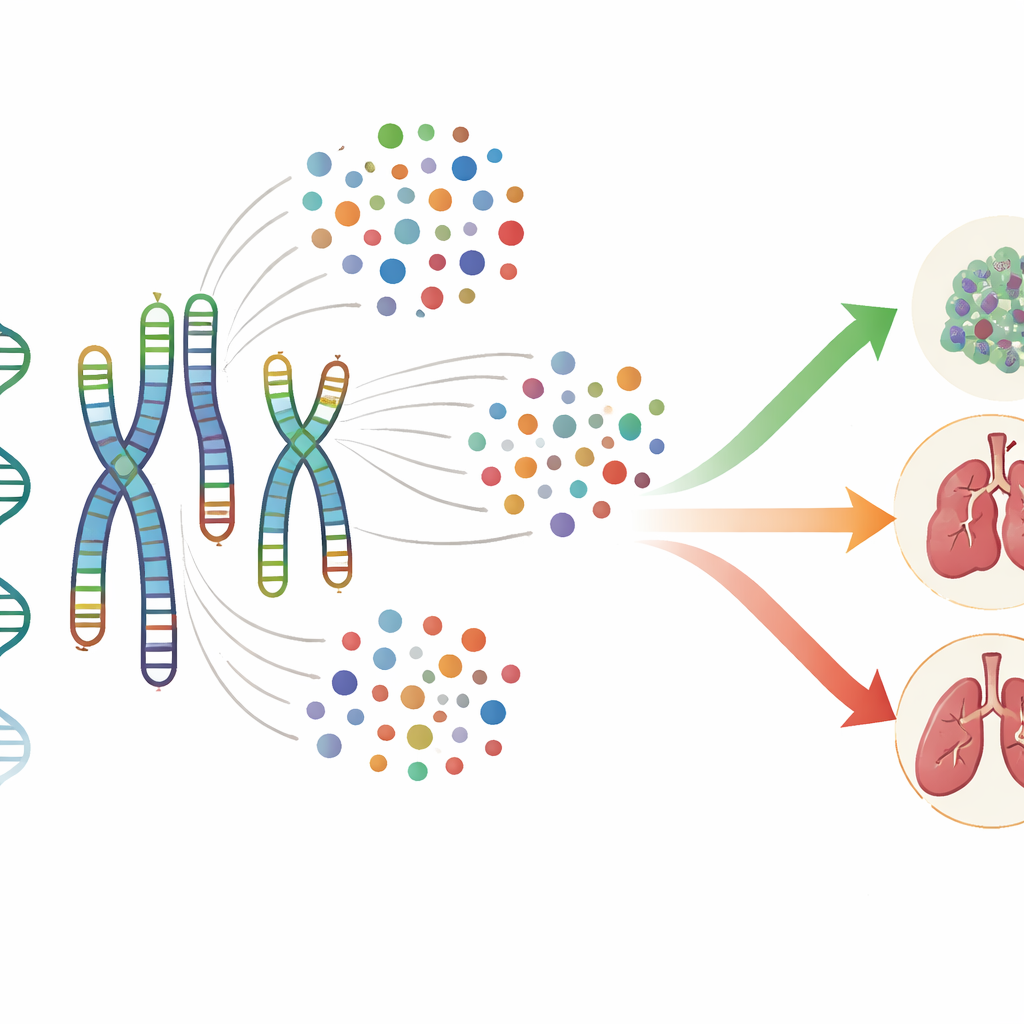
To uncover the inherited component of telomere length, the researchers performed large-scale genome-wide association studies, combining All of Us data with the UK Biobank, a similarly massive UK-based project. Altogether, they identified 234 distinct regions of the genome linked to telomere length, including 37 that had not been reported before. Some regions were seen only or mainly in people of non-European ancestry, and one stood out in women but not in men, underscoring the value of diverse participation. By examining rare, potentially damaging genetic variants, they also found nine new genes that appear to influence telomere maintenance. Many of these genes fall into known biological systems that protect chromosome ends, repair DNA damage, or regulate the building blocks of DNA, reinforcing and extending our understanding of how telomeres are controlled.
Improving prediction while highlighting diversity
Using the genetic findings, the team built polygenic scores—combined measures of many small DNA differences—to estimate a person’s inherited tendency toward longer or shorter telomeres. When these scores were trained using data from both All of Us and UK Biobank, they predicted telomere length more accurately, especially in people of African ancestry, than scores trained only in Europeans. This improvement shows that including diverse participants is not just a matter of fairness; it directly boosts the scientific and potential clinical value of genetic tools. At the same time, the study found that most genetic influences on telomere length are shared across ancestries and sexes, pointing to a common biological foundation.
What this means for aging and health
Taken together, the work paints telomere length as a rich but context-dependent marker of health and aging. Shorter telomeres often go hand in hand with many chronic diseases and more challenging social and lifestyle circumstances, while longer telomeres are linked to certain cancers and cell growth conditions. The fact that these relationships differ by ancestry, sex, and geography suggests that telomere length should not be interpreted in isolation or as a simple “longer is better” measure. Instead, telomere biology reflects a conversation between our genes, our environments, and our life histories. Understanding that conversation more deeply may eventually help tailor strategies to promote healthy aging across the diverse communities that make up the United States.
Citation: Nakao, T., Koyama, S., Truong, B. et al. Genomic, phenomic and geographic associations of leukocyte telomere length in the United States. Nat Genet 58, 831–840 (2026). https://doi.org/10.1038/s41588-026-02567-1
Keywords: telomere length, biological aging, genetic diversity, chronic disease, population health