Clear Sky Science · en
Large-scale exome analyses reveal new rare variant contributions in amyotrophic lateral sclerosis
Why hidden DNA changes matter in ALS
Amyotrophic lateral sclerosis (ALS) is a devastating disease that gradually paralyzes people by killing the nerve cells that control movement. Families often ask why the disease appears seemingly at random, or why it strikes some relatives but not others. This study tackles that question by zooming in on rare changes in the protein‑coding parts of our DNA. By comparing the exomes—the gene‑containing regions—of nearly 18,000 people with ALS to more than 200,000 without the disease, the researchers reveal how many small, hard‑to‑spot DNA changes quietly shape a person’s risk. Their findings not only uncover new genes involved in ALS, but also show that several rare hits can add up to tip someone into illness, offering fresh paths toward targeted treatments.
Building the largest ALS gene catalog to date
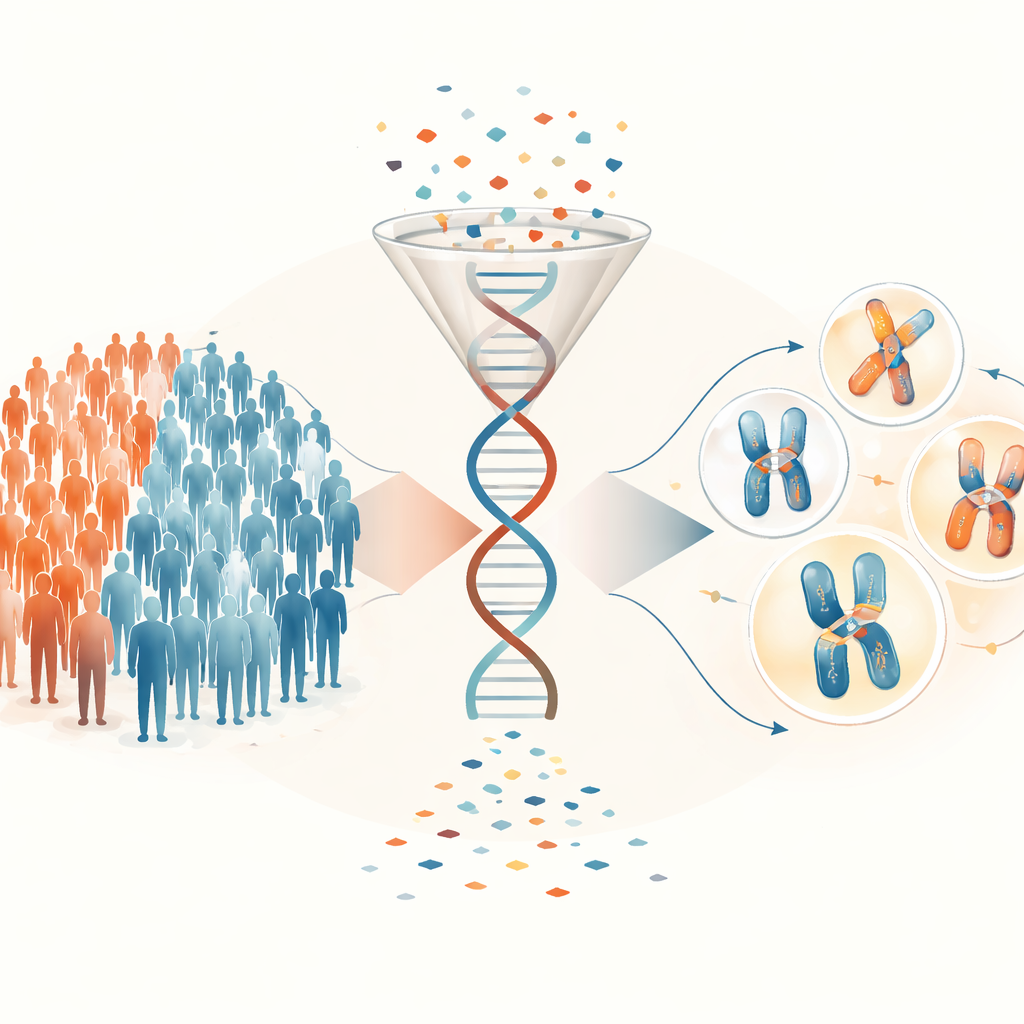
To hunt for elusive genetic risk factors, the team combined sequencing data from 22 international cohorts into the largest ALS exome resource so far: 13,138 patients and 69,775 controls for initial discovery, plus an independent replication set of 4,781 patients and 130,928 controls. They carefully realigned all DNA reads to the same reference genome and processed them with a single analysis pipeline, minimizing technical differences between earlier studies. The focus was on rare protein‑altering changes—both single variants and ultra‑rare variants that appeared in at most five people across the whole dataset. Using statistical methods tailored for rare events, they asked which variants or groups of variants appeared more often in patients than in controls.
New culprits and confirmation of long‑suspected genes
The scan for single rare variants turned up 15 strong risk variants across 11 genes. Ten lay in genes already tied to ALS—including well‑known names like SOD1, FUS, NEK1, and KIF5A—reinforcing the picture built over the last decade. Five variants, however, had not previously been linked to ALS. These included moderate‑frequency changes in genes called YKT6 and HTR3C, and much rarer, high‑impact changes in GBGT1, CAPN2, and KNTC1, each of which can raise risk many‑fold for the small number of people who carry them. In follow‑up data, all five kept the same direction of effect, and all reached very strong statistical support when the discovery and replication cohorts were combined. One variant in YKT6, a gene involved in shuttling cargo within cells, was convincingly reproduced on its own and now stands beside classic ALS variants in terms of its impact on risk.
Ultra‑rare variants and overloaded pathways
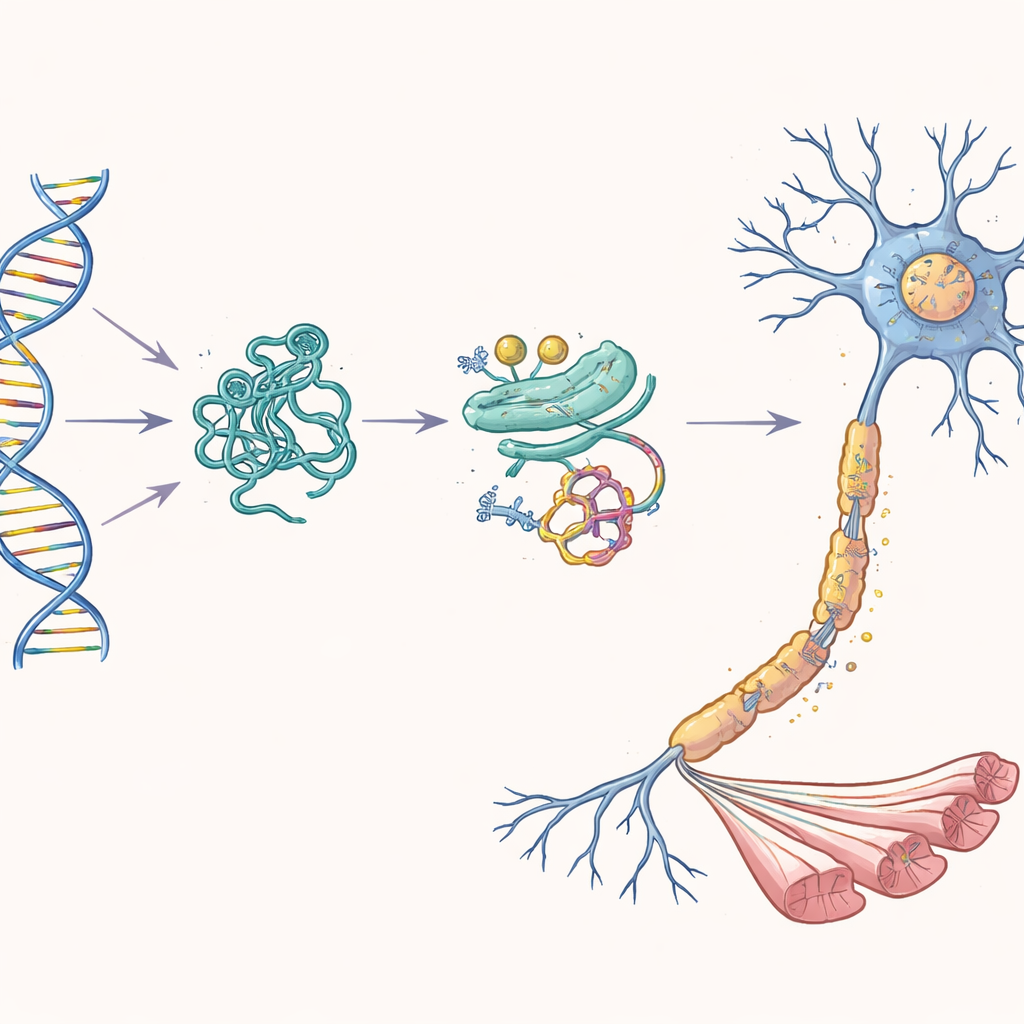
Looking beyond single changes, the researchers asked whether clusters of ultra‑rare variants in the same gene or protein region collectively increase risk. This gene‑level "burden" approach identified both familiar ALS genes—such as SOD1, TBK1, and NEK1—and new candidates like TTC3, UNC13C, and KIF4A. They also zoomed into specific protein domains and found hot spots of damaging variants, for example in a key region of the protein VCP that had not surfaced in whole‑gene tests. When they grouped genes into broader biological pathways, one theme stood out: genes involved in fine‑tuning how RNA messages are spliced and processed carried excess ultra‑rare damage in people with ALS. That dovetails with other evidence that mistakes in RNA handling are a central feature of the disease.
Several small hits add up to big risk
Because many ALS genes are rare, an individual often carries at most one known risk variant. The authors therefore asked whether having more than one such variant pushes risk even higher. Among genes with the strongest prior evidence, they saw a clear dose–response curve: people with one rare variant had a modestly raised chance of ALS, those with two had a bigger increase, and those with three or more—though extremely uncommon—had the highest odds. When they counted all validated rare variants from this study and added the common C9orf72 repeat expansion, about one in four ALS patients carried at least one identifiable genetic risk factor. Notably, some specific variants were tied not only to risk but also to disease course. For example, a change called p.P563L in the RNA‑binding gene ARPP21 was associated with earlier onset and much shorter survival, similar in severity to some of the most aggressive known SOD1 mutations.
What this means for patients and future treatments
Put simply, this study shows that ALS often arises not from a single smoking gun in the genome, but from an accumulation of rare, partly damaging hits across several genes. By systematically cataloging those hits, the work strengthens the evidence for some previously tentative genes—such as ARPP21, DNAJC7, and CFAP410—and highlights new players in cell transport, serotonin signaling, and lipid chemistry. Many of the affected genes sit in pathways already being targeted by precision therapies, including antisense drugs that dial down harmful proteins. While much remains to be learned about exactly how each variant harms motor neurons, this map of rare genetic risk greatly expands the pool of patients who might benefit from gene‑tailored interventions and offers a clearer blueprint for understanding, and eventually treating, ALS.
Citation: Hop, P.J., Kooyman, M., Kenna, B.J. et al. Large-scale exome analyses reveal new rare variant contributions in amyotrophic lateral sclerosis. Nat Genet 58, 717–725 (2026). https://doi.org/10.1038/s41588-026-02535-9
Keywords: amyotrophic lateral sclerosis, rare genetic variants, exome sequencing, neurodegeneration, gene-targeted therapies