Clear Sky Science · en
GLP-1R–GIPR–PPARα/γ/δ quintuple agonism corrects obesity and diabetes in mice
Why this new mouse study matters
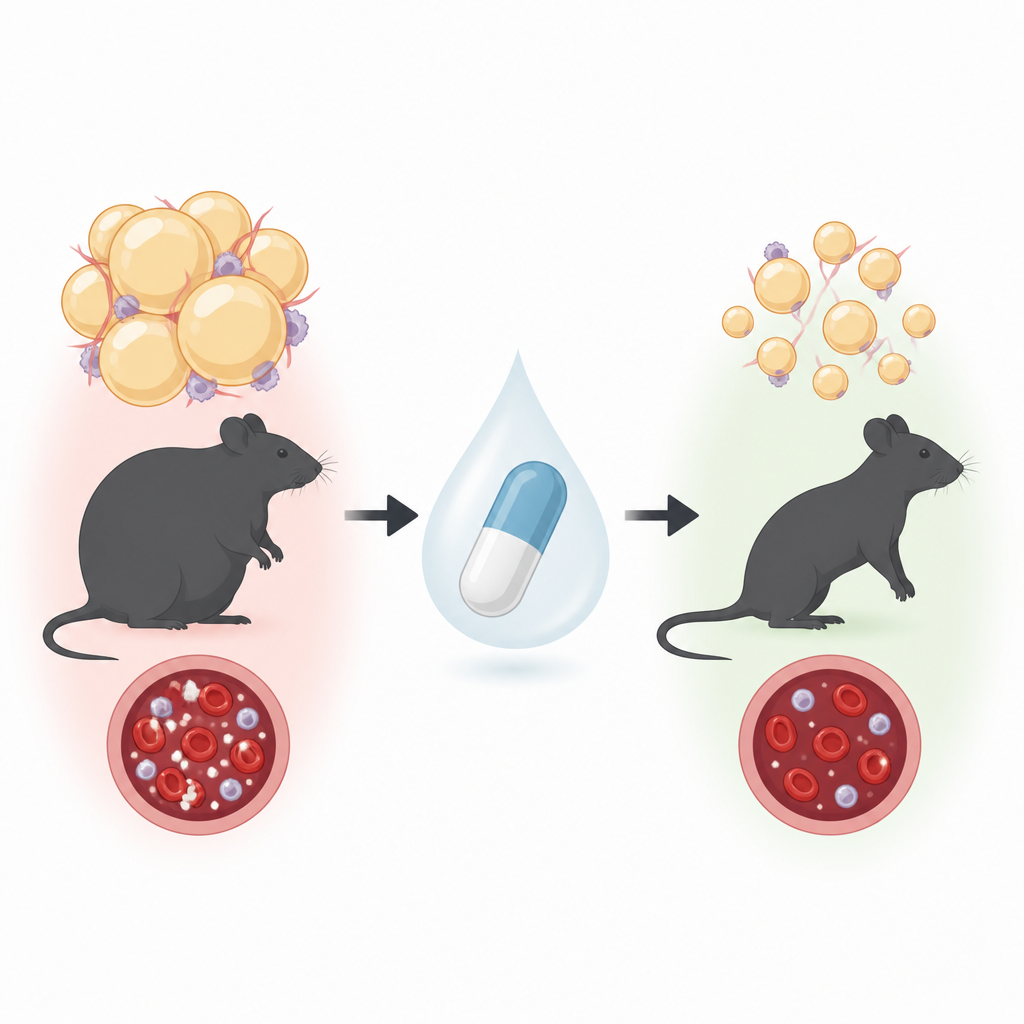
Obesity and type 2 diabetes often travel together, straining hearts, livers and healthcare systems worldwide. Many people now hear about powerful new weight loss injections, but even these medicines do not help everyone and can carry side effects. This study in mice explores a next step: a single engineered drug that combines two gut hormones with a third medicine that acts deep inside cells, aiming to lower body weight, tame high blood sugar and calm harmful inflammation all at once.
A smart all in one medicine
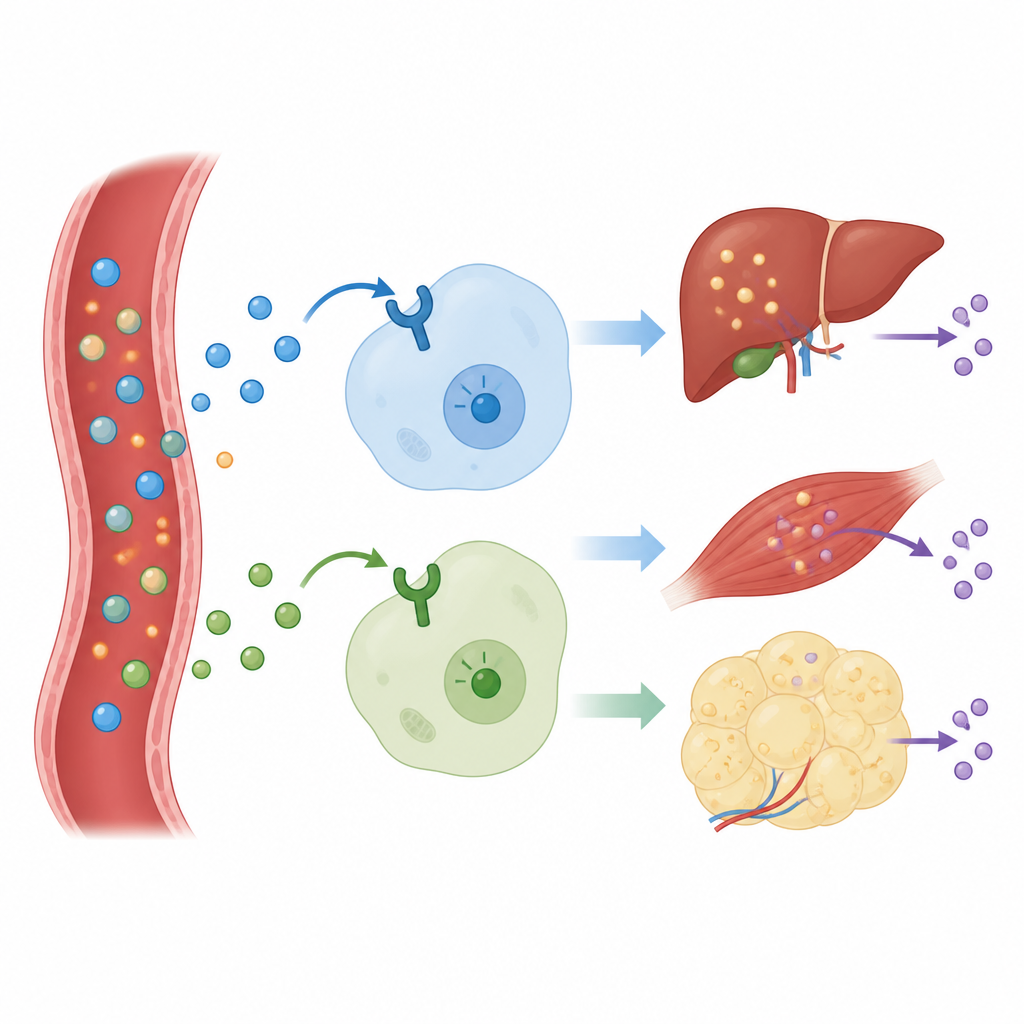
The researchers built a “quintuple agonist,” a single molecule that can switch on five different cellular switches. Two of these are receptors for gut hormones that already form the basis of successful weight loss and diabetes drugs. The other three are receptors inside the nucleus of cells that help control how the body handles fats and sugars. An existing drug that activates these three nuclear receptors can improve liver scarring, but only at very high doses that also cause weight gain and fluid retention. By chemically linking this drug to the gut hormone backbone, the team aimed to deliver it directly into cells that display the gut hormone receptors, while keeping the overall dose extremely low.
Stronger weight and sugar control in obese mice
In lab dishes, the new compound behaved just like a standard dual gut hormone drug when it came to triggering hormone receptors and boosting insulin release from pancreatic cells. Yet in live mice with diet induced obesity, the story changed. Obese animals given the combined molecule lost more body weight, ate less food and showed lower blood sugar than those treated with either the dual hormone drug, the nuclear drug alone, or semaglutide, a widely used obesity medicine. Careful glucose clamp studies revealed that treated mice became more sensitive to insulin and produced less sugar in the liver, both key goals in diabetes care.
Healthier organs without added strain
The team then looked beyond body weight and blood tests to see how organs responded. Gene activity surveys in liver, fat and muscle showed broad shifts toward reduced inflammation, improved cholesterol handling and better energy use in mice receiving the new drug. The compound cut fat build up and scarring signals in the liver and improved markers of heart function in obese mice, without signs of kidney damage, fluid overload or low blood counts, problems that limit some older drugs targeting the same nuclear receptors. Importantly, lean mice given the same treatment did not lose excess weight or develop dangerously low blood sugar, suggesting that its strongest effects appear only in the setting of obesity and insulin resistance.
Probing how and where it works
To understand which switches are essential, the researchers studied mice lacking one or both of the gut hormone receptors, or blocking one of the nuclear receptors. When either gut hormone receptor or the nuclear receptor called PPAR delta was disabled, the drug’s benefits on blood sugar and weight were sharply reduced, and they vanished entirely when both gut hormone receptors were missing. Brain studies showed that the drug does not cross the blood brain barrier, but still alters protein patterns in brain regions that control appetite and more strongly activates specific appetite suppressing nerve cells than the dual hormone drug alone. This suggests that signals from the body, rather than direct brain entry, help the compound influence eating behavior.
What this could mean for future treatments
In plain terms, this study shows that wiring several helpful pathways into a single targeted molecule can give obese mice greater weight loss, better blood sugar control and healthier livers and hearts than current leading drug designs. By hitching a powerful but side effect prone liver drug to gut hormone “delivery tags,” the researchers achieved strong benefits at doses thousands of times lower than those used on their own, avoiding the usual complications. While these findings are still limited to animal models, they outline a strategy in which smart drug design, rather than ever higher doses, might offer more complete treatment of obesity and diabetes in the future.
Citation: Liskiewicz, D., Novikoff, A., Khalil, A. et al. GLP-1R–GIPR–PPARα/γ/δ quintuple agonism corrects obesity and diabetes in mice. Nature 653, 776–785 (2026). https://doi.org/10.1038/s41586-026-10427-5
Keywords: obesity, type 2 diabetes, GLP-1 GIP, PPAR agonist, metabolic health