Clear Sky Science · en
Evolution of pandemic cholera at its global source
Why this cholera story matters now
Cholera is often pictured as a disease that bubbles up from brackish coastal waters before sweeping across the globe. This study challenges that classic view. By following thousands of cholera bacteria across Bangladesh and northern India over two decades, the researchers show that people, borders and microscopic battles with viruses shape modern cholera far more than rivers and tides. Their findings help explain why some strains stay local while others ignite distant outbreaks, with lessons for how and where the world should focus prevention efforts.
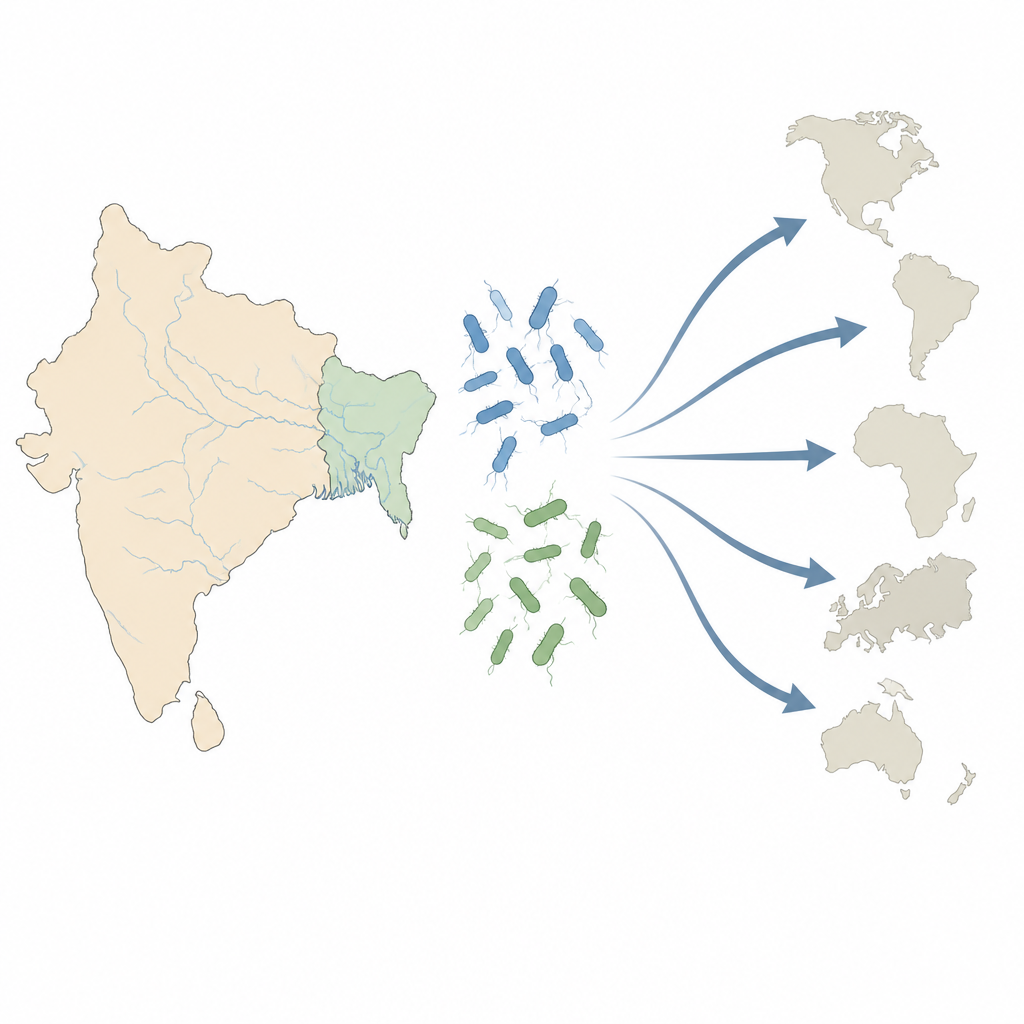
Where today’s global outbreaks really begin
For years, the coastal Ganges Delta in Bangladesh was seen as the world’s main source of pandemic cholera. The team compiled the largest genetic dataset yet for the region, sequencing over 2,300 Vibrio cholerae samples from patients in Bangladesh and northern India and comparing them with thousands of global genomes. They found that two closely related bacterial families, called sBD1 and BD2, dominate the current pandemic in this area. Yet these lineages did not mix freely across waterways. Instead, the patterns of spread followed national borders, with India and Bangladesh largely evolving their own versions of pandemic cholera.
Rapid changes inside Bangladesh’s cholera strains
Within Bangladesh, BD2 was the main player for several years. Its DNA revealed a whirlwind of gain and loss of small mobile genetic elements, many of which help the bacteria defend themselves against viruses that prey on them. Over just a few years, BD2 repeatedly discarded parts of these defence systems and altered its surface coat. These changes were not just academic details. Patients infected with bacteria that had lost certain defence genes were more likely to have classic watery stool and severe dehydration, and the bacteria reached higher levels in the gut. In other words, becoming less well defended against viruses often went hand in hand with becoming better at making people very sick.
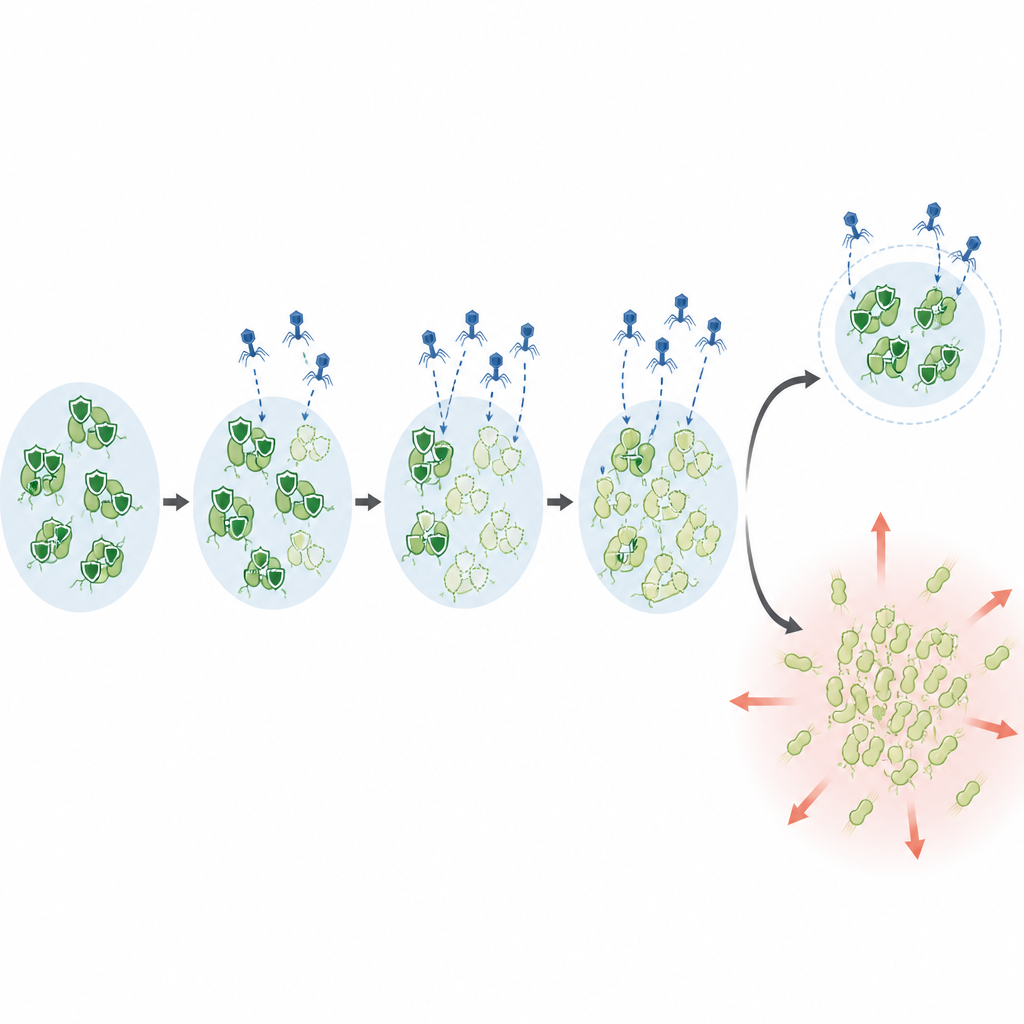
A microscopic arms race with hidden costs
The researchers also tracked one key virus, ICP1, that attacks cholera bacteria. As BD2 in Bangladesh shed some of its viral defences, ICP1 responded by swapping its own anti-defence tools, creating a stepwise arms race. A newer bacterial lineage, sBD1, then swept into Bangladesh around 2018, carrying a different defence package and a distinct toxin variant that had already spread widely in India. Soon after, sBD1 in Bangladesh picked up yet another viral defence island, labelled PLE11, which blocks ICP1 from multiplying. These defence systems seemed to protect bacteria from viruses but made them less likely to spread abroad. Strains carrying such elements, or a particular surface type called Inaba, were rarely found in global export events compared with how common they were within Bangladesh.
India and the basin as the launch pad
When the team reconstructed the family tree of pandemic cholera around the world, a striking pattern emerged. Although Bangladesh experiences intense, diverse cholera outbreaks, most recent international waves of disease traced back not to the coastal delta but to strains evolving in India and the wider Ganges Basin. A variant of sBD1 that first gained a specific toxin gene version in India went on to seed outbreaks in places such as Haiti, Kenya and Nigeria. Repeated, smaller exchanges of bacteria between India and Bangladesh often fizzled out, especially when the incoming strains carried heavy viral defences that may have hurt their ability to establish themselves or travel further.
What this means for fighting cholera
The study shows that cholera’s global reach depends on a delicate trade-off. In crowded settings like Bangladesh, bacteria can afford to carry costly virus defences that help them survive constant attack, even if this reduces their ability to spread internationally. In contrast, strains that dominate in India and across the basin tend to be less burdened by such defences, making them better suited to jump to new regions. For a lay reader, the takeaway is that the true modern springboard for pandemic cholera is the human network across the Ganges Basin, not just the coastal wetlands. Tracking how cholera evolves in these inland populations, and how it juggles protection from viruses with its power to cause severe disease, could guide smarter use of vaccines, sanitation measures and possibly future virus-based therapies to finally curb the seventh cholera pandemic.
Citation: Barton, A., Afrad, M.H., Taylor-Brown, A. et al. Evolution of pandemic cholera at its global source. Nature 653, 491–498 (2026). https://doi.org/10.1038/s41586-026-10340-x
Keywords: cholera, Ganges Basin, Vibrio cholerae, phage defence, genomic surveillance