Clear Sky Science · en
Host control of persistent Epstein–Barr virus infection
Why this hidden virus matters
Most adults quietly carry Epstein Barr virus, the microbe best known for causing glandular fever. For most of us it slumbers in immune cells for life. Yet past infection has been linked to conditions such as multiple sclerosis, lymphoma and some autoimmune diseases. This study asks a simple but important question: what allows some people to keep the virus firmly in check while in others it lingers at higher levels that may raise disease risk?
Reading a virus from human DNA tests
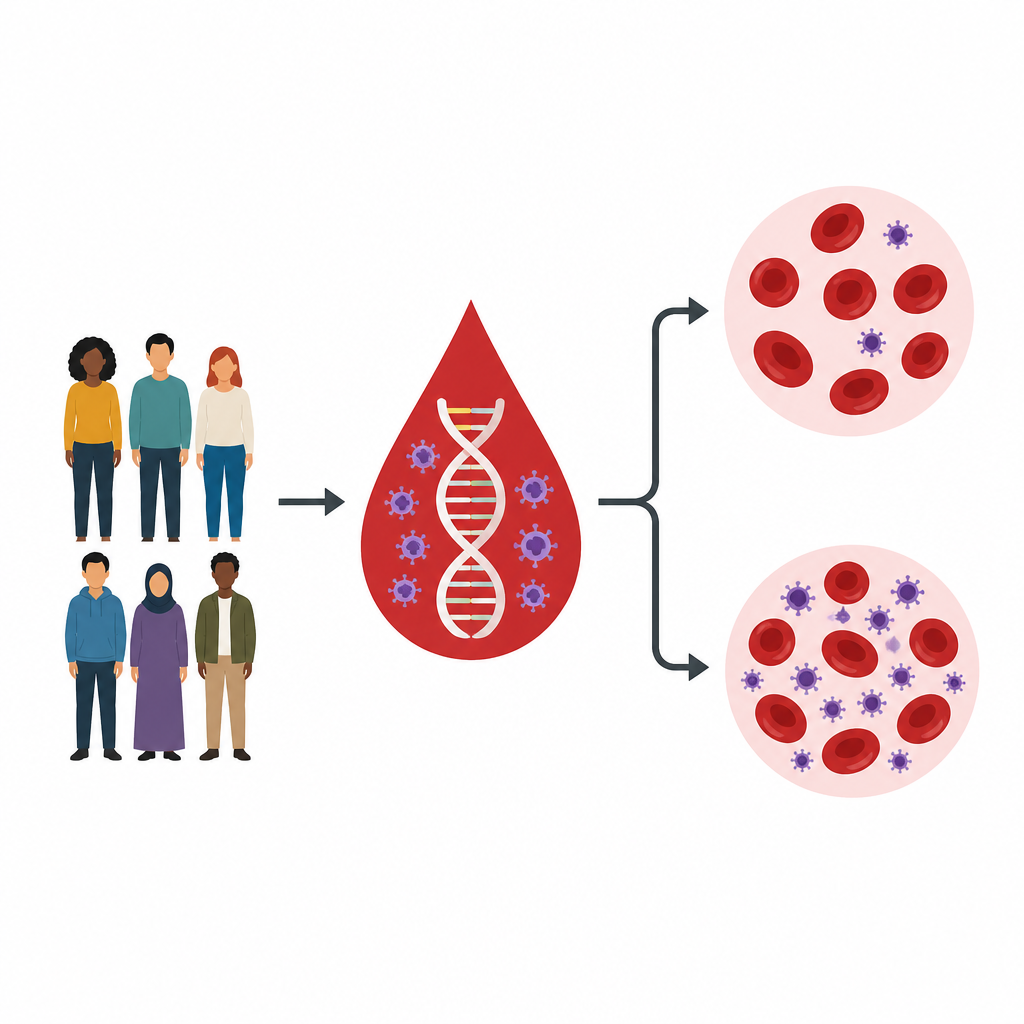
The researchers realised that when large biobanks sequence people’s genomes from blood samples, they also accidentally pick up fragments of viral DNA hiding in those cells. By scanning whole genome data from more than 800,000 volunteers in the UK Biobank and the US All of Us project, they counted short pieces of Epstein Barr virus sequence. People with at least one such fragment in their sequencing data were classified as having a higher viral load in their blood, while those without detectable fragments were treated as having lower levels.
Checking that the signal is real
To be sure these traces reflected genuine infection rather than lab artefacts, the team compared them with several independent measures. In smaller groups where blood tests for Epstein Barr virus were available, samples with viral DNA reads were overwhelmingly from people who already had antibodies against the virus. They also matched viral reads to direct viral load tests using quantitative PCR and to viral gene activity measured by RNA sequencing. In all cases, more reads went hand in hand with more viral DNA or RNA, showing that these incidental sequences provide a useful stand in for how much virus is present in blood cells.
Lifestyle and season shape viral control
With this new yardstick in hand, the scientists asked which everyday factors track with weaker control of the virus. They saw more viral DNA in people living with HIV, in those taking immune dampening drugs such as glucocorticoids, and in current smokers. Even among otherwise healthy volunteers, men and smokers were more likely to have detectable viral reads. Viral traces were also more common in samples drawn during winter, hinting that seasonal infections such as respiratory viruses may jostle the immune system and allow Epstein Barr virus to flare.
Genes that help the immune system hold the line
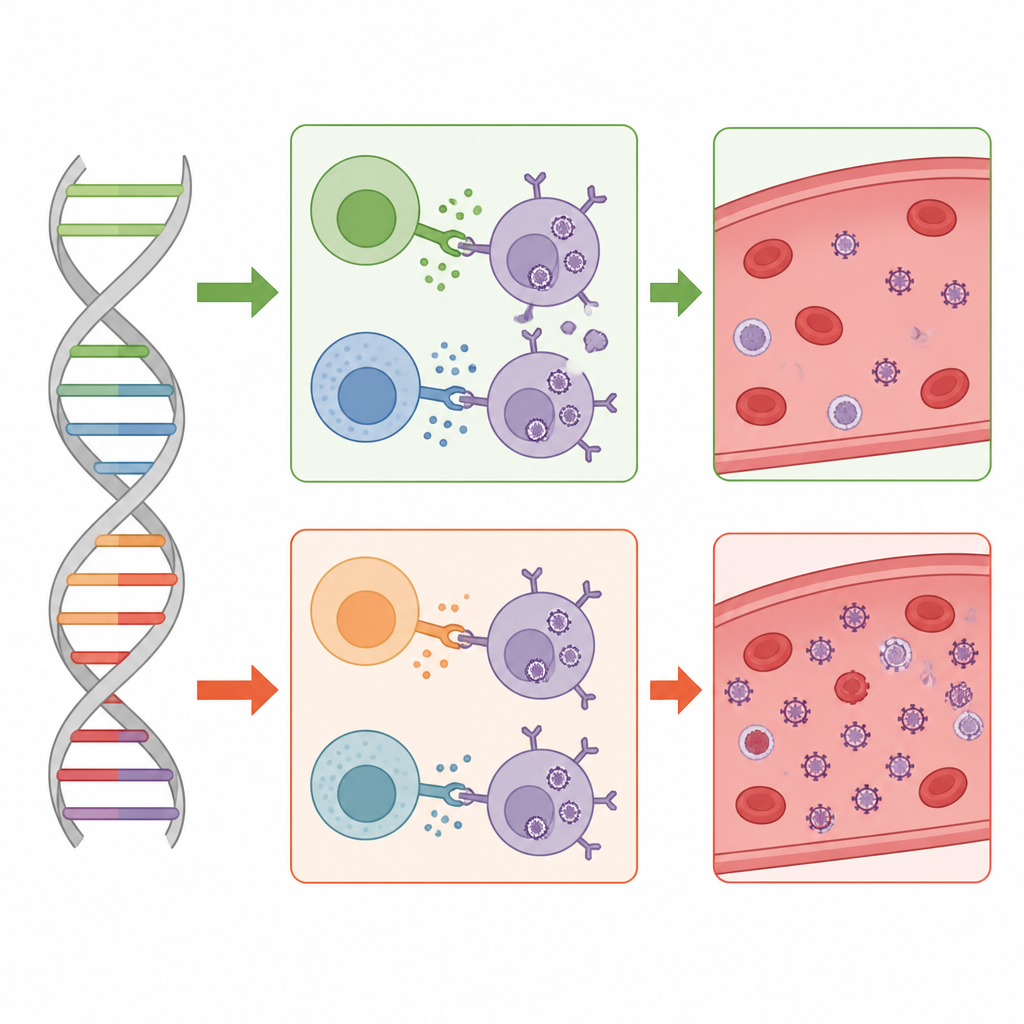
The team then searched the human genome for common genetic variants linked to higher or lower viral load. They found strong signals in the major histocompatibility complex, a region containing genes that help immune cells recognise infected targets, and at 27 locations elsewhere in the genome. Many of the highlighted genes are already known to influence immune function or rare inherited immune deficiencies. The patterns point to the importance of killer T cells and natural killer cells, which patrol for and destroy infected B cells that harbour the virus. A combined genetic score built from these variants predicted viral control across different ancestry groups, showing that host control is a genuinely polygenic trait.
Links to autoimmune diseases
Because Epstein Barr virus has long been suspected of contributing to autoimmune disorders, the authors asked whether the genetic fingerprints of weak viral control overlap with those of known diseases. People whose genetic profiles predicted higher viral load also carried risk patterns for multiple sclerosis and rheumatoid arthritis, though in different ways for two branches of the immune system. Broader scans across medical records revealed shared genetic influences with type 1 diabetes, inflammatory bowel disease and hypothyroidism, suggesting that how well a person restrains this common virus may be one piece of the puzzle in several chronic conditions.
What this means for future research and care
By turning incidental viral fragments from routine genome sequencing into a yardstick for Epstein Barr virus levels, this work opens a new window on how the immune system keeps a lifelong passenger in check. It shows that both environment and inherited genes shape viral control, and that poor control partly overlaps with genetic risk for autoimmune disease. In the long run, similar approaches could help scientists study other persistent infections at scale and guide efforts to prevent or better manage illnesses in which chronic viruses play a quiet but important role.
Citation: Schmidt, A., Alawathurage, T.M., David, F.S. et al. Host control of persistent Epstein–Barr virus infection. Nature 653, 444–454 (2026). https://doi.org/10.1038/s41586-026-10274-4
Keywords: Epstein Barr virus, viral load, immune genetics, autoimmune disease, genome sequencing