Clear Sky Science · en
Thymic health consequences in adults
The Hidden Organ That Shapes Adult Health
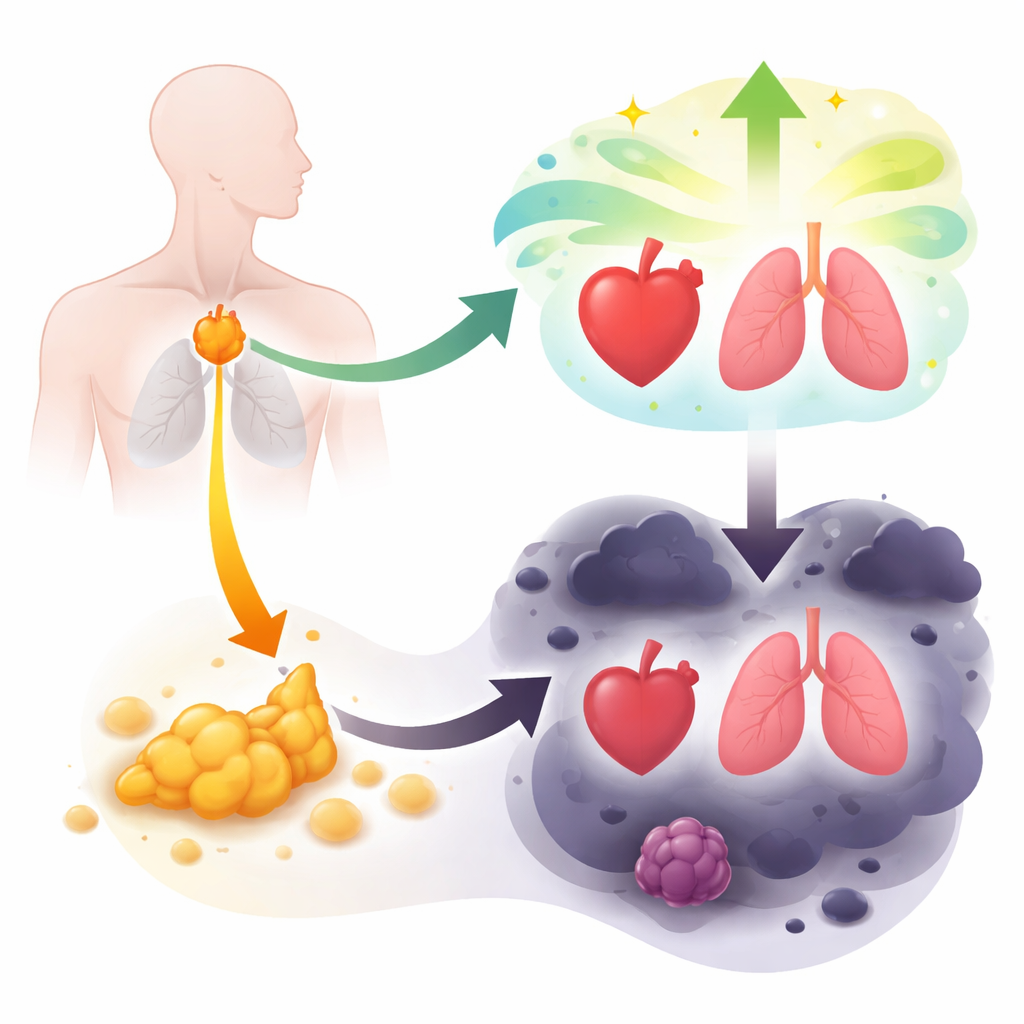
Most of us learn in school that the immune system’s training ground, a small organ called the thymus, matters mainly in childhood and then quietly fades away. This study turns that idea on its head. Using modern medical imaging and artificial intelligence, the researchers show that the condition of the thymus in adults is closely tied to how long people live and how likely they are to develop major illnesses such as cancer and heart disease. Because the thymus appears to respond to everyday habits like smoking, weight, and exercise, the work hints that caring for this overlooked organ could become a new lever for healthy aging.
How The Thymus Was Brought Back Into Focus
The thymus sits just behind the breastbone and helps “educate” T cells, a key branch of the immune system. With age, it shrinks and fills with fat, a process long thought to make it mostly irrelevant in adulthood. Yet scattered clues suggested otherwise, including reports that adults who had their thymus surgically removed later faced higher risks of disease. To move beyond rare surgical cases, the authors asked a broader question: across the general population, does the degree of thymus decay in ordinary adults track with their future health?
Reading Thymic Health From Routine Scans
To answer that question, the team built a deep learning system that can “read” the thymus on standard chest CT scans. Trained on thousands of images, the model first locates the thymus region and then scores its condition on a continuous scale, from nearly completely decayed to relatively well preserved. They applied this tool to 27,612 adults in two long-running studies: the National Lung Screening Trial, which followed heavy smokers screened for lung cancer, and the Framingham Heart Study, a classic community study of cardiovascular health. Participants were then grouped into low, average, or high thymic health based on where they fell in the overall distribution.
Links to Longevity, Cancer, and Heart Disease
The results were striking. In the lung screening cohort of more than 25,000 people, those with high thymic health at the start of the study were about half as likely to die from any cause over the next 12 years as those with low thymic health. They were also less likely to develop lung cancer and less likely to die from it once diagnosed. Similar patterns appeared for heart and blood vessel disease: participants with healthier thymuses had markedly lower rates of fatal cardiovascular events in both the lung screening trial and the Framingham cohort. Importantly, these associations held even after accounting for age, sex, smoking, body weight, and preexisting illnesses, suggesting that thymic health carries independent information about a person’s future disease risk.
Everyday Habits, Inflammation, and the Aging Thymus
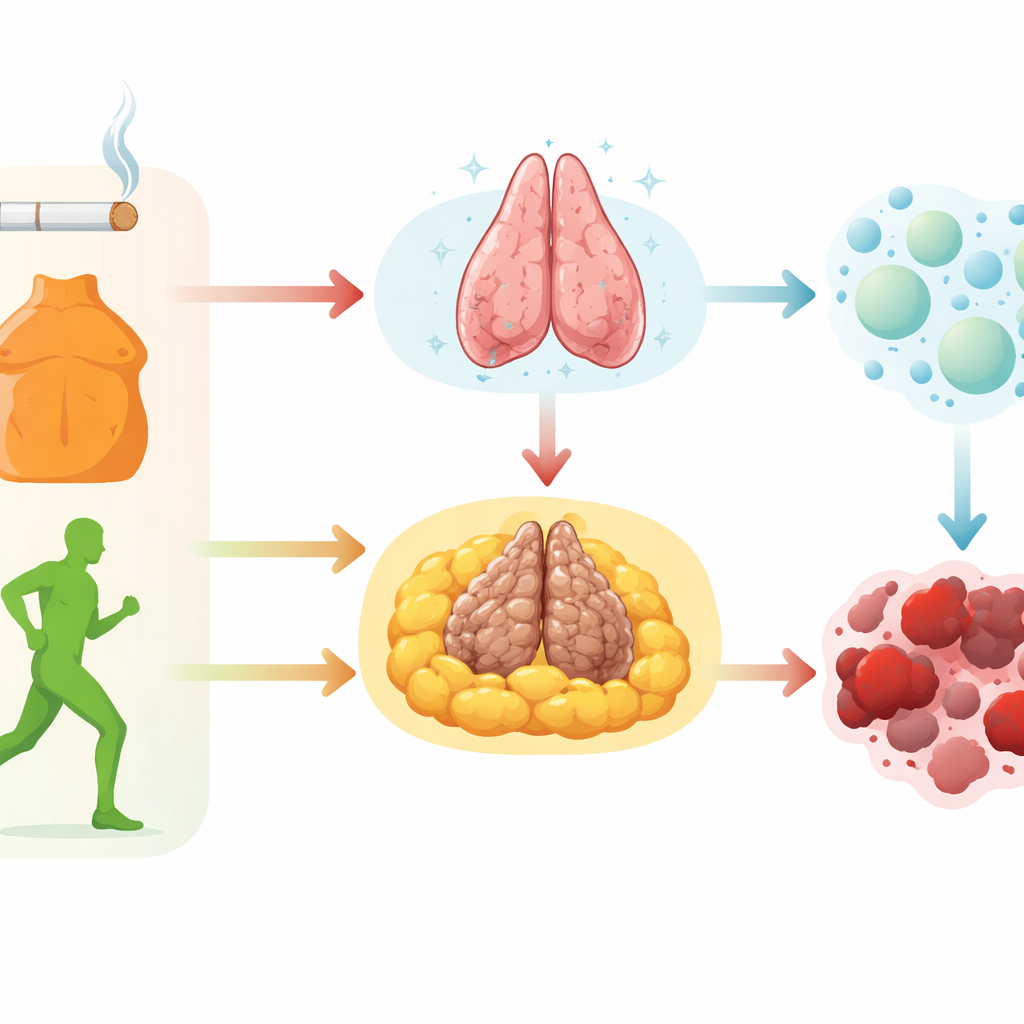
The study also explored what might influence thymic health. Within the Framingham group, people with healthier cholesterol profiles, lower blood sugar, and lower blood pressure tended to have better thymic scores. Higher levels of protective HDL cholesterol went hand in hand with a healthier thymus, while traits tied to metabolic syndrome—high triglycerides, elevated glucose, and high blood pressure—went in the opposite direction. Smoking stood out as especially harmful: the more years and packs a person had smoked, the worse their thymic health. Measures of frailty and reduced physical activity were also linked to poorer thymic scores. Blood tests told a parallel story: participants with signs of chronic, low-grade inflammation, including persistently high C-reactive protein and elevated inflammatory proteins such as IL-6, tended to have more decayed thymuses.
What This Means for the Future of Healthy Aging
Taken together, the findings suggest that the thymus does not simply retire after childhood. Instead, its slow, highly individual decline appears to mirror—and possibly influence—the broader aging of the immune system, shaping vulnerability to cancer, heart disease, lung disease, and metabolic disorders. Because inflammation, obesity, and smoking all correlate with poorer thymic health, improving lifestyle habits or using targeted therapies to reduce inflammation and excess fat may help preserve or even rejuvenate this small but powerful organ. While the study cannot yet prove cause and effect, it firmly places the adult thymus back on the map as a potential target for prevention and regeneration, opening a new frontier in efforts to extend healthy lifespan.
Citation: Bernatz, S., Prudente, V., Pai, S. et al. Thymic health consequences in adults. Nature 652, 986–994 (2026). https://doi.org/10.1038/s41586-026-10242-y
Keywords: thymus, immune aging, longevity, cardiovascular disease, deep learning imaging