Clear Sky Science · en
Natural maternal immunity protects neonates from Escherichia coli sepsis
How Mothers Quietly Guard Newborns from Infection
Newborn babies face the world with developing immune systems, yet most never suffer the severe blood infections that doctors dread. This study asks a striking question: if a common gut bacterium called E. coli is everywhere, why do only a small fraction of babies develop life threatening E. coli sepsis, while most remain healthy? By tracing a hidden line of defense from mothers to their infants, the researchers uncover how natural immunity passed across the placenta and through early feeding can tip the balance between illness and protection.
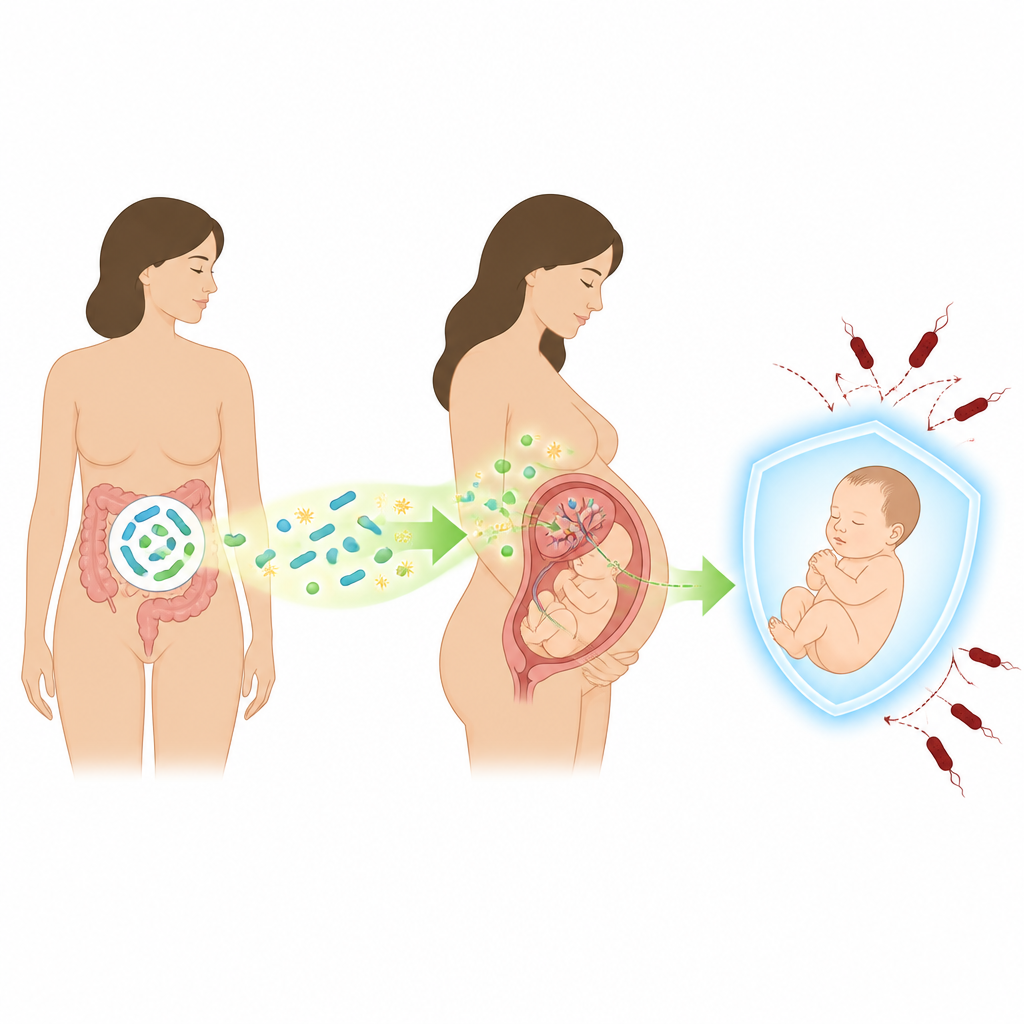
A Common Bacterium with Two Faces
E. coli is famous as a cause of food poisoning and dangerous bloodstream infections, but it also quietly lives in the intestines of almost everyone. Soon after birth, babies are routinely colonized by E. coli, often with strains capable of causing disease. At the same time, newborn immune defenses are known to be immature, which should make babies easy targets. The puzzle is why invasive E. coli infections remain rare. Clues from earlier work suggested that people naturally carry antibodies against E. coli even without obvious prior illness, and that mothers can pass some of these antibodies to their offspring. The new research brings these ideas together and tests them in both mice and human mother–infant pairs.
Friendly Gut Guests that Train Protection
In mice, the team introduced a harmless probiotic strain called E. coli Nissle into the intestines of adult females before pregnancy. This strain stably colonized the gut without spreading to other organs. Over several weeks, the colonized mice built up strong levels of antibodies in their blood that recognized Nissle and a wide range of clinically important E. coli strains. These antibodies did more than just bind: they helped immune cells grab and clear the bacteria, a process called opsonization. A key target was a surface structure named OmpA, which sits like a ring of loops on the bacterial outer membrane. When Nissle was engineered to lack OmpA, it no longer triggered the same robust antibody response, showing that this structure helps the immune system learn to recognize E. coli.
Passing Protection from Mother to Newborn
When adult mice with Nissle-trained immunity were challenged with invasive E. coli, they survived better and carried fewer bacteria in their organs than uncolonized mice. The crucial test came with their offspring. Newborn pups of Nissle-colonized mothers, despite their natural vulnerability, were far more resistant to severe E. coli infection than pups of uncolonized mothers. Careful cross-fostering experiments showed that protection arose both before birth, via the placenta, and after birth through breastmilk, with milk playing a particularly strong role. Transferring purified antibodies from colonized adults directly into newborns also reduced infection, proving that these maternal antibodies alone were sufficient to shield the young animals.
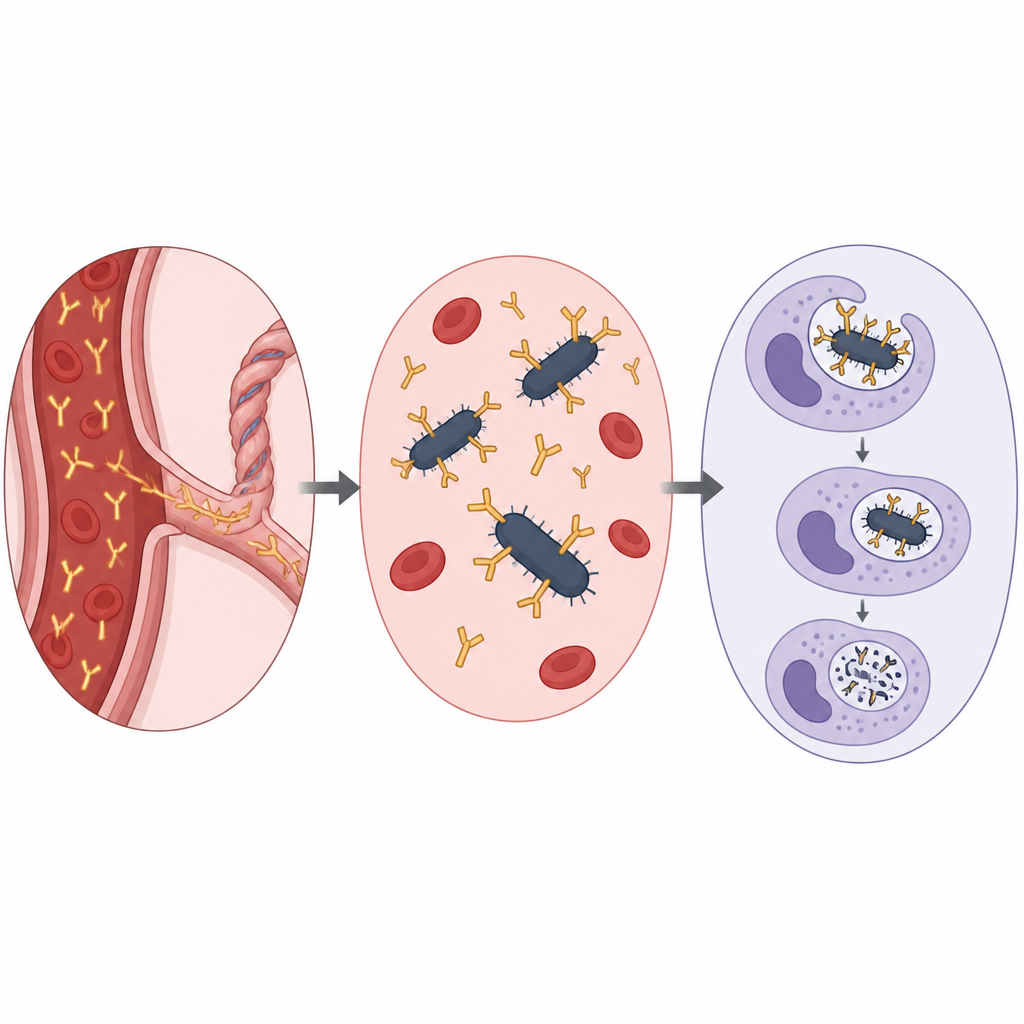
How Protective Antibodies Do Their Job
The scientists next asked how these antibodies work at a cellular level. In newborn mice, protection depended on two cooperating systems: complement proteins in the blood and receptors on immune cells that bind the tail end of antibodies. When either complement or these receptors was missing, antibodies from colonized mothers could no longer prevent disease in pups, even though the same antibodies remained effective in adults. Laboratory tests using mouse and human immune cells confirmed that both components were needed for antibodies to coat E. coli and promote efficient engulfment by white blood cells. This highlights that newborns rely on a tightly tuned partnership between transferred maternal antibodies and their limited innate defenses.
Evidence from Human Newborn Blood Spots
To see whether a similar story holds in people, the team analyzed dried blood spots that had been collected from babies one day after birth for routine screening. They compared 100 infants who later developed E. coli sepsis with nearly 300 matched infants who did not. Babies who went on to suffer sepsis had, on average, about ten times lower levels of antibodies that recognized pooled E. coli strains and the OmpA structure. Their antibodies were also much less able to help human immune cells coat and capture E. coli in the lab. These differences were not explained by overall antibody shortages or by being born early. Instead, they pointed specifically to a lack of E. coli focused maternal immunity as a common risk factor across gestational ages and ages of infection onset.
What This Means for Protecting Babies
Together, the animal and human data present a simple message in accessible terms: when mothers have a rich stock of natural antibodies against E. coli, they can pass this protection to their babies and sharply reduce the odds of dangerous bloodstream infection. When that targeted protection is missing or too low, newborns are left exposed. These insights open the door to practical steps such as screening pregnant women for E. coli specific antibodies, boosting those levels through vaccines or safe probiotic colonization, and providing antibody enriched products to the most vulnerable infants. Rather than viewing neonatal sepsis as inevitable bad luck, the work suggests it often reflects a fixable gap in natural maternal immunity.
Citation: Diep, R.E., Adhikari, U., Gokce Tezel, K. et al. Natural maternal immunity protects neonates from Escherichia coli sepsis. Nature 653, 519–527 (2026). https://doi.org/10.1038/s41586-026-10225-z
Keywords: neonatal sepsis, maternal antibodies, Escherichia coli, newborn immunity, probiotic colonization