Clear Sky Science · en
Microbiota-mediated induction of beige adipocytes in response to dietary cues
How Gut Bacteria Help Turn Fat into a Calorie Burner
Most of us think of body fat as a passive storage depot, but some fat can actually burn calories to produce heat. This article explores how what we eat, and the microbes living in our gut, can coax ordinary fat to behave more like this active “good” fat. By uncovering this hidden dialogue between diet, microbes and fat tissue, the researchers reveal a new way the body adapts to food scarcity that could one day inform approaches to metabolic disease.
From Everyday Fat to Heat-Making Fat
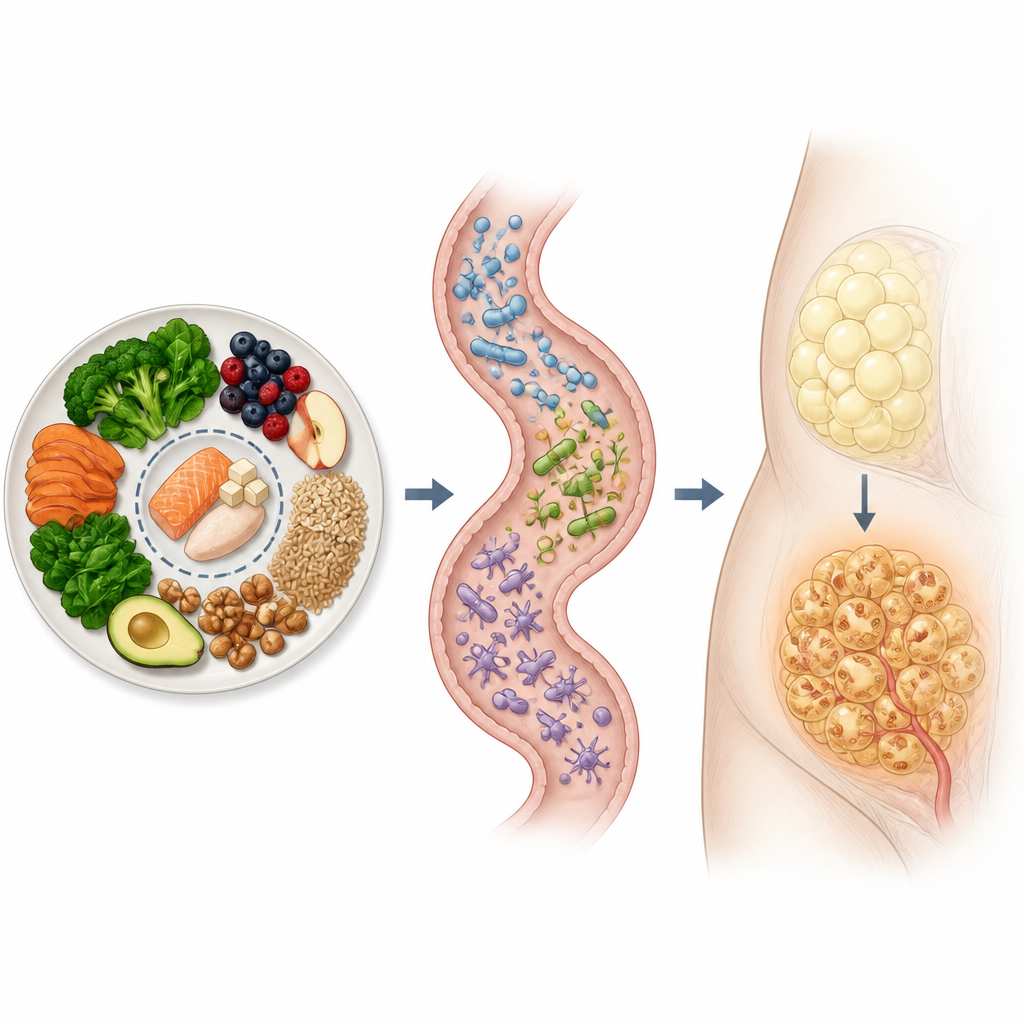
The body carries several types of fat. Classic white fat mainly stores excess energy, while brown and “beige” fat are richer in mitochondria and can burn fuel to generate heat. Under certain conditions, such as exposure to cold, some white fat pads can be remodeled to contain beige cells with heat-making capacity. The authors focused on how changes in dietary protein affect this remodeling. In mice, they found that lowering the protein content of the diet strongly switched on hallmark genes of beige fat in a specific white fat depot near the groin, to a degree comparable to that seen during cold exposure or stimulation of the nervous system.
Low Protein Talks to Fat Through Gut Microbes
When the team fed mice a low-protein diet, the animals lost fat, improved their blood sugar control and showed clear microscopic signs of white fat turning beige. But this effect largely vanished in germ-free mice that lack gut microbes, or in normal mice whose microbiota had been depleted with antibiotics. By carefully transplanting microbes from responsive mice into germ-free animals, and then systematically narrowing those communities down, the researchers showed that relatively small sets of bacterial strains from either mice or humans were sufficient to restore the beige response, but only when the animals were also on a low-protein regimen.
Two Chemical Message Paths from Microbes to Fat
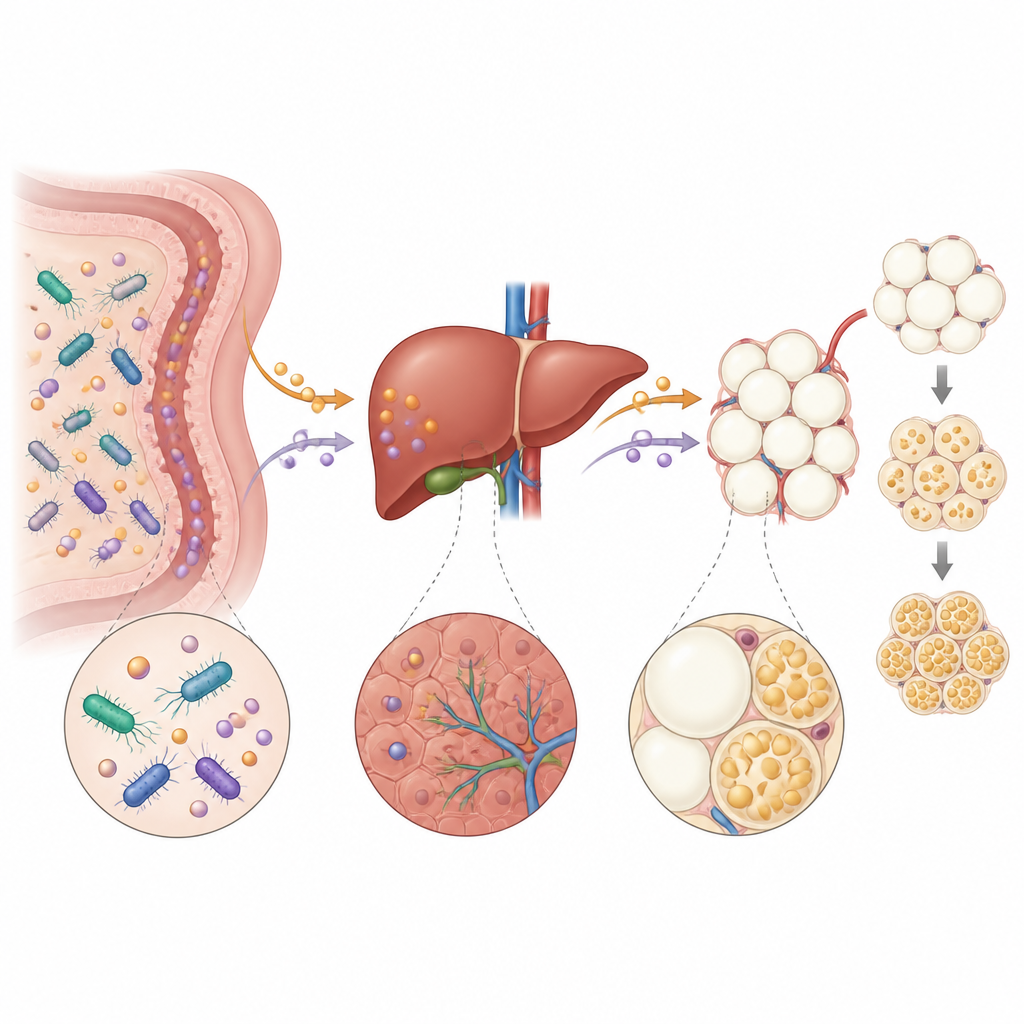
Diving deeper, the scientists uncovered two main chemical “axes” by which the microbiota help drive this fat makeover. First, certain microbes on a low-protein diet altered bile acids, small molecules normally involved in digesting fats. These modified bile acids accumulated in the bloodstream and activated a receptor called FXR in precursor cells within white fat, nudging them toward a beige identity. Second, other microbes ramped up production of ammonia from nitrogen compounds. This ammonia flowed through the portal vein to the liver, where it boosted production of a hormone called FGF21. FGF21 in turn helped promote the beiging of white fat and encouraged a denser network of sympathetic nerves that deliver the signals required for heat production.
Pinpointing Key Microbial Players
To move from broad associations to specific culprits, the authors isolated individual bacterial strains from mice and from human volunteers whose scans showed active brown or beige fat. They identified mouse consortia that combined strains able to modify bile acids with strains that could generate ammonia; together, these recreated the full beiging effect. From human donors they distilled a four-strain group with similar functional abilities. In obese mice previously fattened on a high-fat diet, adding these four strains on top of a low-protein diet led to greater weight loss, healthier blood fats and better glucose tolerance than the diet alone, without obvious loss of muscle mass.
What This Means for Our Understanding of Fat
Overall, the study suggests that when protein is scarce, particular gut microbes sense this shift and adjust their metabolism in ways that help the host adapt. By changing bile acids and releasing ammonia, they trigger signaling pathways in fat and liver that encourage white fat to behave more like a calorie-burning organ. While these results are in mice and the authors do not propose therapies for humans, the work provides a clear mechanistic map linking diet, microbes and fat behavior, offering a framework for future research into how our invisible partners help manage energy balance.
Citation: Tanoue, T., Nagayama, M., Roochana, A.J.A. et al. Microbiota-mediated induction of beige adipocytes in response to dietary cues. Nature 653, 499–509 (2026). https://doi.org/10.1038/s41586-026-10205-3
Keywords: gut microbiome, dietary protein, beige fat, bile acids, FGF21 hormone