Clear Sky Science · en
Insulin resistance prediction from wearables and routine blood biomarkers
Why your watch might flag trouble before your doctor can
Millions of people are on the path toward type 2 diabetes long before their blood sugar tests ring alarm bells. This study asks a simple question with big implications: could an ordinary smartwatch, paired with routine blood tests, quietly warn you years earlier that your body is becoming resistant to insulin—a key early step toward diabetes and heart disease? By combining wearable data with a new class of machine-learning models, the researchers show that everyday signals such as heart rate, sleep, and steps can help uncover hidden metabolic risk at scale.
From silent risk to everyday signals
Insulin resistance happens when the body’s cells stop responding well to insulin, forcing the pancreas to work harder to keep blood sugar in check. People can be significantly insulin resistant while standard tests—like fasting glucose or HbA1c—still look “normal.” In this study, the team focused on more than 1,100 adults across the United States who wore Fitbit or Pixel smartwatches and had fasting blood work done at clinical labs. They used a well-established lab measure called HOMA-IR, which combines fasting insulin and glucose, as the ground truth for how resistant each person’s body was to insulin.
How the study turned raw data into risk scores
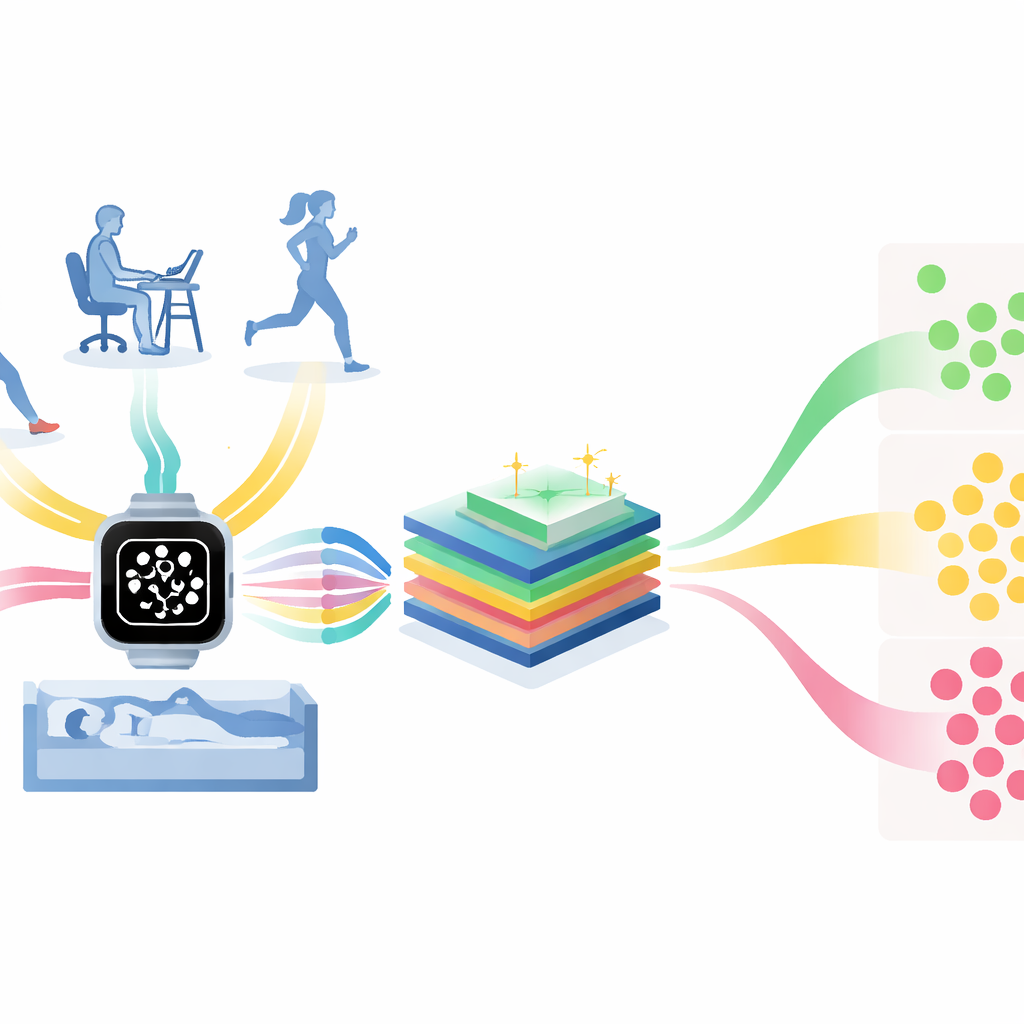
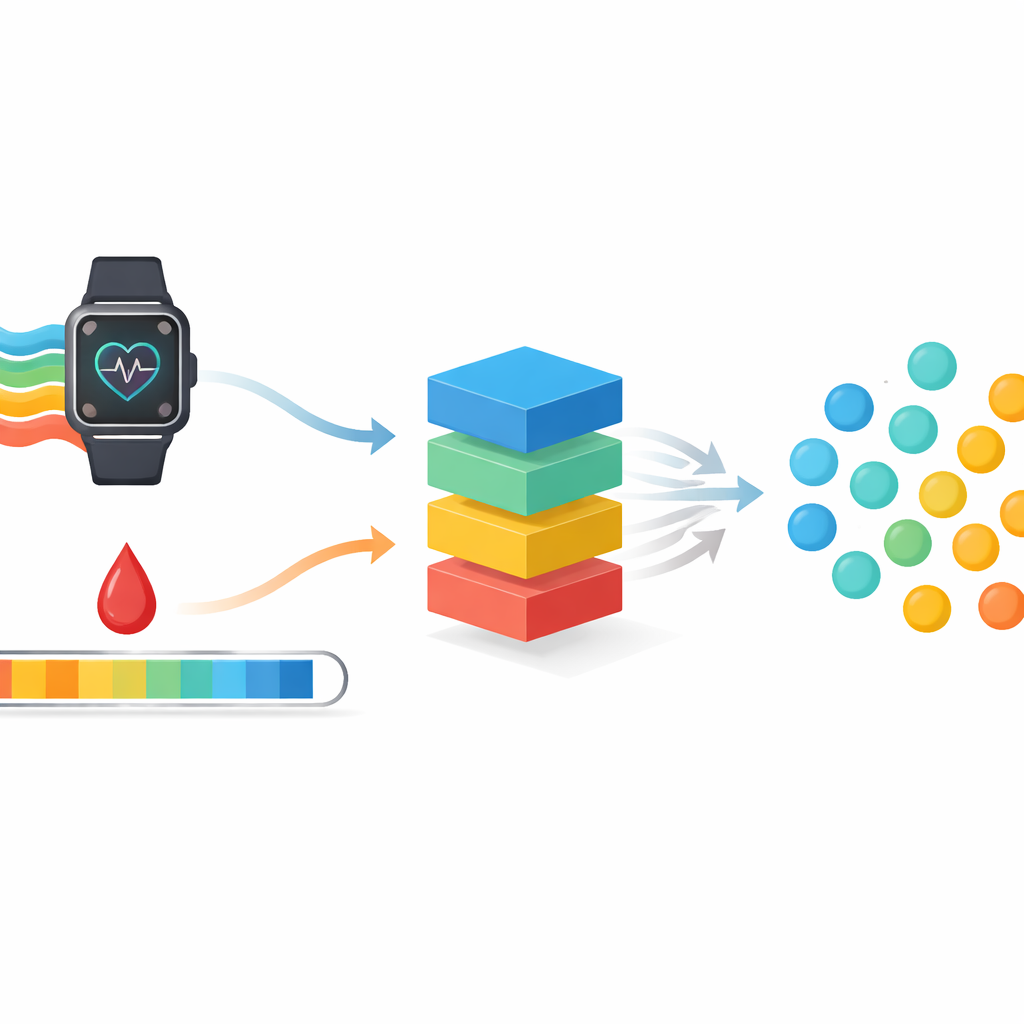
From each participant, the researchers gathered three main ingredients: lifestyle signals from wearables (resting heart rate, heart-rate variability, daily steps, and sleep duration), basic demographic information (such as age and body mass index), and routine lab tests (including fasting glucose, a lipid panel and a metabolic panel). They then trained machine-learning models to predict each person’s HOMA-IR score directly from these easily obtained inputs. By setting a threshold on HOMA-IR, they could classify people as insulin sensitive, borderline, or insulin resistant. The most powerful model combined all three sources of information and explained about half of the variation in HOMA-IR across individuals, clearly outperforming models that relied on glucose or wearable data alone.
A smarter way to read wearable streams
To get the most out of the dense, minute‑by‑minute smartwatch data, the team adapted a “foundation model” originally trained on 40 million hours of sensor recordings from over a million people. Rather than using simple weekly averages of steps or sleep, this foundation model learned rich patterns in activity, heart rhythm and sleep timing, and then compressed each person’s data into a compact representation. When these learned wearable features were fed into the insulin‑resistance model, performance jumped: in the main cohort, adding foundation‑model features on top of demographics, fasting glucose and lipid levels improved the ability to distinguish insulin‑resistant people from others to an area under the curve of about 0.88—competitive with far more invasive testing methods.
Putting the approach to the test in a new group
Because algorithms often look best on the data they were trained on, the authors tested their models on a completely separate validation cohort of 72 people who wore a different Fitbit device in a laboratory‑run lifestyle study. Here too, models that used smartwatch representations plus standard blood tests outperformed those using clinic data alone. Crucially, the wearable‑enhanced model was better at spotting people whose blood sugar still looked normal but whose insulin resistance was already high, a group at elevated risk for future diabetes and fatty liver disease.
Turning numbers into understandable advice
To make these predictions useful in everyday life, the researchers built an “insulin resistance agent,” a reasoning system on top of a large language model. Given a person’s wearable data, lab results and predicted insulin‑resistance status, the agent can answer questions such as “Am I at risk for diabetes?” or “What lifestyle changes matter most for me?” It can call the prediction model, look up medical references on the web, perform calculations, and then assemble a tailored explanation. When a panel of endocrinologists compared its answers with those from a standard language model that lacked insulin‑resistance information, they consistently preferred the new agent’s responses for being more comprehensive, trustworthy and personalized.
What this could mean for your future checkup
The study’s message is not that smartwatches can diagnose disease on their own, but that they can make early warning far more accessible. By fusing common lab tests with passively collected signals from devices many people already wear, the model can flag individuals who may benefit from targeted lifestyle changes or confirmatory insulin testing—long before diabetes fully develops. In practical terms, this work points toward a future in which your watch and your routine bloodwork together form an early‑warning radar for metabolic trouble, helping clinicians and patients act sooner with diet, exercise or medications to prevent lasting damage.
Citation: Metwally, A.A., Heydari, A.A., McDuff, D. et al. Insulin resistance prediction from wearables and routine blood biomarkers. Nature 652, 451–461 (2026). https://doi.org/10.1038/s41586-026-10179-2
Keywords: insulin resistance, wearable devices, type 2 diabetes risk, digital health, machine learning in medicine