Clear Sky Science · en
Capturing dynamic phage–pathogen coevolution by clinical surveillance
Hidden Battles Inside a Deadly Disease
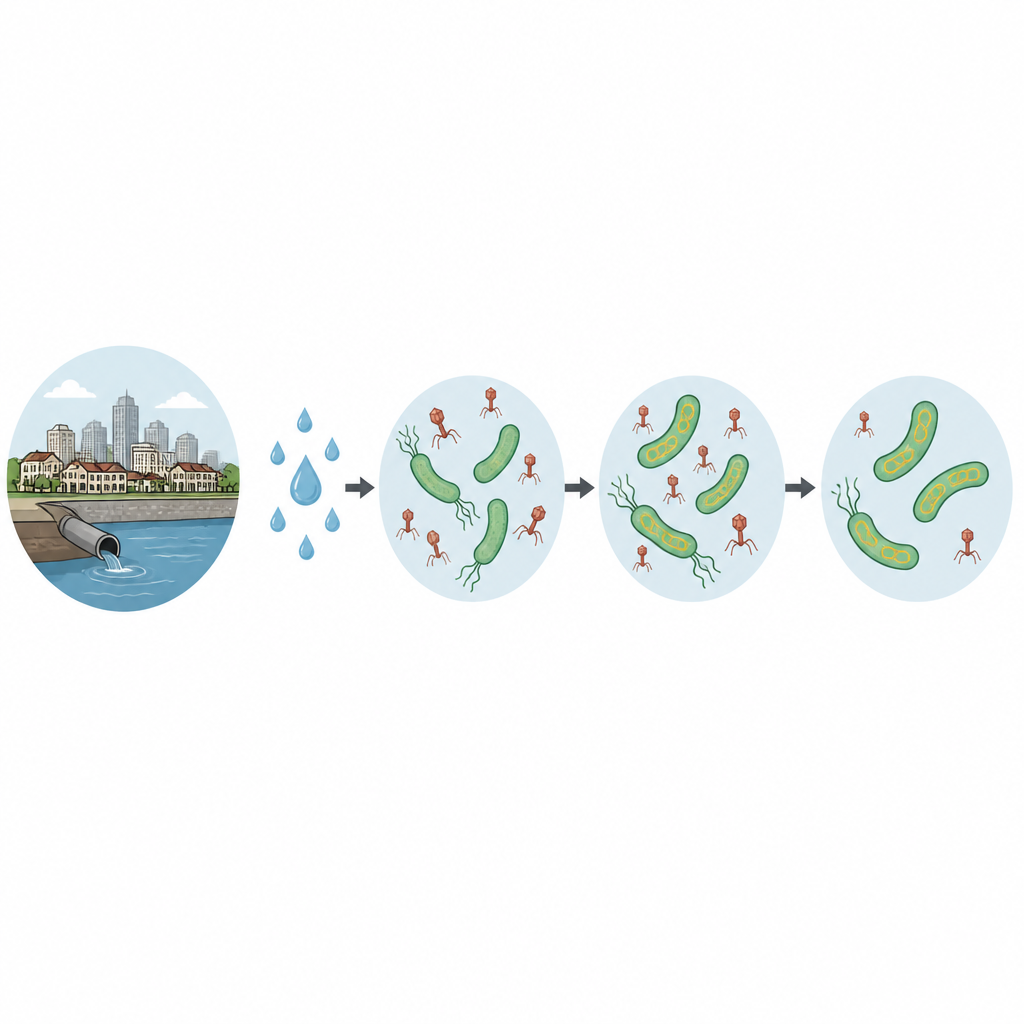
Cholera outbreaks are usually blamed on dirty water and poor sanitation, but this study shows that an unseen war between bacteria and their viruses can shape how bad an epidemic becomes. By tracking cholera patients in Bangladesh over several years, researchers watched in real time as the cholera bacterium and the virus that attacks it engaged in a genetic arms race that changed which strains spread, how long outbreaks lasted and how severe illness could be.
A Virus That Can Soften Cholera’s Blow
The disease cholera is caused by the bacterium Vibrio cholerae, which has triggered repeated global pandemics. In Bangladesh, where cholera is common, people’s stools often contain both the bacteria and a virus that preys on them, called a phage. Earlier work suggested that when this phage, named ICP1, is abundant in patients, severe disease becomes less likely because the virus cuts down the bacterial population. That raised a key question: when bacteria evolve ways to resist the virus, does that make outbreaks worse, and can we see this process as it happens in real patients rather than only in the lab?
A New Genetic Passenger Tips the Scales
To answer this, scientists closely monitored more than 500 cholera cases in Dhaka and in a coastal village between 2019 and 2023. They isolated cholera bacteria and phages from stool, sequenced their genomes and reconstructed their evolutionary history. During this period, Bangladesh experienced an unusually large cholera outbreak. The team discovered that the dominant cholera lineage in circulation picked up a small piece of extra DNA called PLE11, carried on a mobile genetic element that can hop between bacteria. Within nine months of its first appearance, strains carrying PLE11 had almost completely replaced those without it, showing that this tiny passenger gave the bacteria a strong advantage.
How Bacteria Block the Virus Without Losing Its Tools
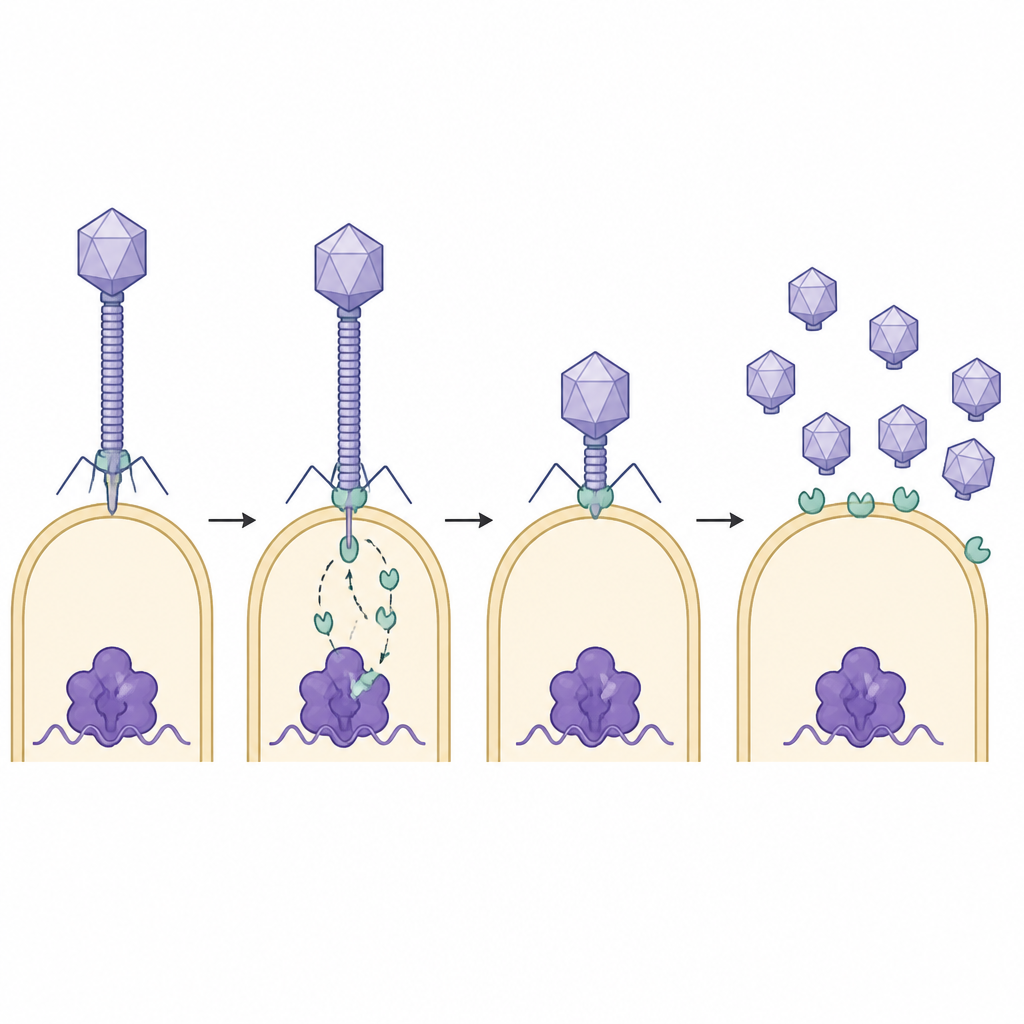
PLE11 acts like a parasitic sidecar attached to the bacterial chromosome. When the ICP1 virus attacks, PLE11 activates and hijacks parts of the virus’s machinery to spread itself to new bacterial hosts, while at the same time blocking the virus from making more infectious particles. The team showed that PLE11 was able to shut down every kind of virus from the outbreak period that they tested, even those with known tricks to cut up or bypass earlier versions of these elements. A key protein encoded by PLE11, called Rta, turned out to be the crucial defender. Rta prevents proper construction of the virus’s tail, the long tube the virus needs to inject its DNA into bacteria. Under the microscope, infections in the presence of Rta produced many viral heads with no tails, which are harmless. Yet PLE11 still manages to build working tails for its own particles by mixing virus-made and element-made tail parts into “chimeric” tails, neatly solving the problem of breaking the virus while still riding its machinery.
The Virus Strikes Back in the Wild
In laboratory evolution experiments, researchers forced virus populations to grow on PLE11-carrying bacteria and watched which mutations allowed escape. Every successful escape virus carried changes in a single structural protein that serves as a measuring rod for tail length. Guided by these results, they examined later patient samples and found that, about a year after PLE11 appeared, a new set of ICP1 viruses emerged in the clinic. These natural viruses had swapped in a different counter-defence system and carried their own set of mutations in the same tail-length protein region. When these clinical viruses were tested, they could again infect PLE11-carrying bacteria and ignore Rta, mirroring what had been predicted in the lab.
Why This Invisible Arms Race Matters
By combining patient surveillance, genome sequencing and mechanistic experiments, the study shows that viral attack can steer which cholera strains dominate in an outbreak, and that small mobile DNA elements play a central role in this struggle. The arrival of PLE11 probably helped certain cholera strains expand by shielding them from the main predatory virus, which may in turn have contributed to the size of the 2022 outbreak. Over time, the virus evolved new ways to get around this defence, restarting the cycle. For a layperson, the message is that cholera dynamics cannot be understood by looking at the bacterium alone. The outcome of an epidemic depends on a three-way interaction between people, bacteria and the viruses and mobile genes that battle inside every infected gut.
Citation: Mathur, Y., Boyd, C.M., Farnham, J.E. et al. Capturing dynamic phage–pathogen coevolution by clinical surveillance. Nature 653, 483–490 (2026). https://doi.org/10.1038/s41586-026-10136-z
Keywords: cholera, bacteriophage, Vibrio cholerae, phage resistance, mobile genetic elements