Clear Sky Science · en
Cleavage of mRNAs by a minority of pachytene piRNAs improves sperm fitness
Hidden Helpers in Sperm Development
Deep inside the testis, developing sperm cells are awash in millions of tiny RNA molecules whose purpose has puzzled biologists for years. These short pieces of genetic material, called pachytene piRNAs, appear in huge numbers just as male germ cells enter the special kind of cell division that makes sperm. Yet their sequences change rapidly between species and even among people, raising a provocative question: if they are so poorly conserved, do most of them actually matter? This study in mice shows that only a small minority of pachytene piRNAs are truly useful, but those few are crucial for producing healthy, fertile sperm—and their importance may allow the entire, largely “selfish” collection to persist through evolution.
Many Small Pieces, Few Big Effects
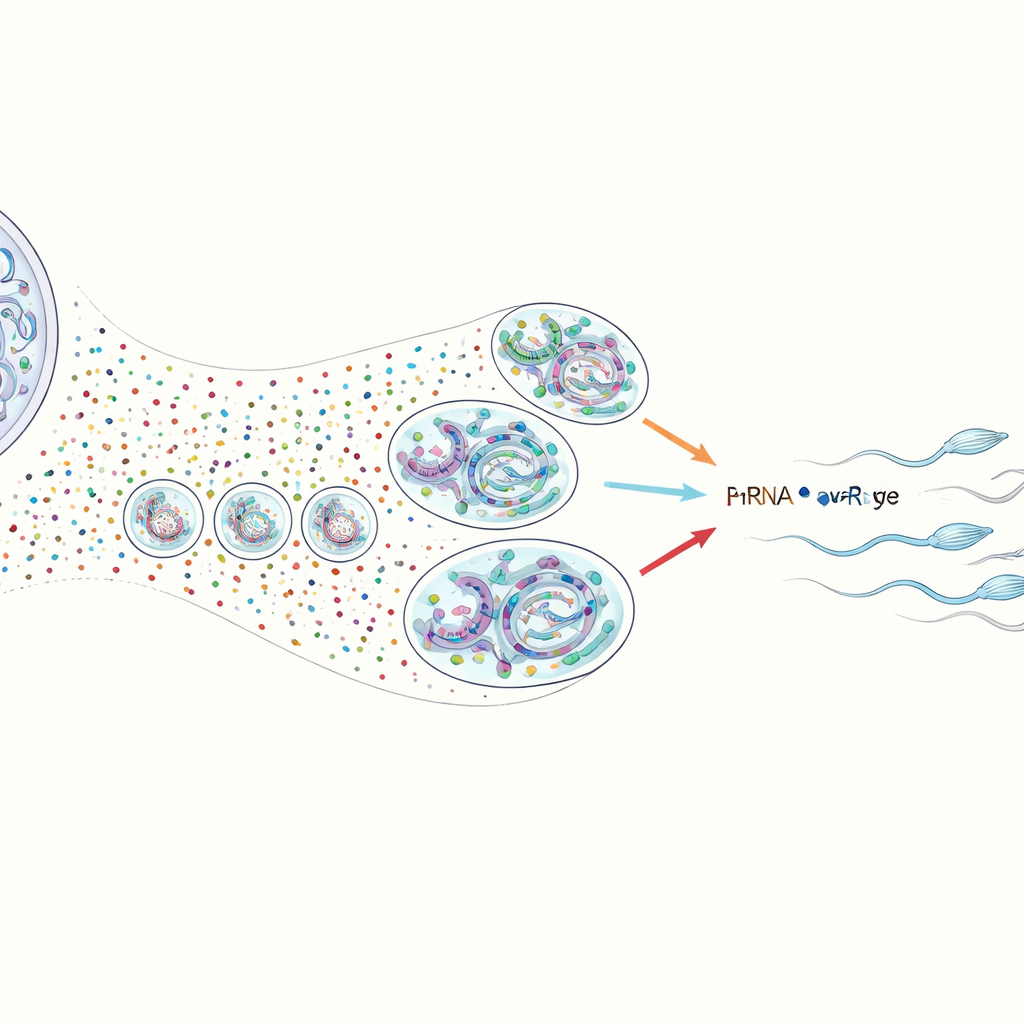
Pachytene piRNAs are short RNAs that partner with PIWI proteins to recognize and cut other RNAs inside germ cells. Earlier work showed that they come from special regions of the genome and can silence mobile genetic elements, but their overall role during sperm production remained murky. In mouse primary spermatocytes, there are roughly ten million pachytene piRNAs but only about 1.4 million messenger RNAs, suggesting a vast surplus of small RNAs relative to potential targets. The authors focused on the six largest piRNA-producing regions in the mouse genome, which together generate about 40% of all pachytene piRNAs and are found in roughly the same chromosomal positions across placental mammals, despite having very different sequences from species to species.
Testing Which Pieces Matter
To work out which piRNA regions are important, the team used genome editing to delete individual piRNA clusters, as well as combinations of two or three clusters, and then measured male fertility. Surprisingly, knocking out any one of several major clusters slightly impaired sperm movement but did not usually cause complete sterility. However, removing particular pairs or a triple combination of clusters sharply reduced litter numbers, sperm motility, and the ability of sperm to penetrate the egg’s outer coat. Under the microscope, sperm from these multi-cluster mutants often showed damaged DNA and abnormal mitochondria in the midpiece, pointing to deep problems in how sperm mature and maintain genome integrity.
How the Few Useful piRNAs Work
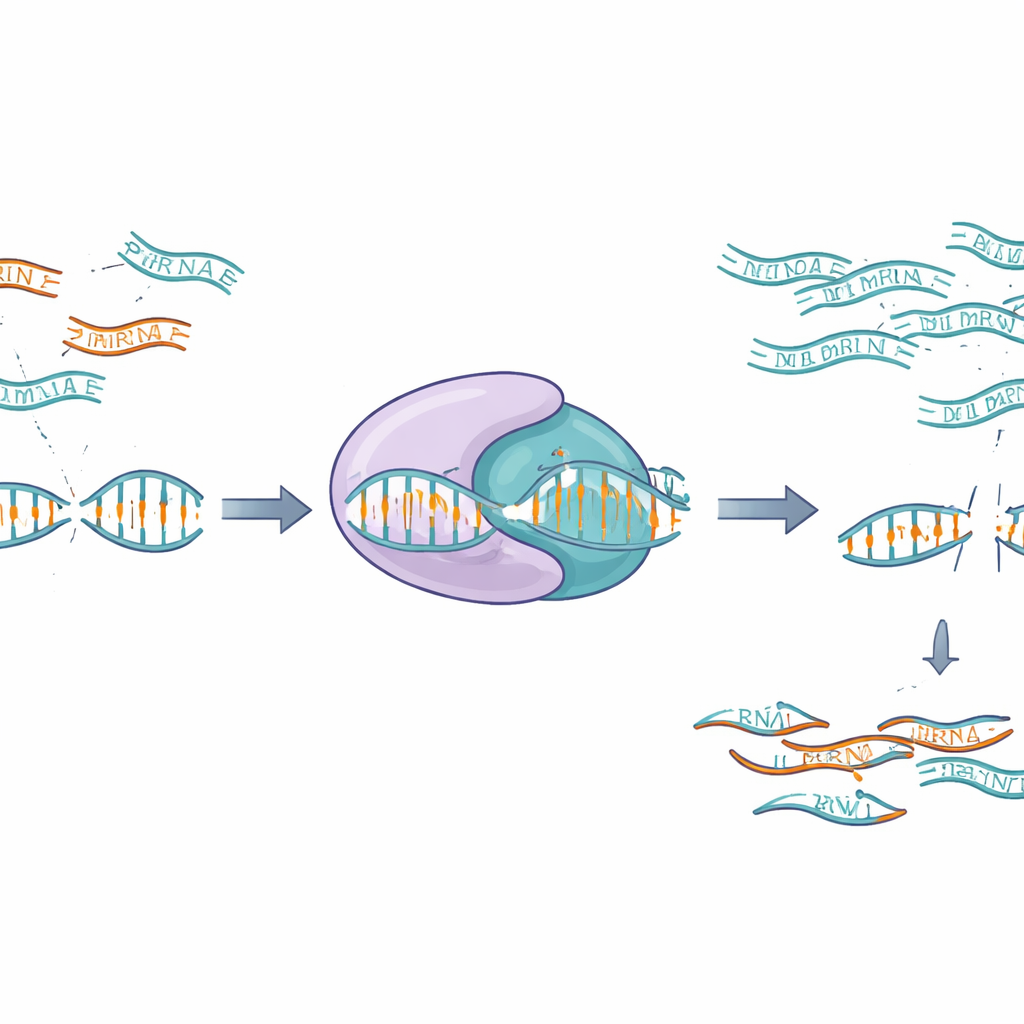
Digging into the molecular details, the researchers compared RNA levels in normal and mutant spermatocytes. They found that deleting entire piRNA clusters eliminated thousands of piRNA species, yet altered the abundance of only a handful of messenger RNAs—often fewer than two dozen per cluster. For most of these affected messages, the team could identify specific piRNAs from the missing cluster that were complementary enough to guide PIWI proteins to slice the target RNA. They directly detected the cut pieces of these mRNAs in normal cells and showed that these fragments almost vanished in the mutants, confirming that piRNA-guided cleavage was responsible. Overall, the data support a simple rule: when pachytene piRNAs regulate genes, they do so by cutting extensively matching RNAs, not by fine-tuning translation or gently nudging RNA stability in a microRNA-like fashion.
Why So Much Activity Changes So Little
Although the team could catalog more than a hundred mRNAs that are actually cut by piRNAs, only a small fraction of these showed noticeable changes in steady-state levels when specific clusters were removed. Two factors explain this. First, many piRNAs are present at modest concentrations, so only a small proportion of their target molecules is sliced at any given time. Second, the affected target genes are often highly active, with fast transcription that quickly replaces any RNAs that get cut. When the researchers compared targets whose levels did or did not rise in mutants, they found that messages with strong increases tended to be cut more efficiently and to have lower transcription rates. Importantly, several of the few strongly repressed targets encode proteins that drive cell division, DNA repair, or programmed cell death; when these proteins become too abundant, sperm DNA accumulates breaks and meiosis is thrown off balance, reducing fertility.
Selfish RNAs and Evolutionary Consequences
Because only about one percent of pachytene piRNAs are sufficiently complementary to any transcript to direct cutting, and even fewer measurably change target abundance, most piRNA sequences experience little or no selective pressure. This helps explain why pachytene piRNA sequences drift so quickly between species and even among individuals. Yet the small subset that does reduce target RNA levels improves sperm fitness, ensuring that males carrying intact piRNA clusters have a reproductive advantage. The authors propose a "piRNA addiction" model: the complex feedback system that makes piRNAs links the production of a tiny, beneficial minority to the generation of a vast, mostly neutral majority. As long as the useful few are needed for proper spermatogenesis, the genome remains "addicted" to maintaining the whole ensemble, allowing these largely selfish small RNAs to persist—and rapidly evolve—over tens of millions of years.
Citation: Cecchini, K., Zamani, M., Ajaykumar, N. et al. Cleavage of mRNAs by a minority of pachytene piRNAs improves sperm fitness. Nature 652, 508–516 (2026). https://doi.org/10.1038/s41586-026-10102-9
Keywords: spermatogenesis, small RNA, gene regulation, male fertility, evolution