Clear Sky Science · en
Cholinergic modulation of dopamine release drives effortful behaviour
Why working hard can make rewards feel better
Most of us know the strange satisfaction of enjoying something more when we have really worked for it, whether it is a home-cooked meal after a long day or a personal project finished late at night. This study asks how the brain turns hard work into extra pleasure and motivation. By studying mice, the researchers uncover a chemical conversation deep in the brain that makes rewards earned through effort feel especially valuable, helping animals keep going even when the task is demanding.
A closer look at the brain’s reward hub
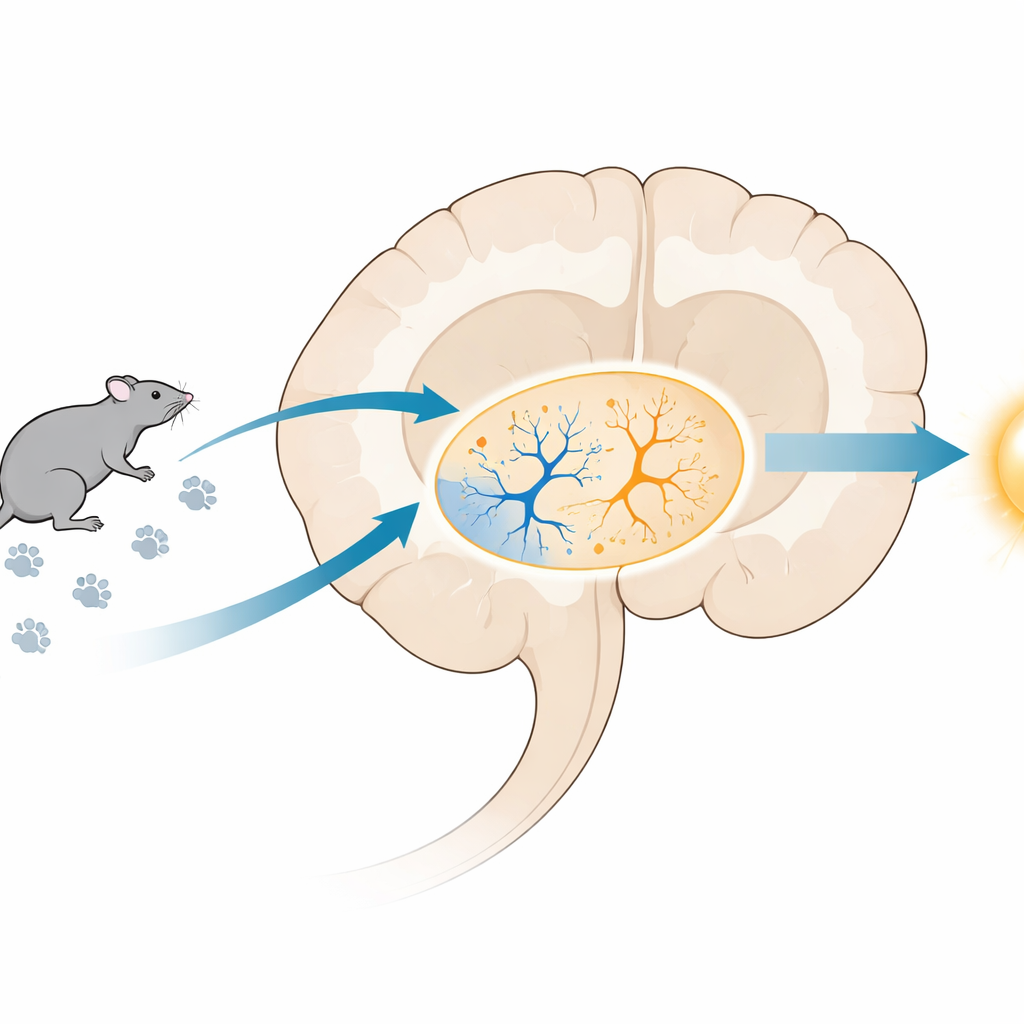
The work focuses on the nucleus accumbens, a small region often called the brain’s reward hub. When a reward arrives, this area receives a burst of dopamine, a signaling chemical linked to learning and motivation. Earlier research showed that this dopamine surge is not fixed: it grows when rewards are larger or when animals have to work harder. The new question was why. Does the change come mainly from distant dopamine-producing cells deep in the midbrain, or from local switches within the nucleus accumbens itself?
Testing how effort changes dopamine
To tease this apart, the team trained mice to nose-poke for either drops of sugary water or direct activation of their dopamine fibers with light. The cost of each reward was varied in blocks, from a single poke to dozens of pokes. Sensitive optical sensors recorded dopamine levels in the nucleus accumbens as the mice worked. In both the natural sugar task and the artificial light-reward task, the same pattern appeared: higher-effort rewards produced bigger dopamine bursts at the moment of reward, even though the reward itself was unchanged. Mathematical models showed that this signal was best explained by how much effort the mice had just invested, rather than by simple timing differences between rewards.
Local helpers: acetylcholine steps in
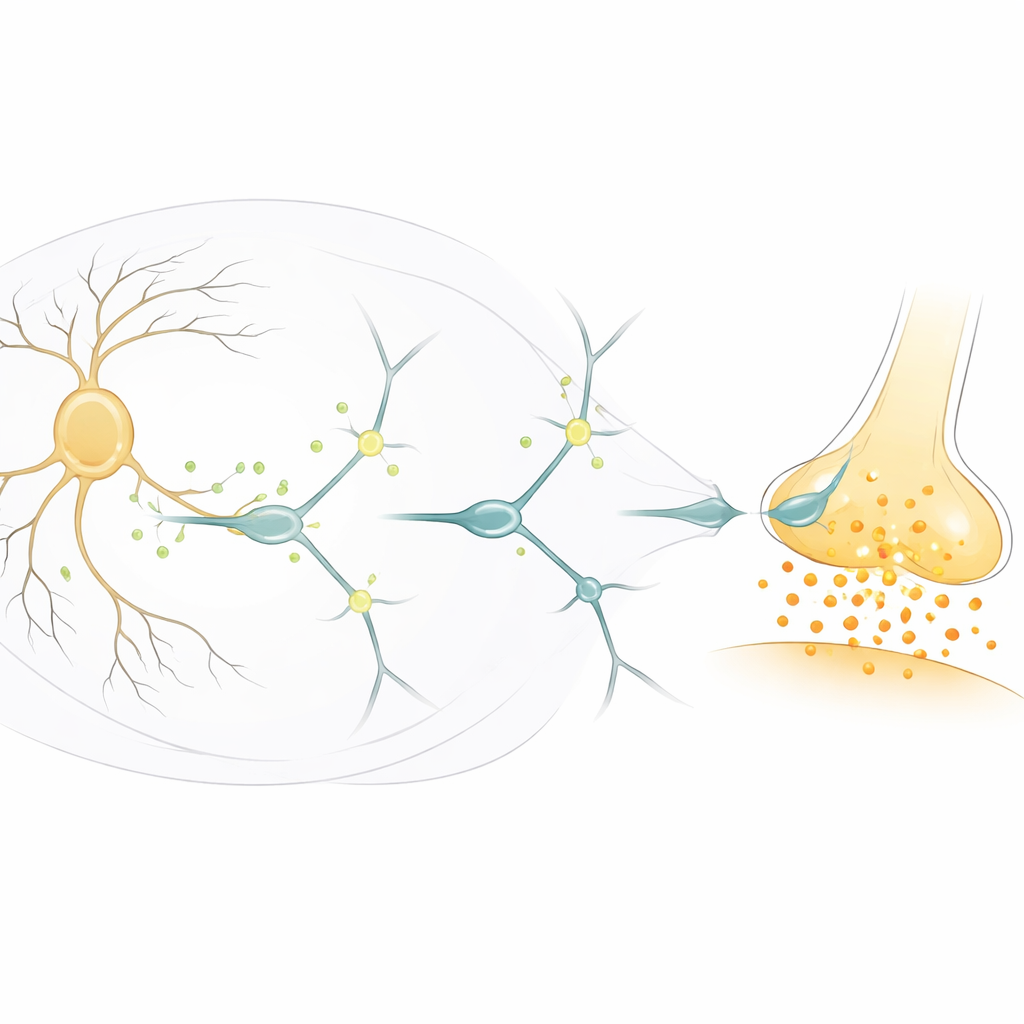
Surprisingly, turning down the activity of dopamine cells in the midbrain did not erase this effort-based boost in dopamine release. That led the researchers to suspect that local “helper” cells in the nucleus accumbens might be critical. They focused on cholinergic interneurons, cells that release another messenger, acetylcholine. By infusing targeted drugs into the nucleus accumbens and by recording brain activity slice by slice, they found that acetylcholine can directly excite dopamine fibers through special docking sites called nicotinic receptors. Blocking these receptors removed the extra dopamine seen after high-effort rewards while leaving basic dopamine release at low effort largely intact.
Timing the chemical conversation
Next, the team measured acetylcholine release itself during the effortful task. They found that, around the time of reward, acetylcholine in the nucleus accumbens shows a complex wave: a small rise just before reward, a sharp spike, a brief dip, and then a second peak. Importantly, these signals grew stronger as the work requirement increased, even when reward size stayed the same. Comparing timing revealed that the acetylcholine spike reliably occurred a few hundred milliseconds before the dopamine surge, positioning it to act as a trigger. When the researchers silenced cholinergic interneurons genetically or shut them down with light precisely during reward, the effort-related amplification of dopamine largely disappeared.
From brain chemistry to behavior
Finally, the study linked this microscopic chemistry to real behavior. When nicotinic receptors were blocked directly in the nucleus accumbens, mice became less willing to keep working as the task grew harder. They earned fewer rewards and were slower to start new trials at high effort levels, while their behavior at very low effort was almost unchanged. This suggests that acetylcholine’s ability to boost dopamine during hard-won rewards helps sustain persistence when costs mount, without simply turning off normal reward enjoyment.
What this means for everyday motivation
In plain terms, the findings reveal a built-in brain mechanism that makes “hard-earned” rewards feel especially good. Local acetylcholine signals in the nucleus accumbens temporarily turbocharge dopamine release when a reward follows sustained effort, encouraging animals—and likely humans—to keep striving in tough conditions. The same nicotinic receptors involved are also key targets of nicotine, hinting that the extra value we place on hard work may share machinery with tobacco addiction. Understanding this effort-sensitive reward circuit could eventually inform treatments for disorders of motivation, from depression and apathy to substance use, by showing how to adjust not just how much dopamine is released, but when and in what context it matters most.
Citation: Touponse, G.C., Pomrenze, M.B., Yassine, T. et al. Cholinergic modulation of dopamine release drives effortful behaviour. Nature 651, 1020–1029 (2026). https://doi.org/10.1038/s41586-025-10046-6
Keywords: effortful behavior, dopamine, acetylcholine, nucleus accumbens, motivation