Clear Sky Science · en
Streptomyces produce a diphtheria toxin-like exotoxin that targets insects
Hidden weapons in friendly soil bacteria
Many of the antibiotics and medicines that protect us come from Streptomyces, a group of soil bacteria long viewed as helpful partners. This study reveals that some of these familiar microbes also carry a surprising secret: they make a powerful protein toxin that selectively kills insects, allowing the bacteria to feast on the remains. The work uncovers a new side of a well known microbe and hints at future ways to control insect pests by borrowing nature’s own tools. 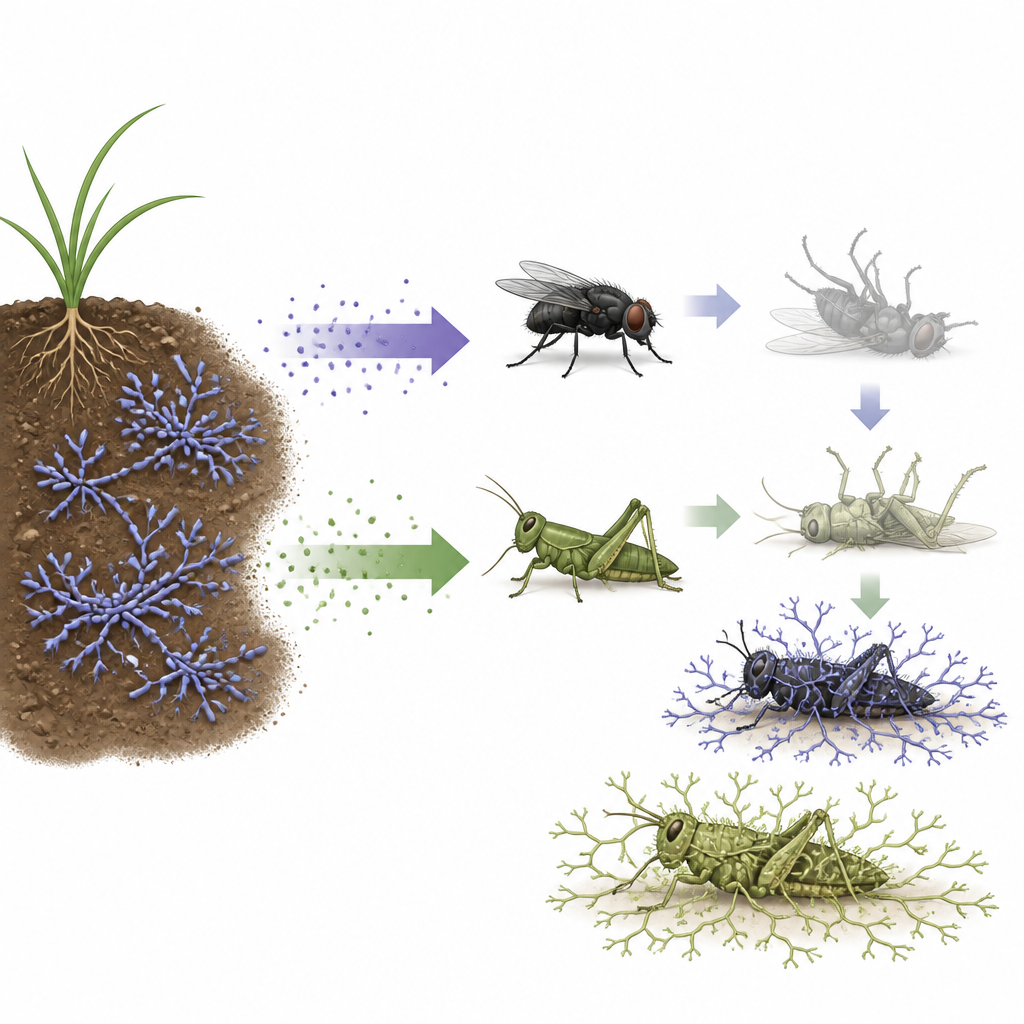
An ancient alliance between insects and microbes
Streptomyces have shared the land with insects for more than 400 million years. Earlier research focused on their friendly roles, such as helping insects digest tough plant material or producing antibiotics that defend insect nests and food. Yet many insects live and feed in the same soil that Streptomyces inhabit, raising the question of whether some strains evolved weapons aimed specifically at these six legged neighbors. Until now, only broad acting chemical poisons were known, and no protein toxin from Streptomyces had been shown to target insects in particular.
Finding a cousin of diphtheria toxin in the dirt
The researchers began with a computer search across many bacterial genomes for proteins that resemble diphtheria toxin, the notorious factor that once caused widespread deadly throat infections in children. They uncovered a family of related proteins in a tight knit branch of Streptomyces and named them Streptomyces antiquus insecticidal proteins, or SAIPs. Genetic and evolutionary analyses showed that the saip gene has been passed down within this group for more than 100 million years, rather than recently borrowed from another microbe. The gene’s DNA sequence appears as stable and well conserved as the core housekeeping genes that Streptomyces need for basic survival, suggesting that SAIP provides an important long term advantage.
How the toxin locks onto insect cells
Using purified SAIP, the team tested its effects on cultured cells. Insect cells from fruit flies and mosquitoes died at trillionths of a gram per milliliter, while human and mouse cells remained healthy at doses a thousand times higher. Fruit flies injected with tiny amounts of SAIP quickly became paralyzed and most died within a couple of days; feeding flies SAIP mixed into their food also caused gradual paralysis and death. Structural work showed that SAIP’s active portion closely mimics that of diphtheria toxin and shuts down protein production inside cells in the same way. To explain why insects are sensitive but mammals are not, the scientists used a CRISPR based screen in fly cells and discovered the key: a surface protein called Flower serves as the toxin’s docking site. When the flower gene was disabled, insect cells became resistant; when insect Flower was added to human cells, those cells suddenly became vulnerable. Flower like proteins from many insects worked, whereas versions from mammals, some moths, and a worm did not, showing how small differences in this receptor shape species’ susceptibility.
From paralysis to a microbial meal
SAIP’s effects reach beyond simple cell death. In fruit flies, the Flower receptor is abundant in neurons and immune cells. Flies exposed to the toxin lost activity in taste neurons that normally respond to sugar, and their circulating immune cells shrank and died unless Flower was reduced by genetic methods. Low doses of SAIP alone did not kill the flies, but when these pre exposed animals later encountered harmless Escherichia coli bacteria, many could no longer clear the infection and died, showing that the toxin quietly weakens the insect’s defenses. The team then examined whole Streptomyces strains that naturally carry saip. When spores of these strains were injected into flies, they caused rapid death, while closely related strains lacking saip did not. On dead grasshoppers, SAIP positive Streptomyces spread across the exoskeleton, broke down the body within about a week, and produced red antibiotic pigments, demonstrating how the bacteria convert an insect carcass into both food and chemical weapons against other microbes. 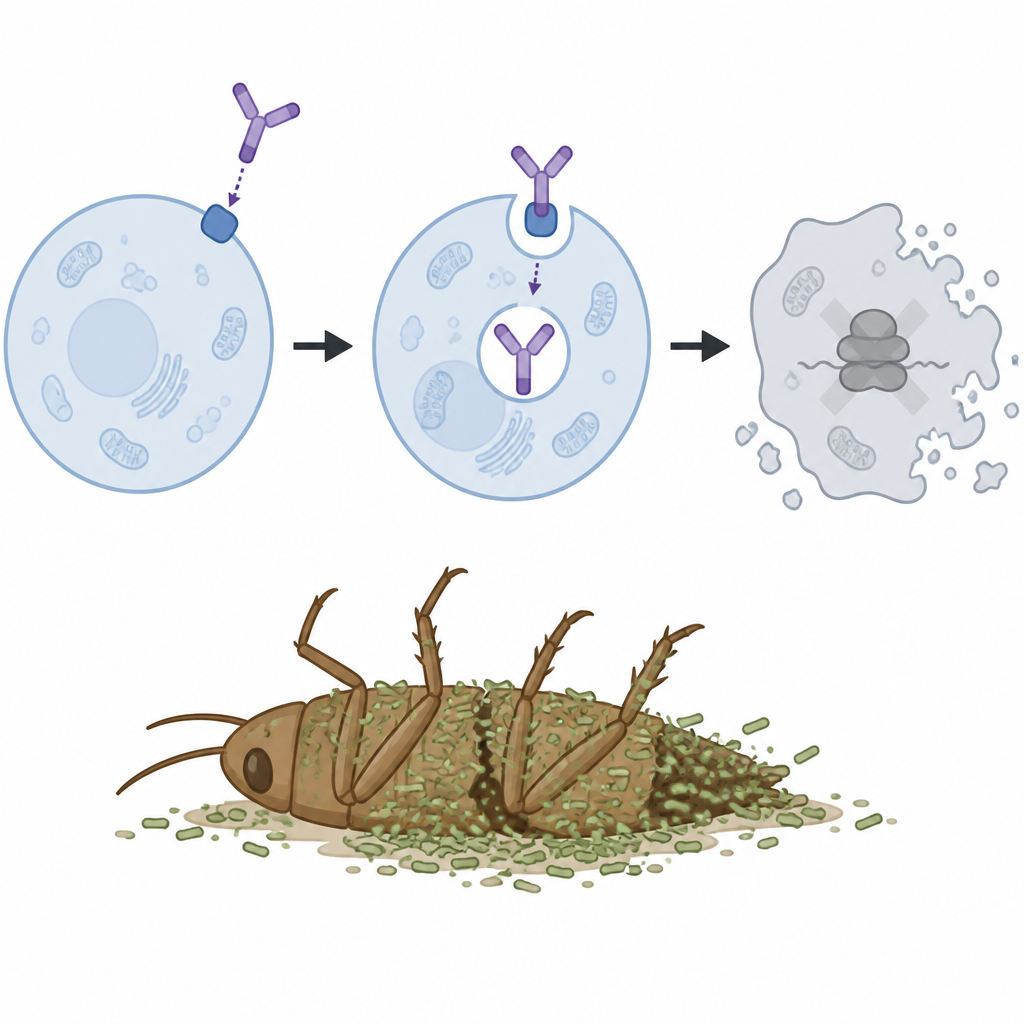
Why this discovery matters for people and ecosystems
This study reveals that some soil bacteria famous for giving us antibiotics also wield a highly specialized protein toxin that singles out insects. SAIP attaches to an insect specific version of the Flower protein, slips inside cells, shuts down protein production, and ultimately helps Streptomyces kill insects and recycle their bodies. For a general reader, the key takeaway is that microbe insect relationships are far richer than simple friendship or harm: the same bacterial lineage can protect some hosts while preying on others. In practical terms, SAIP represents a new kind of insect targeted tool that might one day inspire pest control strategies different from today’s chemical sprays, while also deepening our understanding of how long term coevolution between microbes and animals shapes life in soils worldwide.
Citation: Xu, Y., Stubbendieck, R.M., Viswanatha, R. et al. Streptomyces produce a diphtheria toxin-like exotoxin that targets insects. Nat Microbiol 11, 1271–1285 (2026). https://doi.org/10.1038/s41564-026-02315-5
Keywords: Streptomyces, insect toxin, Flower receptor, microbe insect interactions, biological pest control