Clear Sky Science · en
A penicillin-binding protein inhibitor series to target drug-resistant Neisseria gonorrhoeae
Why drug resistant gonorrhoea matters
Gonorrhoea is one of the most common sexually transmitted infections on the planet, and it is becoming harder to treat. The usual injectable antibiotic, ceftriaxone, is starting to fail against some strains that have evolved defenses in a key bacterial protein. This article describes how scientists designed a new experimental drug, called boro PBPi 21 (VNRX 14079), that can kill these highly resistant gonorrhoea bacteria in the lab and in mice, offering a possible future replacement for ceftriaxone.

How the bacteria outsmart today’s drugs
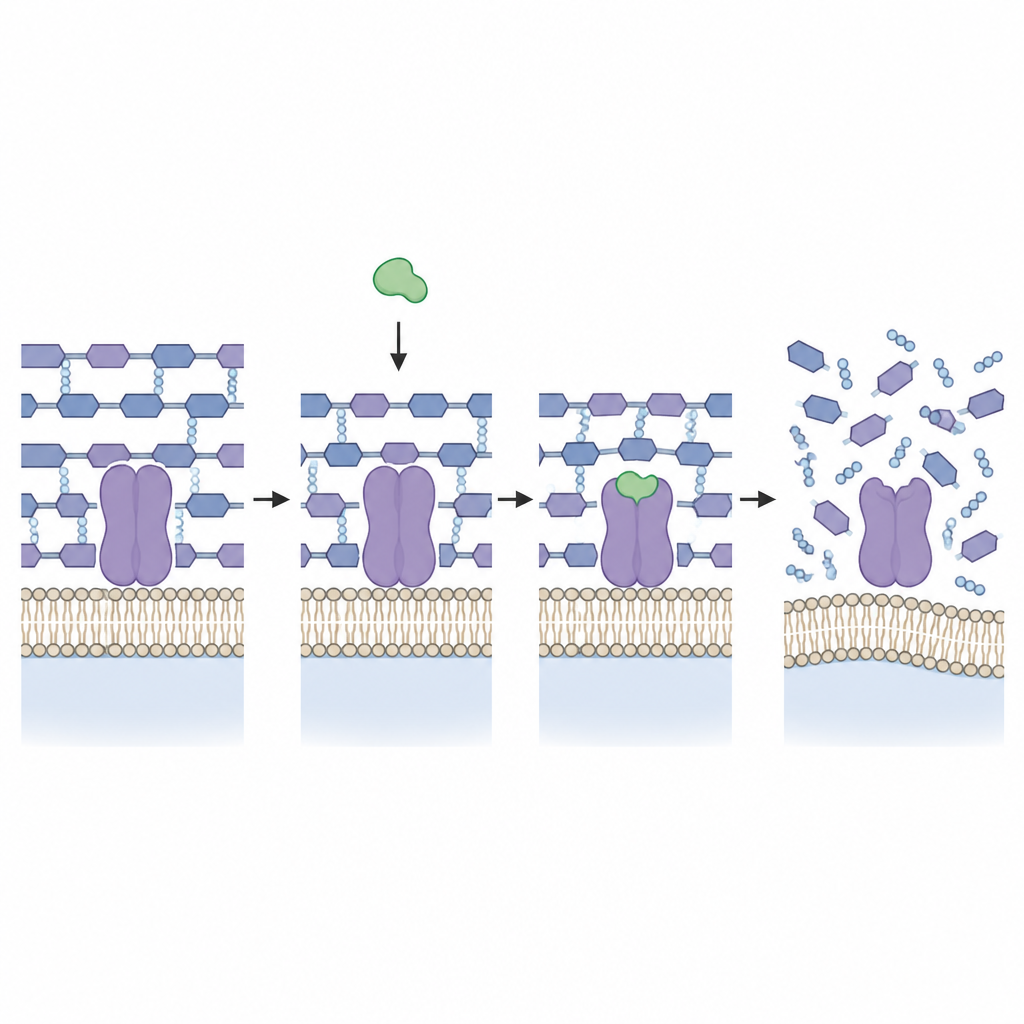
Neisseria gonorrhoeae, the bacterium that causes gonorrhoea, builds its cell wall using a protein known as penicillin binding protein 2, or PBP2. Ceftriaxone works by locking onto this protein and shutting down cell wall construction. Many modern strains carry altered versions of the gene penA, which encodes PBP2. Some of these are “mosaic” genes stitched together from several related species, subtly reshaping the protein so that ceftriaxone binds poorly. These mosaic PBP2 variants, particularly one known as penA 60 that has spread worldwide since 2015, are a main driver of ceftriaxone resistance and raise fears of untreatable gonorrhoea.
Designing a new kind of blocker
The research team set out to make non beta lactam molecules that still home in on PBP2 but avoid the weaknesses of older drugs. They started from a boron containing chemical scaffold already used in experimental beta lactamase blockers and modified its side chains to improve activity against gonorrhoea. Step by step, they found that adding a ureido group, introducing negative charges such as benzoate and then phosphonate groups, and tuning the pattern of fluorine atoms all boosted binding to both normal and mosaic PBP2. This guided evolution of the molecules led to compound 21, which showed strong ability to stick to resistant PBP2 and stop bacterial growth at very low concentrations, often beating ceftriaxone against hard to treat strains.
Seeing the drug lock onto its target
To understand why the new compounds work so well, the scientists solved high resolution crystal structures of several of them bound to mosaic PBP2. The pictures revealed that the boron atom in the drug forms a covalent link with a key serine residue in the active site of PBP2. Other parts of the molecule reach out to nearby amino acids and help pull a flexible loop of the protein, called the β3 β4 loop, inward toward the active site. In resistant PBP2 this loop tends to stay in an “out” position that slows ceftriaxone. By drawing the loop in, the new inhibitors appear to overcome this conformational barrier and achieve tight, stable binding even in resistant forms of the protein.
Testing in animals and safety checks
The team then moved beyond test tubes. In mice, earlier versions of the compound and the final lead, 21, reached useful levels in the blood after injection and were well tolerated at high doses. In a vaginal infection model using a ceftriaxone resistant strain called H041, single day dosing with 21 cleared infection in most or all animals, depending on the dose schedule, with no obvious side effects. Across panels of clinical gonorrhoea isolates from around the world, 21 generally matched or outperformed ceftriaxone and a newer antibiotic, zoliflodacin, particularly against mosaic PBP2 strains. The drug also showed low rates of spontaneous resistance, little effect on human enzymes and heart channels in vitro, and good stability in blood and liver cells.
What this could mean for future treatment
While much work remains before any new medicine reaches the clinic, this study shows that it is possible to outmaneuver drug resistant gonorrhoea by targeting PBP2 with a fresh chemical approach. Compound 21 combines potent activity against current resistant strains with promising safety, dosing and injection properties that fit outpatient treatment needs. If further testing confirms these findings in humans, this boron based inhibitor could one day provide doctors with a much needed new option when ceftriaxone no longer works.
Citation: Uehara, T., Zulli, A.L., Miller, B. et al. A penicillin-binding protein inhibitor series to target drug-resistant Neisseria gonorrhoeae. Nat Microbiol 11, 1348–1360 (2026). https://doi.org/10.1038/s41564-026-02309-3
Keywords: gonorrhoea, antibiotic resistance, Neisseria gonorrhoeae, ceftriaxone alternative, PBP2 inhibitor