Clear Sky Science · en
Clostridia from preterm infants metabolize human milk oligosaccharides to suppress pathobionts and modulate intestinal function in organoids
Milk Sugars and Tiny Partners
For babies born too soon, the first weeks of life are a delicate balancing act, especially in the gut. Preterm infants are at high risk of a dangerous bowel disease called necrotizing enterocolitis, and doctors know that breast milk helps protect against it. This study asks a surprising question with big implications for these fragile babies: beyond the well-known “good” bacteria, could some ordinarily overlooked gut microbes actually turn breast milk sugars into medicine-like compounds that calm inflammation and keep harmful bugs in check?
Special Sugars in Human Milk
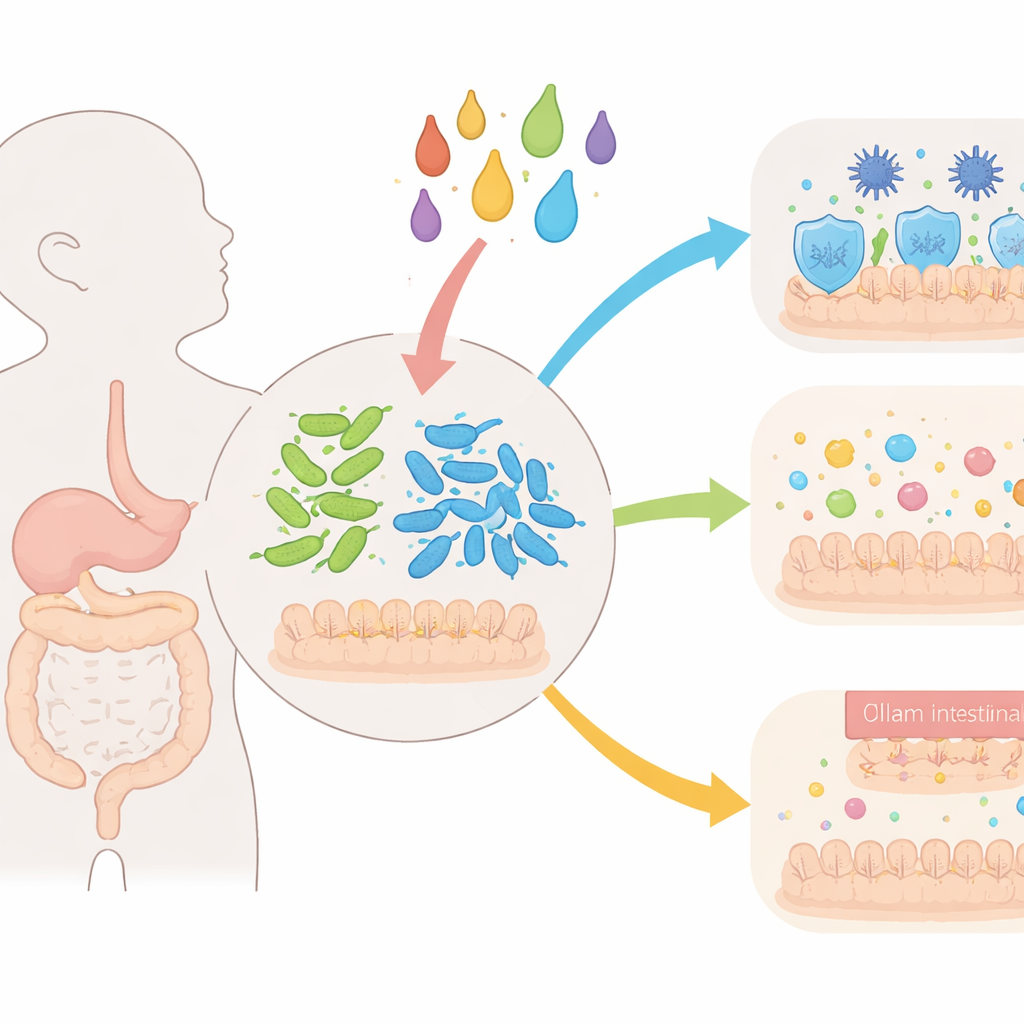
Human milk is rich in complex sugars called human milk oligosaccharides, or HMOs, which babies themselves cannot digest. Instead, these sugars are food for selected gut microbes, shaping which bacteria thrive in the infant intestine. Until now, most attention has focused on bifidobacteria, classic “friendly” microbes often added to probiotic products. The authors studied stool samples from preterm infants and screened 29 bacterial isolates to see which could grow using different HMOs as their only sugar source. They found that not only bifidobacteria, but also several Clostridium species common in preterm babies, could metabolize these milk sugars, including a particular Clostridium perfringens strain that lacks a major toxin gene called pfoA.
Unexpected Helpers in the Gut
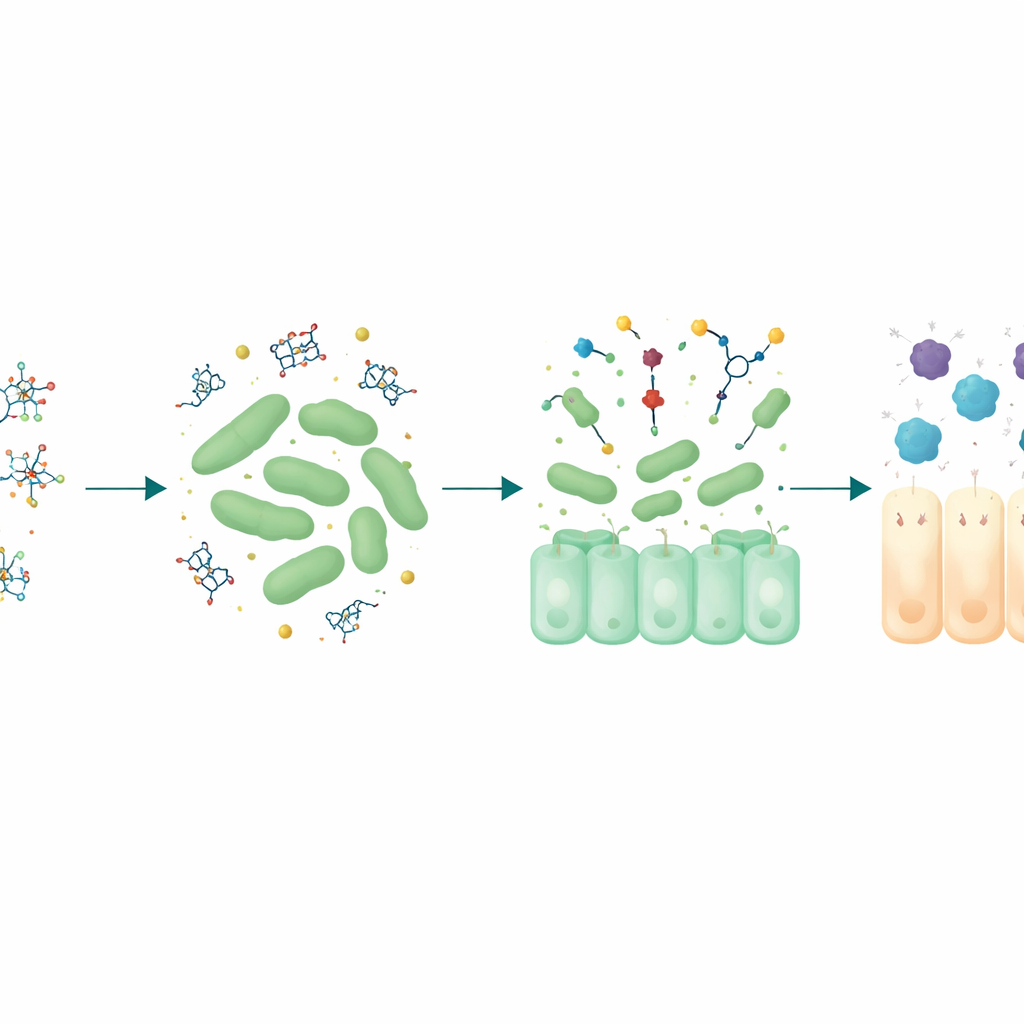
Clostridium perfringens is usually viewed with suspicion because some strains can damage the intestine. However, the team showed that pfoA-negative strains from preterm infants behaved very differently. Using genome analysis, RNA sequencing and protein profiling, they mapped how these bacteria break down HMOs such as DSLNT, a milk sugar previously linked to protection against necrotizing enterocolitis. These Clostridium strains used sets of enzymes distinct from bifidobacteria, converting HMOs into simpler fragments and completely digesting several of the sugars tested. In the process, they generated intermediate sugars that other beneficial bacteria could use, hinting at cooperative “cross-feeding” within the infant gut ecosystem.
Milk Sugars Turned into Protective Molecules
The researchers then looked at what chemical products these bacteria release after feeding on HMOs. Compared with bifidobacteria, Clostridium species—especially the pfoA-negative C. perfringens—produced higher amounts and a wider variety of potentially beneficial metabolites. These included short-chain fatty acids such as butyrate and propionate, which can fuel intestinal cells, strengthen the gut barrier and influence immune responses, as well as tryptophan-derived compounds and polyamines that are known to support barrier function and dampen inflammation. Cell-free liquid taken from these cultures strongly inhibited the growth of common preterm gut pathobionts such as Klebsiella and Escherichia coli, while at the same time promoting the growth of naturally occurring infant bifidobacteria.
Testing Effects on a Miniature Preterm Gut
To see how these microbial products affect human tissue, the team used intestinal organoids—mini-gut structures grown from preterm infant cells and formed into thin monolayers. When exposed to inflammatory triggers, these monolayers release cytokines, signalling molecules associated with gut inflammation. Adding supernatant from the pfoA-negative C. perfringens strain greatly reduced inflammatory cytokine secretion without harming the cells or relying solely on acidity, and even improved mitochondrial energy output in the intestinal cells. In contrast, supernatant from a toxin-producing pfoA-positive C. perfringens strain reduced cell viability and impaired energy metabolism. When live bacteria were added, the non-toxic strain strengthened barrier integrity and, when present first, helped protect the organoids from damage later caused by the toxic strain.
What This Means for Preterm Babies
To a lay observer, Clostridium perfringens may sound like a germ to avoid at all costs. This work shows that the story is more nuanced: the presence or absence of a single toxin gene can separate harmful strains from those that may quietly support gut health. In preterm infants, pfoA-negative strains can use human milk sugars to generate a cocktail of small molecules that feed beneficial microbes, suppress troublesome bacteria and calm the inflamed immature intestine. The findings suggest that carefully selected, non-toxigenic C. perfringens strains might one day join bifidobacteria as members of targeted microbial therapies for vulnerable newborns—while also warning that giving extra HMOs to infants carrying dangerous, toxin-producing strains could have unintended consequences.
Citation: Chapman, J.A., Masi, A.C., Beck, L.C. et al. Clostridia from preterm infants metabolize human milk oligosaccharides to suppress pathobionts and modulate intestinal function in organoids. Nat Microbiol 11, 940–959 (2026). https://doi.org/10.1038/s41564-026-02297-4
Keywords: preterm infant gut, human milk oligosaccharides, Clostridium perfringens, necrotizing enterocolitis, infant microbiome