Clear Sky Science · en
A systematic review and network meta-analysis of randomized controlled trials of well-being-focused interventions
Why Feeling Good Matters for Everyone
In a world facing chronic illness, social divides and climate anxiety, many people are asking a simple question: what actually works to help us feel and function better in everyday life? This study pulls together results from 183 experiments involving more than 22,000 adults to compare popular ways of boosting well-being—from mindfulness and yoga to exercise and time in nature. By looking across this large body of research, the authors show which approaches are most promising, how strong their effects are and where the evidence is still shaky, offering a big-picture guide for individuals, communities and policymakers seeking practical paths to a healthier, happier society. 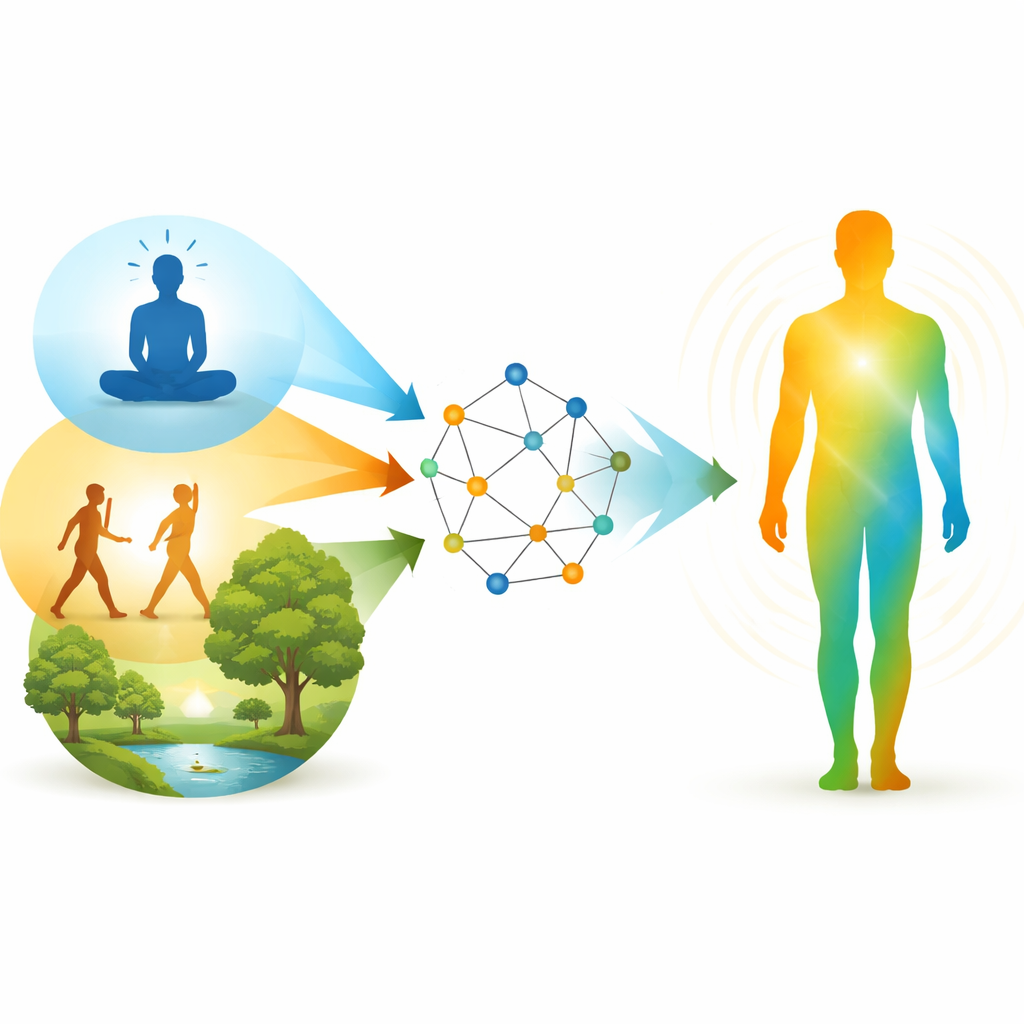
Different Paths to Feeling Better
The researchers focused on adults from the general population, rather than people receiving treatment for diagnosed disorders. This makes the findings especially relevant for everyday prevention and promotion, not just therapy. They grouped interventions into broad types: psychological programs such as mindfulness, compassion training and positive psychology exercises; physical approaches like structured exercise and yoga; activities rooted in the natural world; and combinations that deliberately blend movement with psychological skills. All were compared against control conditions in which people received no dedicated well-being program or simply waited on a list.
Weighing the Evidence Like a Map
Instead of comparing one approach at a time, the team used a method called network meta-analysis, which allows many interventions to be compared within a single statistical “map.” This technique combines both direct head-to-head trials and indirect links—for example, if mindfulness and exercise have each been tested against doing nothing, they can also be compared with each other. The authors carefully checked that studies were similar enough to be pooled, rated each trial’s risk of bias, and ran multiple sensitivity tests to see whether the overall picture held up when weaker studies, small samples or specific outcome measures were removed.
What Works Best in Practice
Across the network, most interventions improved well-being compared with doing nothing, often with small-to-moderate benefits that are meaningful at a population level. The strongest effects appeared when physical activity was deliberately combined with psychological strategies—such as walking plus guided reflection or positive coaching—though this result rests on just three studies and needs confirmation. Mindfulness programs, compassion-based training, single positive psychology exercises, yoga and straightforward exercise all showed similar, moderate gains. In plain terms, cultivating awareness and kindness, building habits like gratitude, moving your body regularly and engaging in mind–body practices tend to help people feel better, and no one psychological approach clearly outperforms the others. 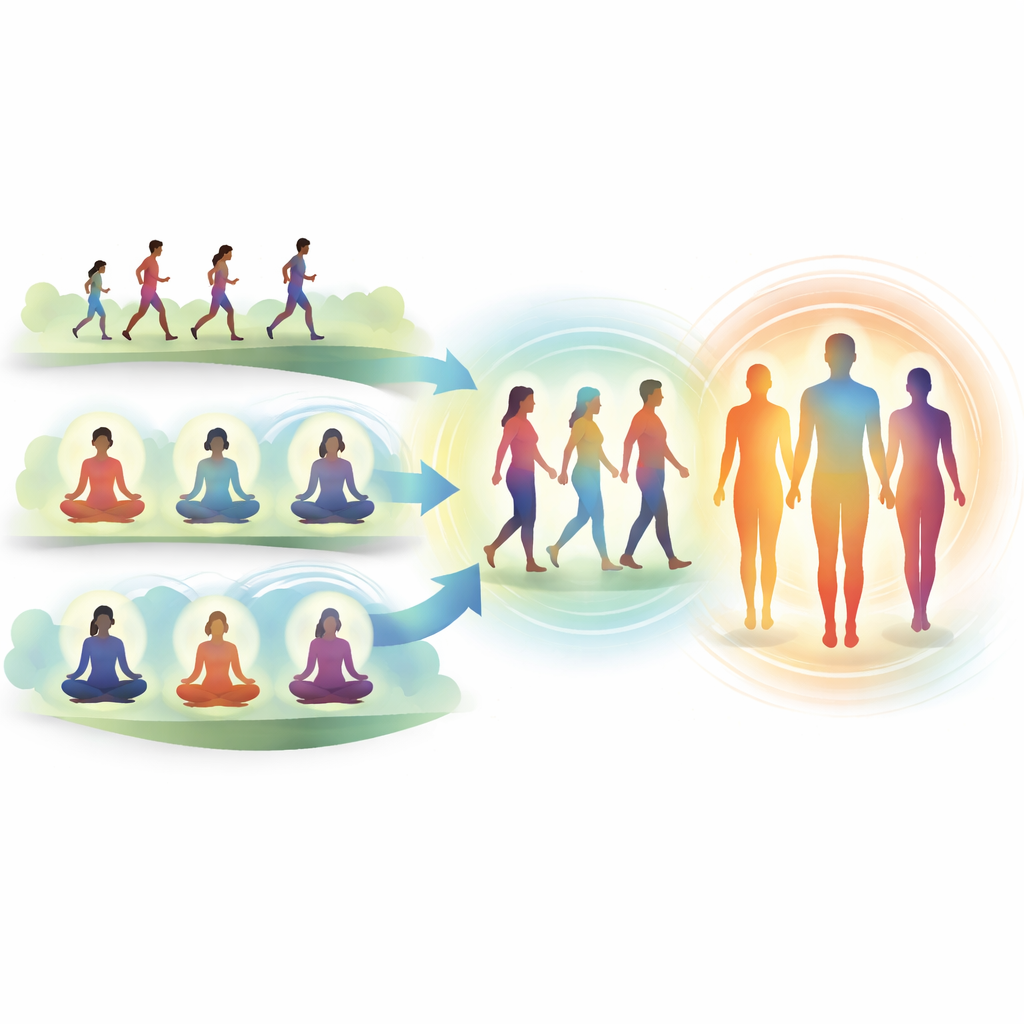
Surprises and Gaps in the Picture
Some findings were less clear-cut. Nature-based programs, for example, did not reliably beat control conditions, even though many other studies link green spaces to better mental health. Here, the authors point out that the trials they could include were small, very mixed in design and often did not actively nurture a sense of connection with nature—they simply took place outdoors. Approaches drawn from acceptance and commitment therapy showed promising but less stable results, heavily influenced by a few small, methodologically weak studies. Overall, many trials reported only short-term outcomes, and a large share had moderate to high risk of bias, underscoring the need for better-quality, longer-term research.
What This Means for Everyday Life
For non-specialists, the core message is reassuring: there are several accessible, evidence-supported ways to improve well-being, and people can choose options that fit their preferences and circumstances. Regular movement, structured programs in mindfulness or compassion, simple positive exercises and yoga all tend to nudge well-being upward in similar ways, and combining movement with psychological skills may offer extra benefits. At the same time, the field still needs more rigorous, inclusive and creatively designed trials—especially those that integrate mind, body, community and the natural world—to guide policies that make effective well-being practices available at scale.
Citation: Wilkie, L., Fisher, Z., Geidel, A. et al. A systematic review and network meta-analysis of randomized controlled trials of well-being-focused interventions. Nat Hum Behav 10, 715–726 (2026). https://doi.org/10.1038/s41562-025-02369-1
Keywords: well-being interventions, mindfulness and yoga, exercise and mental health, positive psychology, network meta-analysis