Clear Sky Science · en
Evolution of a distinct chromatin regulatory landscape in brown algae
Why seaweeds hold clues to our own genetic control
Brown seaweeds line rocky coasts around the world, building underwater forests that shelter fish, invertebrates and even influence the global carbon cycle. Yet these familiar shoreline plants belong to a branch of life very distant from animals and land plants. This paper explores how brown algae control their genes using chromatin—the packaging of DNA around proteins—and shows that they have evolved a surprisingly different set of molecular switches. By tracing how these switches changed over hundreds of millions of years, the authors reveal that there is more than one way to build complex multicellular life.
A different toolkit for packaging DNA
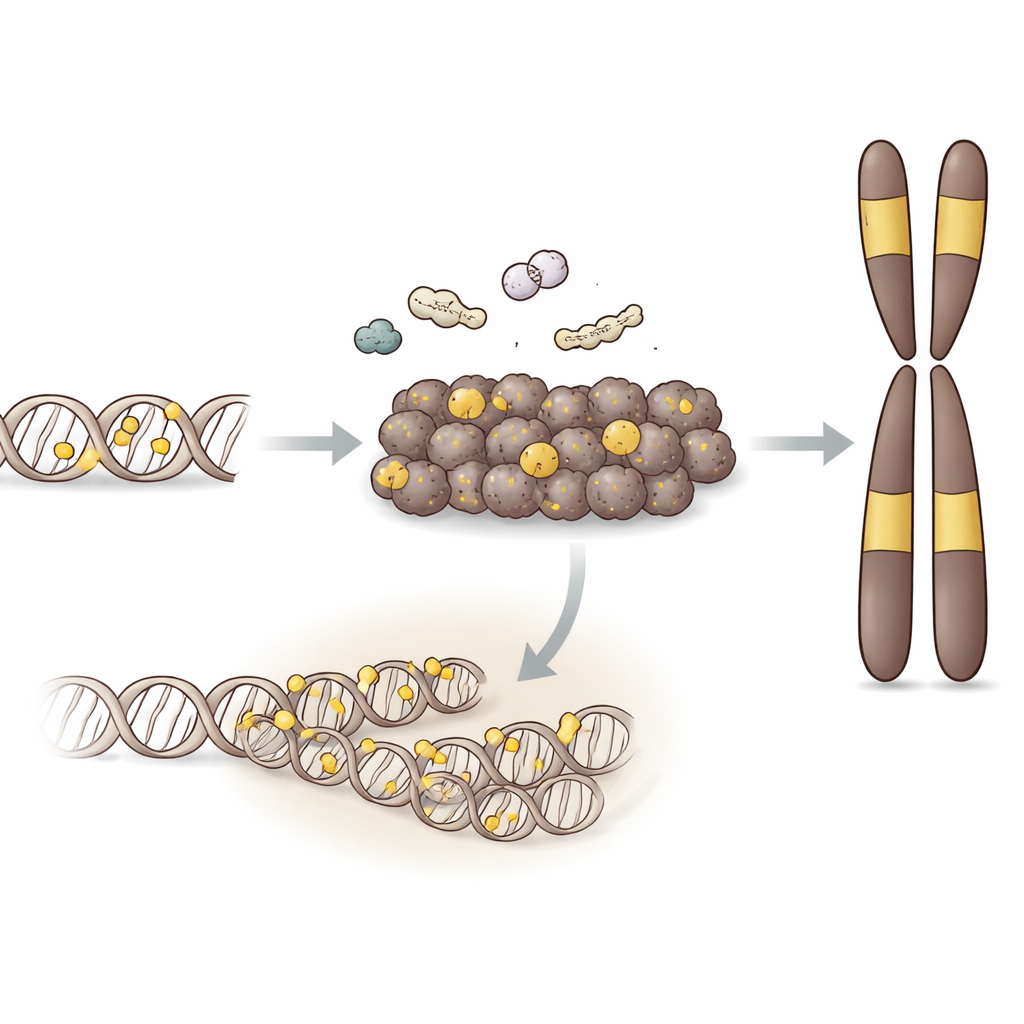
In most animals and plants, key systems for keeping genes off—including chemical tags on DNA itself and on certain spots of histone proteins—are deeply conserved. Brown algae, however, have taken another path. By scanning the genomes of many species, the authors find that brown algae have completely lost the usual DNA-methylating enzymes and important components of a major silencing machine called Polycomb repressive complex 2. The expected chemical marks that these systems lay down are also missing from brown algal chromatin. At the same time, a different histone-modifying enzyme family, DOT1, which tags a site called H3K79, has expanded dramatically in brown algae, hinting that these organisms have repurposed this pathway as a central way to shut genes down.
Shared activation marks, novel ways to turn genes off
To see how these chemical tags are arranged along the genome, the team mapped several histone modifications and measured gene activity across a panel of brown algae that span a wide range of body plans and sexual systems, plus a close filamentous relative as an outgroup. Marks typically linked to active genes in other organisms—such as acetylation and methylation near gene start sites and across active gene bodies—behave in a very similar way in brown algae, strongly tracking with genes that are switched on. The major surprise lies in a methyl mark on H3K79: instead of being associated with active genes, as in yeast and animals, it is found over genes that are expressed weakly or not at all, especially when it sits right at their start. Together with another repressive mark, H4K20me3, this H3K79 signal helps define chromatin “signatures” that accurately predict whether a brown algal gene is on, off or somewhere in between.
Gene age, genome innovation and sex differences
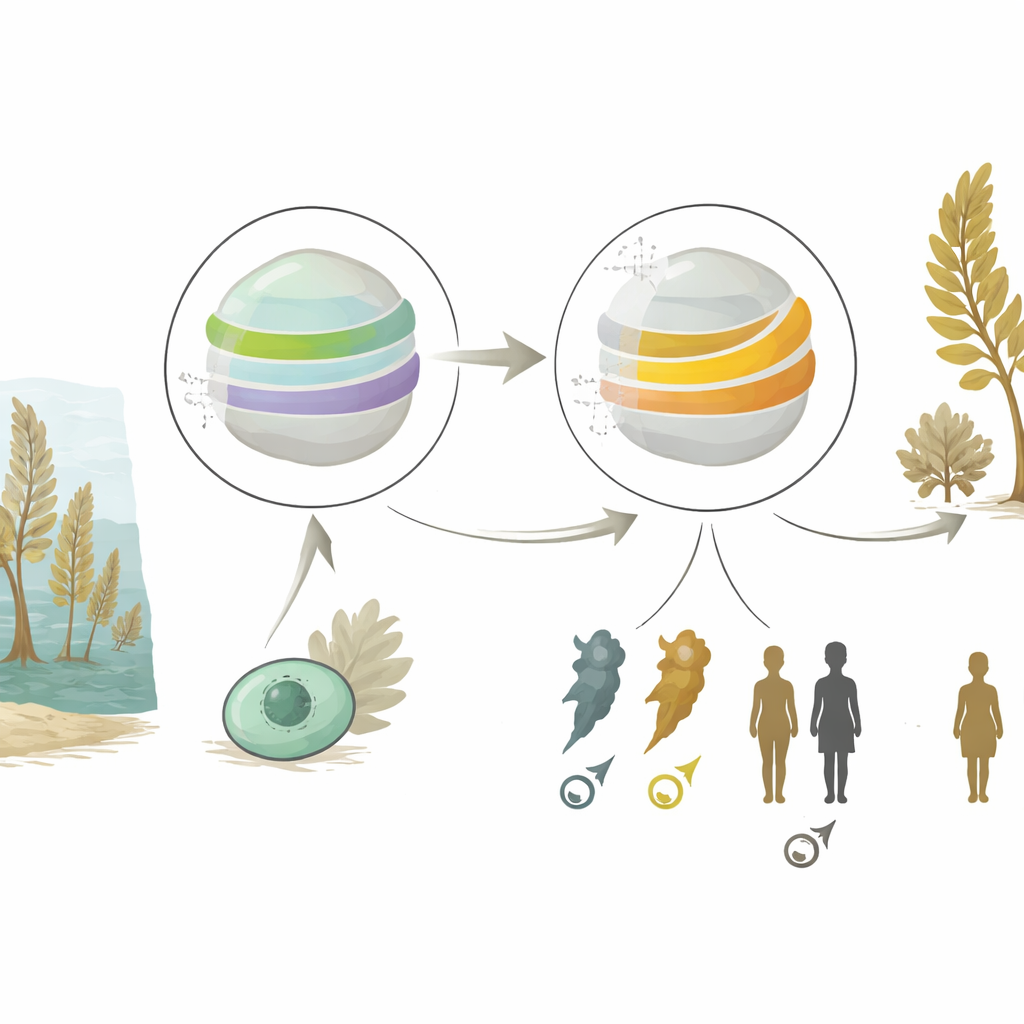
Because many brown algal genomes still mirror each other in overall structure, the authors could track how these chromatin signatures evolve. Genes that have been conserved one-to-one across species mostly carry active signatures, suggesting they are housekeeping genes that stay on in many tissues. In contrast, younger genes and species-specific “orphan” genes are much more likely to sit in repressive or unmarked chromatin and to be expressed only in limited contexts. This pattern supports the idea that quiet, heterochromatin-like regions act as cradles where new genes arise and can be tested with minimal risk. The study also looks at the chromosomes that determine sex in species with separate males and females. Across very different brown algae, these UV sex chromosomes are consistently enriched in repressive chromatin and show less conservation of chromatin signatures than ordinary chromosomes. Only a modest fraction of genes switch chromatin state between males and females, and these changes cluster at sex-biased genes and particular chromosome regions, especially those linked to female functions.
From separate sexes to co-sexuality and ancestral clues
One brown alga in the study has recently shifted from having separate male and female individuals to being co-sexual, producing both gamete types on the same body. Comparing this species to its close dioicous relative reveals that most genes keep the same chromatin signature, but changes again concentrate at genes that were previously more active in females. Intriguingly, the chromosome that used to act as a sex chromosome still carries unusually repressive chromatin, even though it now behaves like an ordinary chromosome. This suggests that the molecular imprint of being a sex chromosome can linger long after its special role has been lost. Looking outward to the closest non–brown algal relative, the team finds a very different picture: here, DNA is heavily methylated throughout the genome, with small unmethylated “islands” at active gene promoters, and these regions are decorated by the same activating histone marks. This outgroup thus offers a snapshot of the ancestral state before DNA methylation and Polycomb pathways vanished in the brown algal lineage.
What this means for life’s many solutions
For non-specialists, the key message is that complex body plans and intricate life cycles do not require a single, universal set of gene-control tools. Brown algae have dispensed with some of the hallmark repression systems used by animals and plants and instead rely heavily on a remodeled H3K79-based pathway to keep genes, transposable elements and sex chromosomes in check. Yet the broad logic remains familiar: certain chromatin combinations mark genes that are always on, others mark experimental newcomers and rarely used genes, and still others shape how males, females and co-sexual forms differ. This work shows that evolution can rewrite the molecular rules of chromatin regulation while preserving the higher-level principles needed to build and maintain multicellular life.
Citation: Vigneau, J., Lotharukpong, J.S., Liu, P. et al. Evolution of a distinct chromatin regulatory landscape in brown algae. Nat Ecol Evol 10, 779–793 (2026). https://doi.org/10.1038/s41559-026-03031-3
Keywords: brown algae, chromatin, epigenetics, sex chromosomes, gene regulation