Clear Sky Science · en
Silent reservoir species are shaping the emergence of Usutu virus
Hidden helpers in a bird virus story
When a new virus sweeps through wildlife, we usually notice the victims that die in large numbers. But some species can quietly carry and spread an infection without getting very sick themselves. This study shows how such “silent” bird species helped shape the rise and fall of Usutu virus, a mosquito-borne virus that recently hit blackbirds in the Netherlands, and what that means for predicting and controlling wildlife diseases that can sometimes spill over to people.
A bird virus on the move
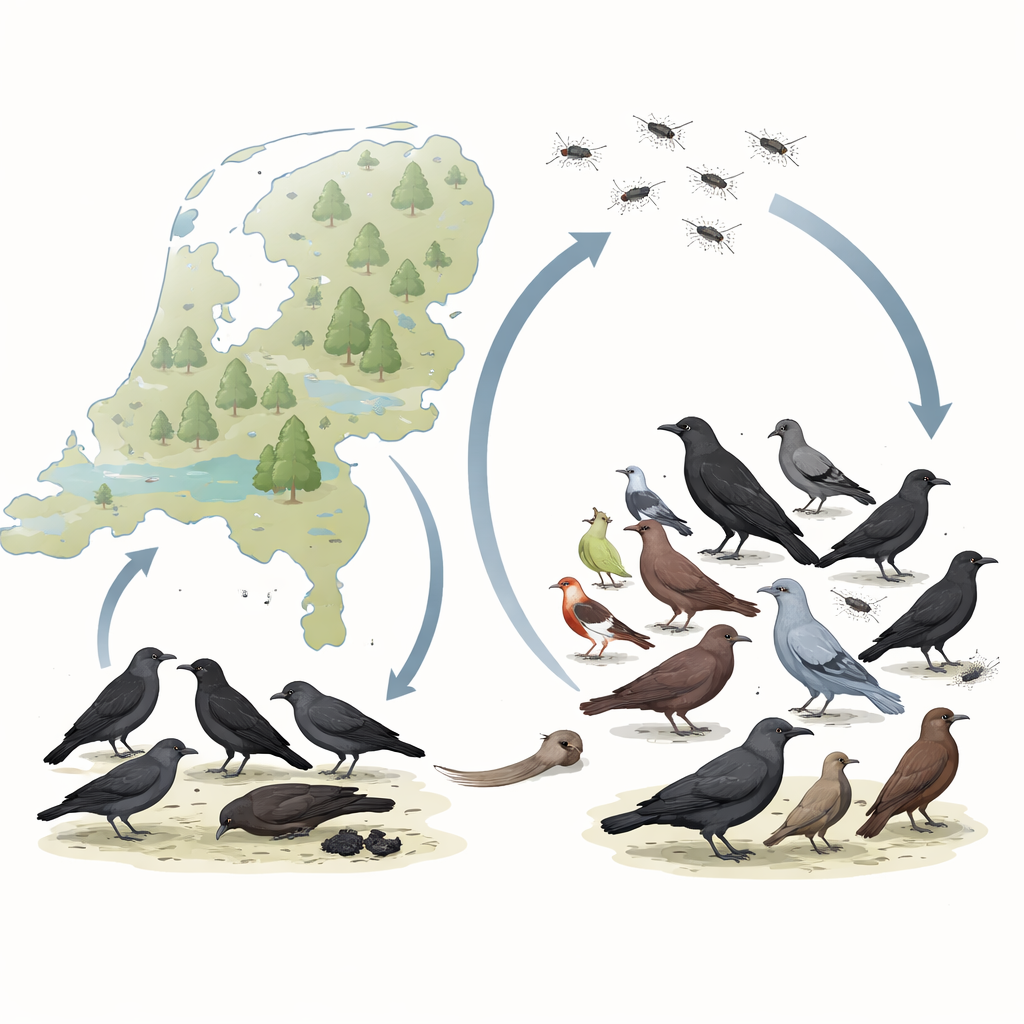
Usutu virus, a close relative of West Nile virus, circulates between mosquitoes and birds and has spread across Europe over the past two decades. In the Netherlands, it was first detected in 2016, followed by a wave of dead Eurasian blackbirds. Over several years, scientists collected a wide variety of data: how many live and dead blackbirds were infected, how many had antibodies showing past infection, and how blackbird populations changed from year to year. These records revealed a dramatic initial impact on blackbirds, with high infection levels and noticeable local declines, followed by a puzzling drop in detected cases before a later uptick.
Clues from many kinds of evidence
The researchers combined five different types of blackbird surveillance data with a computer model that simulates virus transmission between mosquitoes and birds across the Dutch landscape. The country was split into small grid cells that differed in bird and mosquito abundance and local temperature, and bird movements between areas were built in. Using a statistical approach called approximate Bayesian computation, they tested several versions of the model against the data, gradually narrowing down which combinations of assumptions best reproduced the observed patterns in time and space.
The case for unseen bird partners
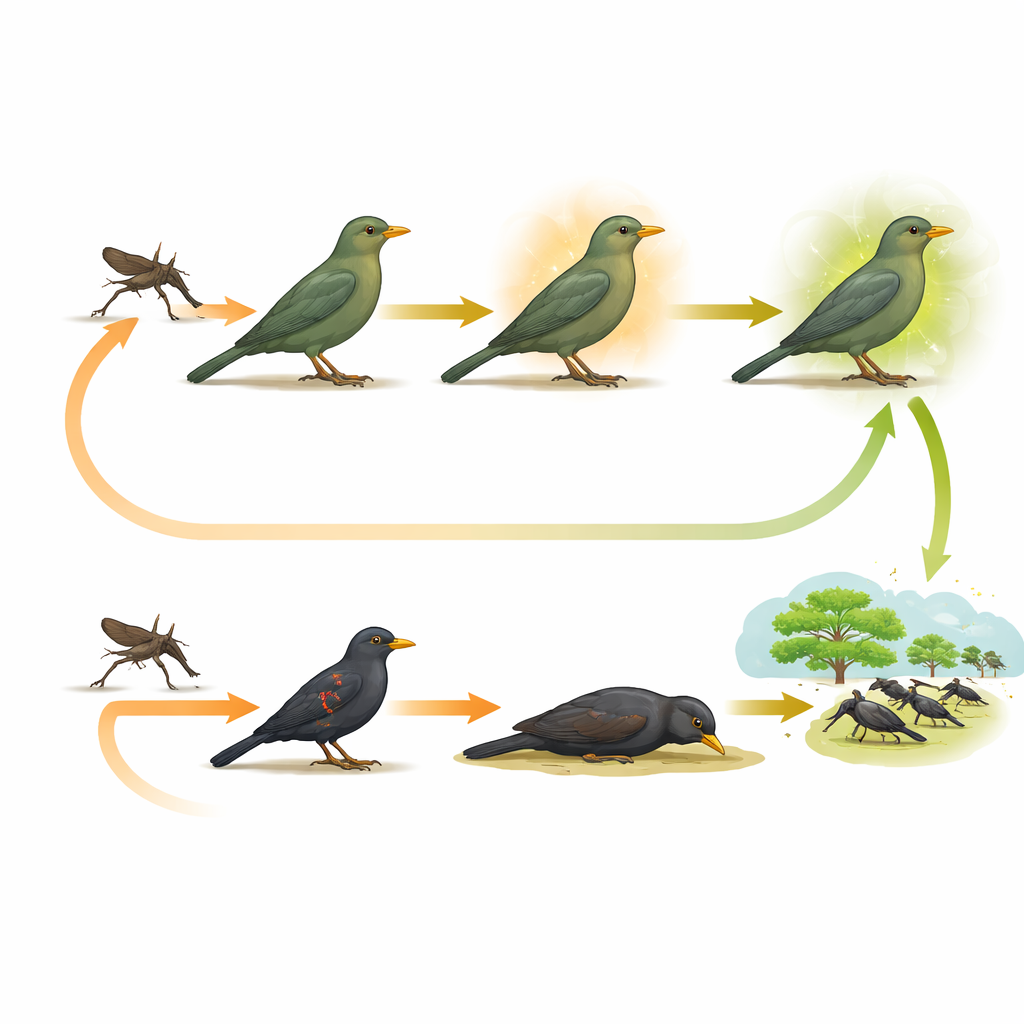
Models that assumed Usutu virus used only blackbirds as hosts did a poor job of matching reality. The best-fitting explanation required at least one additional group of bird species that often became infected but rarely died from the virus, lived longer than blackbirds, and likely moved farther across the landscape. In the model, this broader bird group received many more mosquito bites than blackbirds and built up high levels of immunity over the first few years. That immunity reduced overall virus circulation later on, which in turn eased the pressure on blackbirds and helped stabilize their numbers. In contrast, blackbirds alone could not sustain the virus: their own transmission cycle had an effective reproduction number well below the threshold needed for ongoing spread.
Reconstructing the outbreak’s rise and slowdown
With the best-fitting model in hand, the team replayed the outbreak. Usutu virus likely entered the Netherlands from the south, then spread north over three years, with infection in blackbirds peaking in late summer, especially in 2018 when mosquito numbers and temperatures were high. Juvenile blackbirds contributed more to transmission than adults, but the reservoir bird group dominated the overall spread. Each winter, virus levels in mosquitoes dropped sharply, yet yearly reintroductions and local overwintering allowed the infection to return. Over time, increasing immunity in the long-lived reservoir birds pushed the effective reproduction number downward, shortening the season when the virus could grow and limiting further blackbird declines.
Why hidden hosts matter for future outbreaks
The study concludes that “silent reservoir” bird species—rarely noticed because they do not die in large numbers—were crucial for both sustaining and eventually dampening Usutu virus transmission. This has practical consequences: watching only dead blackbirds can reveal when the virus is circulating but will miss much of the underlying process, especially in areas with few blackbirds. Understanding which other bird species quietly harbor the virus will improve early warning systems and forecasts of where and when mosquito-borne bird viruses can thrive. More broadly, the work shows that to make reliable predictions and design effective interventions, scientists must look beyond the most obvious victims and account for the full cast of hosts involved in an outbreak.
Citation: de Wit, M.M., Beaunée, G., Dellar, M. et al. Silent reservoir species are shaping the emergence of Usutu virus. Nat Ecol Evol 10, 721–732 (2026). https://doi.org/10.1038/s41559-025-02973-4
Keywords: Usutu virus, reservoir hosts, mosquito-borne disease, wildlife surveillance, multi-host transmission