Clear Sky Science · en
Formal Diels–Alder reaction of saturated carboxylic acids via C–H activation
Turning Simple Rings into Useful Shapes
Chemists are always looking for easier ways to build the compact, two-ring shapes that show up in many medicines and advanced materials. This study introduces a method that starts from cheap, common ingredients and reshapes them into these complex structures in a single sequence, offering a more direct path to new drugs, diagnostics and smart plastics.
Why These Two-Ring Structures Matter
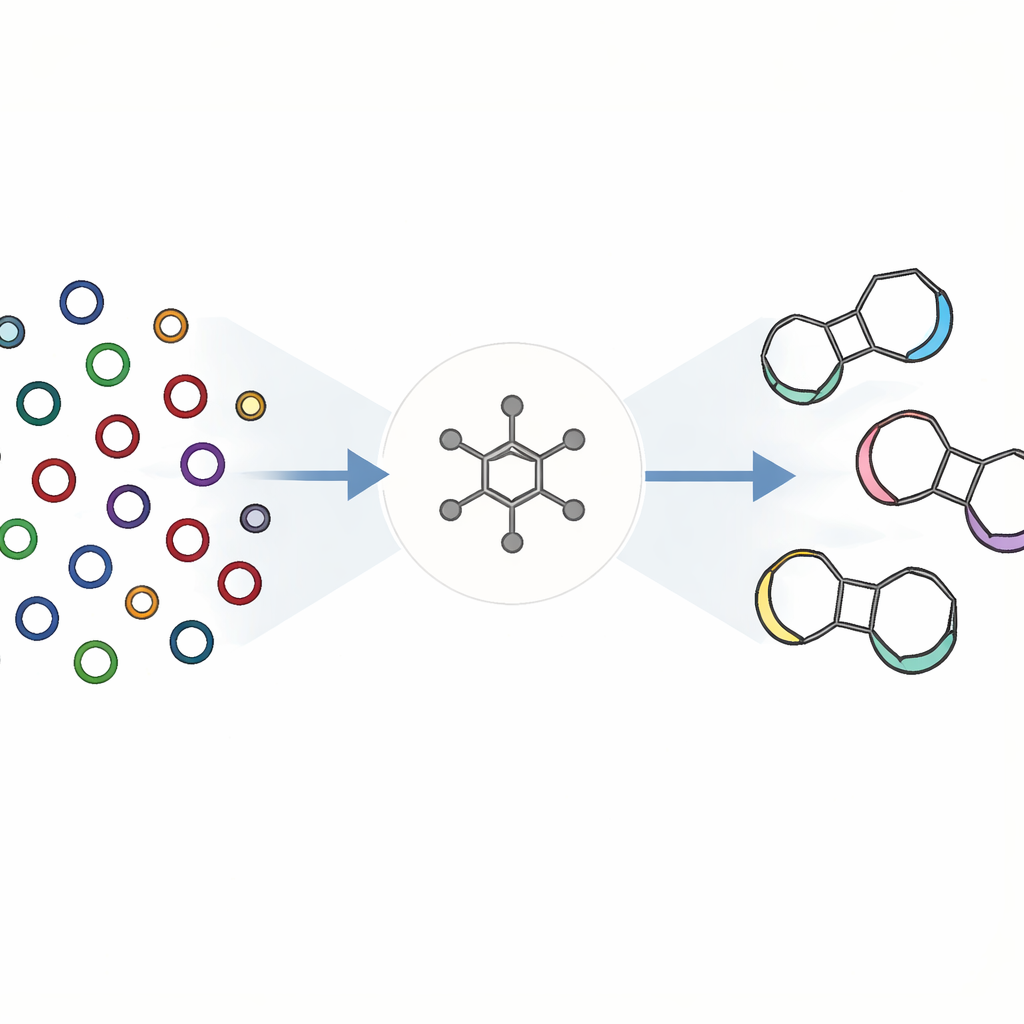
Small molecules made of two fused rings are prized because they fit snugly into biological targets and give plastics special strength and flexibility. They appear in drug candidates, imaging agents and high-performance polymers. Yet varying the size and decoration of these ring systems has been hard, since it normally requires rare starting materials that already contain a delicate double-bond pattern. The authors wanted to sidestep this bottleneck by beginning instead from simple, saturated ring-shaped acids that are sold in hundreds of thousands of varieties.
A New Shortcut Using Hidden Reactivity
The team developed a catalyst system based on the metal palladium working together with a specially designed helper molecule, or ligand, made from pyridine and pyridone units. This combination unlocks otherwise unreactive carbon–hydrogen bonds on the ring-shaped acids. Step by step, the catalyst removes hydrogen atoms and a carbon dioxide unit from the acid, briefly revealing a highly reactive diene, a ring with two double bonds. This fleeting structure is formed exactly where it is needed and is immediately captured by another partner molecule called a dienophile, stitching the two pieces together into a compact bridged bicycle.
From Simple Ingredients to Bioactive Frameworks
Using this strategy, the researchers converted five-, six- and seven-membered ring acids into families of two-ring products in good yields. The method tolerated many different side groups, including halogens, aromatic rings and strongly electron-withdrawing units, while still delivering a single orientation of product. They showed that the products can be made on larger scale and that the same conditions work for a range of dienophiles, not just one type. Importantly, they applied the reaction to fragments taken from known drugs and fluorescent tags, demonstrating that their approach can build new versions of biologically active scaffolds without disturbing sensitive pieces attached to them.
Peeking Under the Hood of the Reaction
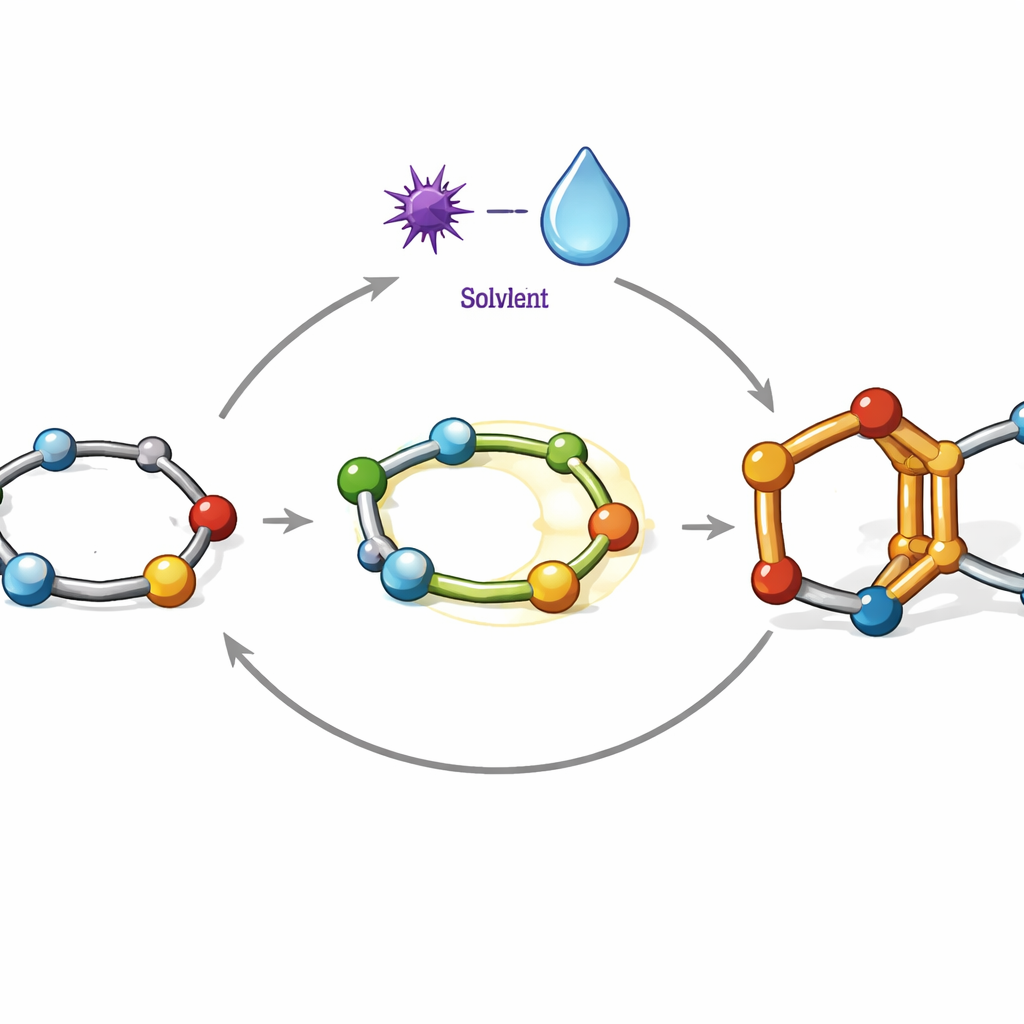
To understand why the process is so selective, the authors combined experiments with computer calculations. Their analysis suggests that the ligand shapes the flow of electrons around the palladium center and steers which carbon–hydrogen bonds are broken first. A fluorinated alcohol solvent helps pull off carbon dioxide in a single, smooth step, creating a key intermediate whose shape then guides the final removal of hydrogen. This carefully choreographed sequence explains how one catalyst can control which position on the ring reacts and ensure that the diene couples with the partner molecule in a single, preferred orientation.
What This Means Going Forward
In plain terms, the study shows how to turn very simple, saturated ring acids into much more intricate two-ring frameworks in one continuous operation, while keeping tight control over the final shape. Because such acids are abundant and inexpensive, this method greatly widens the menu of building blocks available for drug design and advanced materials. It does not solve every challenge in making complex molecules, but it offers chemists a powerful new shortcut from basic feedstocks to structures that are central to modern medicine and materials science.
Citation: He, Q., Lu, Y., Sheng, T. et al. Formal Diels–Alder reaction of saturated carboxylic acids via C–H activation. Nat. Chem. 18, 893–898 (2026). https://doi.org/10.1038/s41557-026-02077-x
Keywords: Diels Alder reaction, C H activation, bridged bicyclic molecules, palladium catalysis, cyclic carboxylic acids