Clear Sky Science · en
The atypical E3 ligase HOIL-1 safeguards the ribosome during cellular stress
How Cells Cope When Sugar Runs Low
Every cell in the body depends on a steady supply of nutrients, especially glucose, to stay alive. When fuel is scarce, cells flip into survival mode, slowing their activities and tapping into stored reserves. This study reveals that a protein called HOIL-1 acts as a guardian of the cell’s protein factories, the ribosomes, during these lean times. When HOIL-1 is damaged, cells struggle to handle nutrient shortages, which may help explain certain heart diseases linked to faulty energy use.
The Cell’s Protein Factories Under Pressure
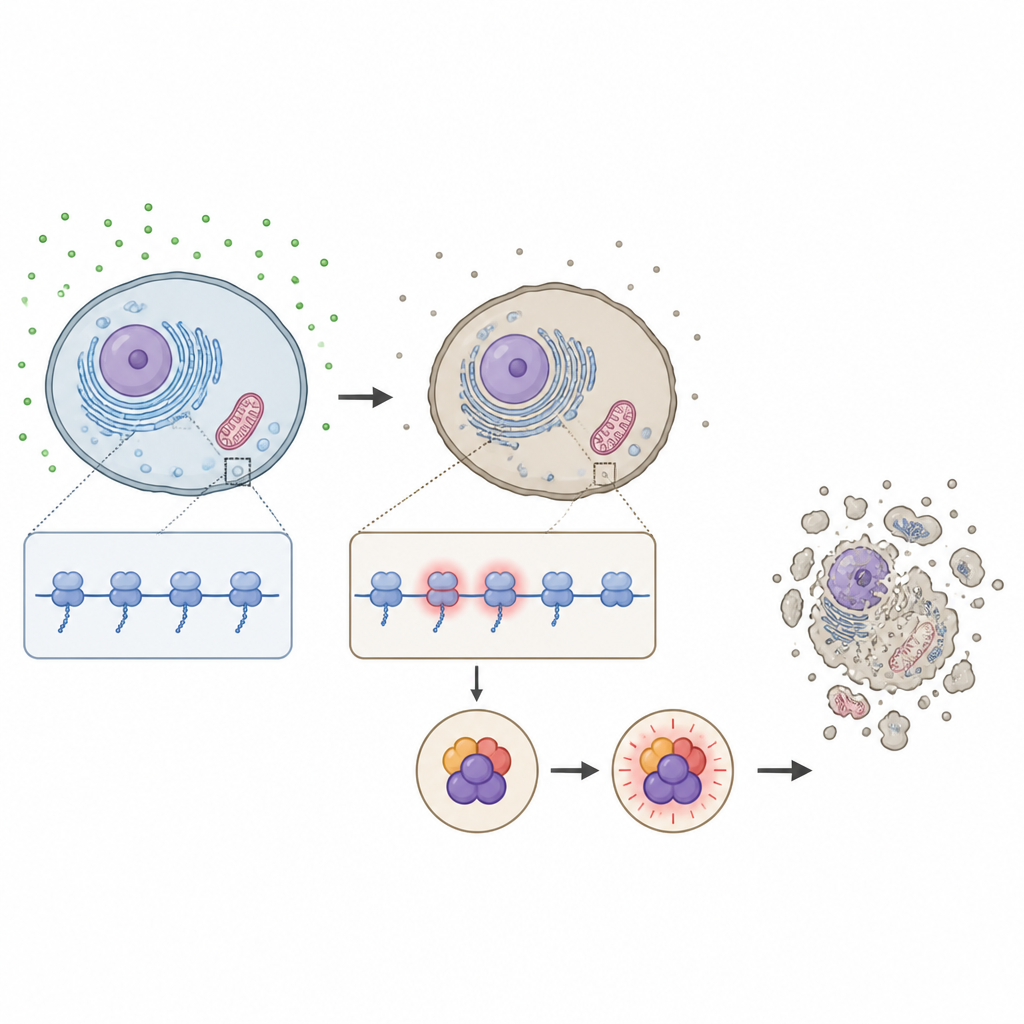
Ribosomes are best known as the machines that build new proteins, but researchers now see them as sensitive control panels that detect trouble inside the cell. The authors show that HOIL-1 sits at the heart of this ribosome-based alarm system. In healthy cells, HOIL-1 helps ribosomes respond calmly to stress so that damaged protein-making events are cleared away without harming the cell. When HOIL-1 is missing or truncated, however, the ribosomes send out stronger distress signals, tipping cells toward death instead of recovery.
A Clue from Failing Hearts
Inherited mutations that chop off the working end of HOIL-1 are known to cause a rare disorder involving weak muscles and enlarged, poorly pumping hearts. To understand why, the team engineered mice that carry a similar shortened version of HOIL-1. When these animals were subjected to a procedure that forces the heart to pump against higher pressure, their hearts enlarged and stretched more than normal, particularly in males. Their heart muscle cells accumulated clumps of stored sugar in the form of glycogen, suggesting that these cells could not properly tap into their backup fuel when the heart was under strain.
When Sugar Shortage Turns Deadly
The researchers then turned to human heart cells grown in the lab and several other cell types to probe what happens during nutrient loss. Cells with truncated HOIL-1 were far more likely to die when deprived of glucose or amino acids than either normal cells or cells completely lacking HOIL-1. Detailed chemical profiling revealed that during glucose starvation, these mutant cells took up large amounts of the nutrient cystine through a transporter called xCT, upsetting the balance of the antioxidant glutathione. This imbalance led to a recently described form of cell death driven by abnormal disulfide bonds, called disulfidptosis. Blocking xCT or boosting glutathione levels protected the cells, showing that this toxic pathway depends on mismanaged sulfur chemistry.
A Stress Switch on the Ribosome
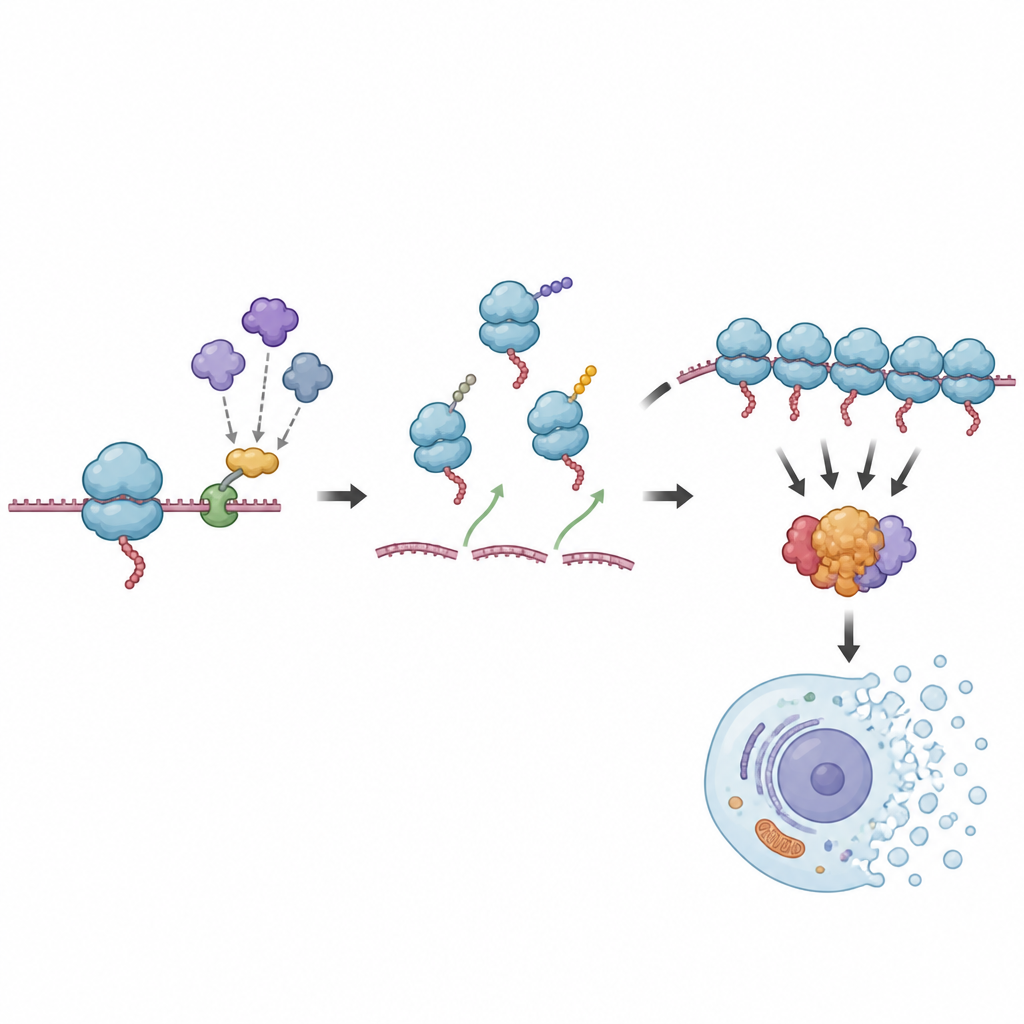
Why do HOIL-1–mutant cells respond to glucose loss with such an extreme death program? The team found that a stress-sensitive protein on ribosomes, ZAKα, is a key switch. In normal cells, HOIL-1 adds small molecular tags called ubiquitin to ribosomal parts, helping a quality-control system remove stalled protein-making machines before they pile up. In cells with mutant HOIL-1, these tags are reduced, and the quality-control machinery cannot work efficiently. As a result, stalled ribosomes linger, activating ZAKα. Once triggered, ZAKα turns on the stress-response factor ATF4, which then boosts xCT levels and drives the harmful cystine influx and disulfidptosis. Silencing ZAKα or ATF4 prevented this chain reaction and spared the cells.
How a Single Protein Tips the Balance Between Survival and Death
At a practical level, this work shows that HOIL-1 helps cells survive nutrient stress by keeping ribosomes operating safely and preventing overactivation of a lethal stress pathway. When HOIL-1’s key region is lost, a dominant-negative version of the protein interferes with normal quality-control partners at the ribosome, allowing stalled protein factories to alarm the ZAKα–ATF4 system and push cells into disulfidptosis. For a layperson, the message is that a single guardian at the cell’s protein factory can determine whether a shortage of sugar becomes a manageable challenge or a fatal crisis, with important implications for heart health and other conditions linked to energy stress.
Citation: Douglas, T., Nie, P., Zhang, J. et al. The atypical E3 ligase HOIL-1 safeguards the ribosome during cellular stress. Nat Cell Biol 28, 930–945 (2026). https://doi.org/10.1038/s41556-026-01936-6
Keywords: ribosome stress, HOIL-1, nutrient starvation, disulfidptosis, cardiomyopathy