Clear Sky Science · en
Electrophilic compound screening identifies GPX4-dependent ferroptosis as a senescence vulnerability
Why old and damaged cells matter
As we age, some cells in our bodies stop dividing but refuse to die. These lingering cells, called senescent cells, can help prevent cancer at first, yet over time they drive tissue damage, chronic inflammation and even make cancer treatments less effective. Finding safe ways to remove these harmful "zombie" cells is a major goal in ageing and cancer research, because it could improve health in later life and boost current therapies.
A vast search for senescent cell killers
To uncover weaknesses in senescent cells, the researchers screened 10,480 small molecules designed to form covalent bonds with their protein targets. Using human lung cells pushed into a senescent state by an activated cancer gene, they compared how each compound affected normal versus senescent cells. This large survey yielded 72 candidates that seemed to kill senescent cells more efficiently, and a second round of testing in melanoma cells confirmed 38 as genuine "senolytic" compounds. Among these, a family of molecules known as chloroacetamides stood out for their ability to clear a broad range of therapy-induced senescent cells from different cancer cell lines.
Zeroing in on a key survival switch
Next, the team set out to discover which proteins these chloroacetamides were hitting. They made probe versions of each compound that could latch onto targets and be pulled out of cell extracts for mass spectrometry analysis. This approach highlighted more than a hundred proteins, but one repeatedly appeared as a strong and selective target in senescent cells: GPX4, a special antioxidant enzyme that protects cell membranes from damage. A complementary genetic screen, in which individual genes were silenced by small interfering RNAs, independently showed that reducing GPX4 levels selectively killed senescent melanoma cells, strengthening the case that GPX4 is a senescent cell lifeline. 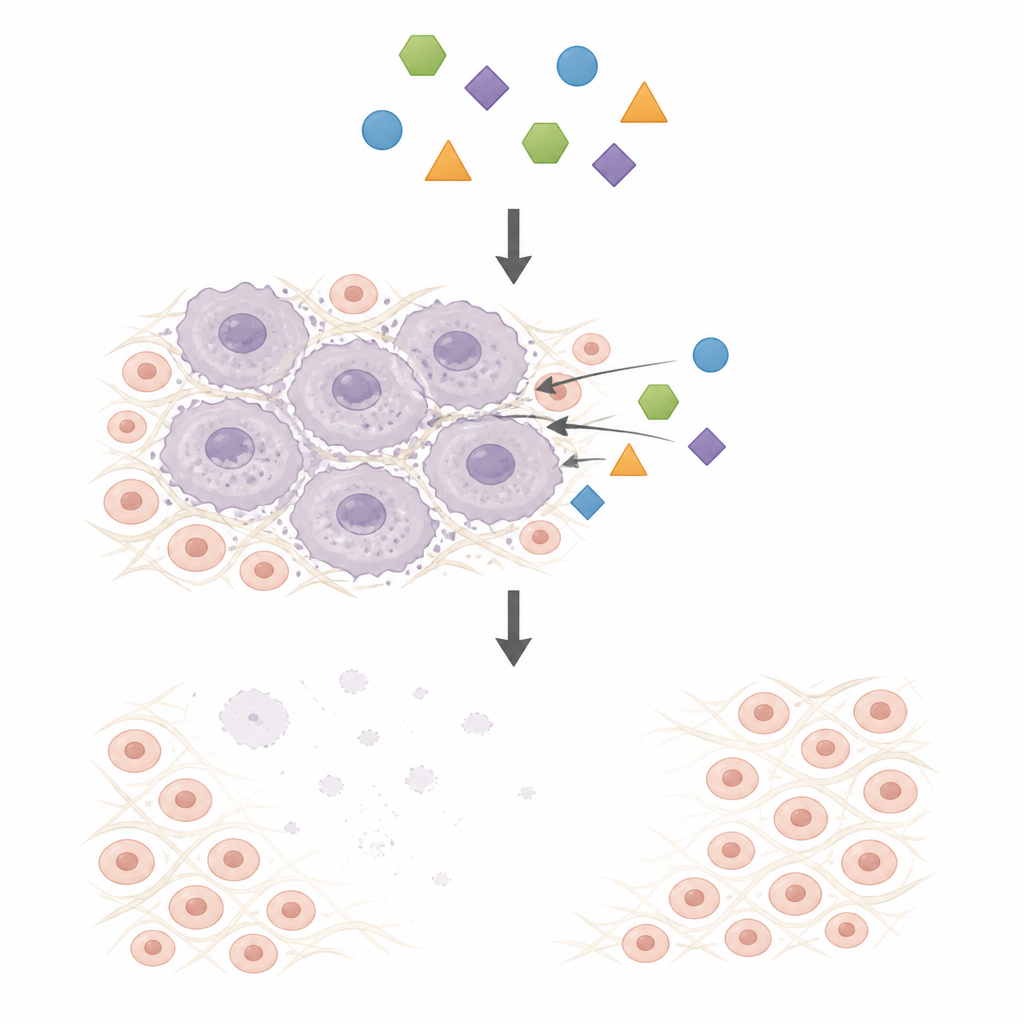
Senescent cells walk a tightrope with iron and fat
The study then asked why GPX4 matters so much to these cells. Senescent cells turned out to live in a stressed, precarious state. Compared with their younger counterparts, they carried higher levels of reactive oxygen species, built up more free iron inside, and showed changes in fat molecules in their membranes that make them susceptible to a type of iron-driven cell death called ferroptosis. At the same time, senescent cells boosted GPX4 and other iron-handling proteins, suggesting they rely heavily on this enzyme to keep their vulnerable, fat-rich membranes from oxidizing beyond repair. When the researchers blocked GPX4 with either their chloroacetamides or well-known GPX4 inhibitors, membrane lipids became oxidized and senescent cells died by ferroptosis, while non-senescent cells were far less affected.
From dishes to tumours in living animals
To test whether this vulnerability exists in living tissues, the team examined mouse livers in which an oncogene drives premalignant senescent patches. These liver cells showed increased GPX4, and treatment with the GPX4 blocker RSL3 reduced both oncogene-positive and senescent marker–positive cells without obvious toxicity. The researchers then moved to cancer models that mimic "one-two punch" therapy: first driving tumour cells into senescence with drugs like the cell-cycle blocker palbociclib or the chemotherapy agent cisplatin, then following up with a GPX4 inhibitor. In melanoma, prostate and ovarian cancer models, this combination shrank tumours more than either treatment alone, reduced senescence markers within the tumours and, in the ovarian cancer model, extended mouse survival.
What this means for future treatments
This work reveals that senescent cells sit on the brink of ferroptosis, propped up by high levels of the GPX4 enzyme. By screening a large chemical library and combining chemistry with functional genetics, the researchers identify GPX4 as a central Achilles’ heel of senescent cells. Drugs that inhibit GPX4, including some chloroacetamides identified here, can push these stressed cells over the edge into controlled self-destruction while sparing many normal cells. Although safety challenges remain, especially given GPX4’s importance in normal tissues, the findings point to new ways to clear harmful senescent cells in ageing and to enhance existing cancer therapies by adding a targeted clean-up step after treatment. 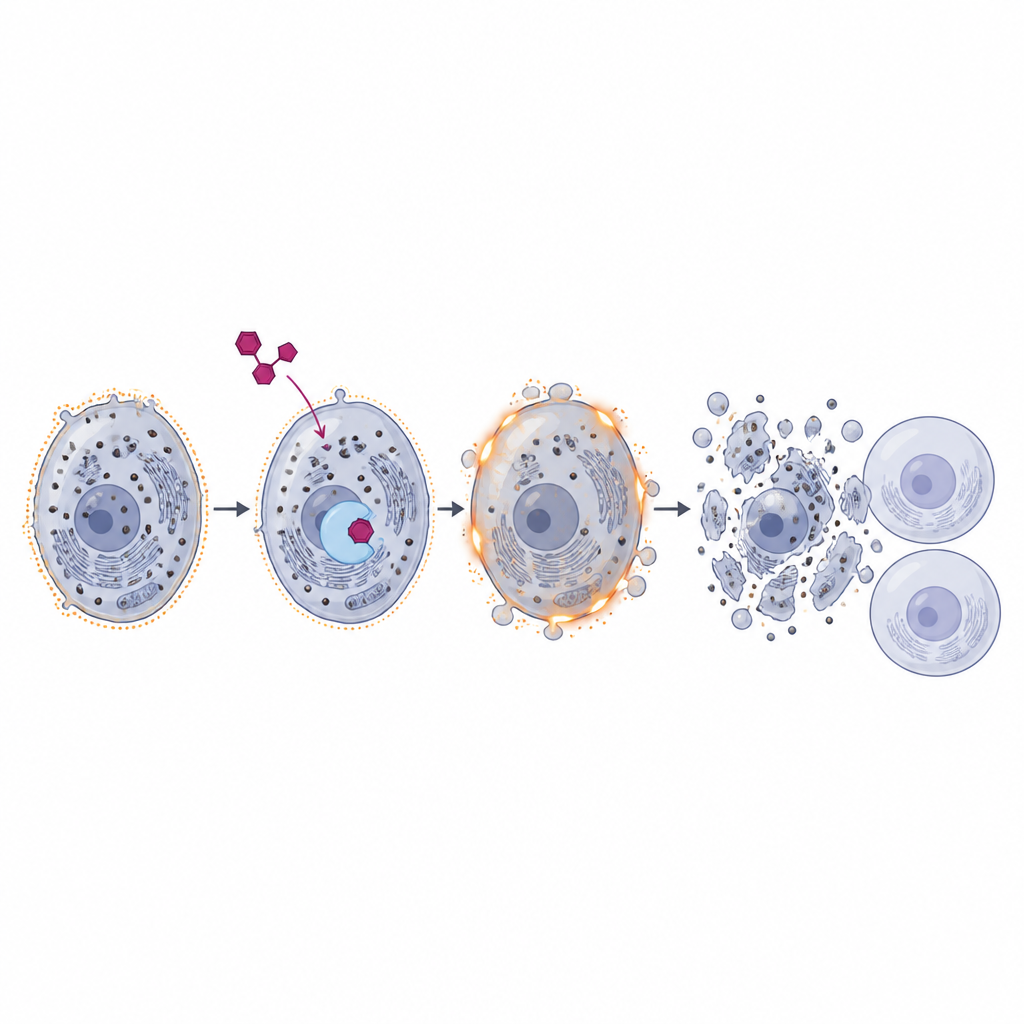
Citation: D’Ambrosio, M., White, M.E.H., Gavriil, E.S. et al. Electrophilic compound screening identifies GPX4-dependent ferroptosis as a senescence vulnerability. Nat Cell Biol 28, 915–929 (2026). https://doi.org/10.1038/s41556-026-01921-z
Keywords: cellular senescence, ferroptosis, GPX4, senolytics, cancer therapy