Clear Sky Science · en
Reusable immobilised quaternary ammonium particles reduce microbial and resistome burdens without promoting resistance selection during wastewater post-treatment
Why cleaner wastewater matters to everyone
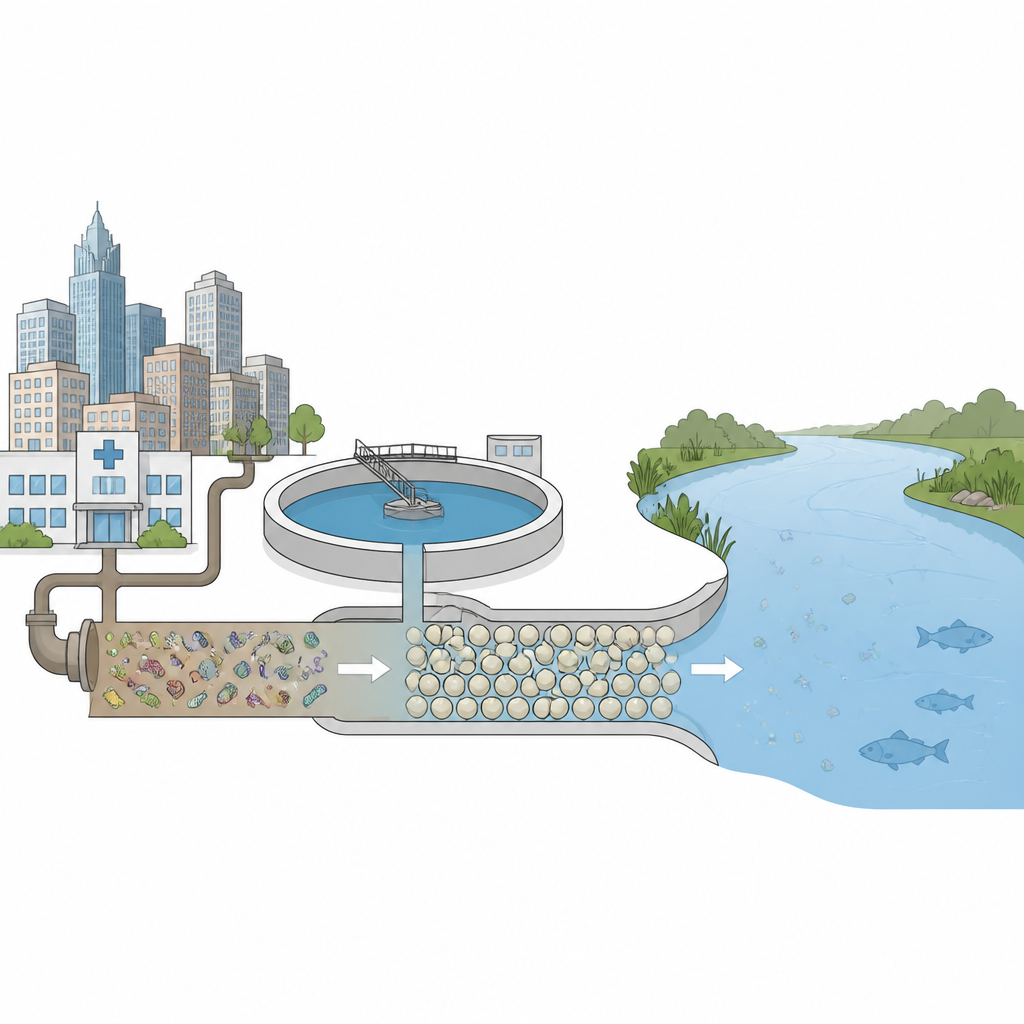
Wastewater treatment plants quietly protect public health by cleaning what we flush and drain away. Yet even after standard treatment, traces of antibiotics, hardy bacteria, and the genes that make microbes drug resistant can slip into rivers and lakes. This study explores a new way to polish treated wastewater so that it carries fewer germs and fewer resistance genes into the environment, without encouraging microbes to become even harder to kill.
A new kind of cleaning particle
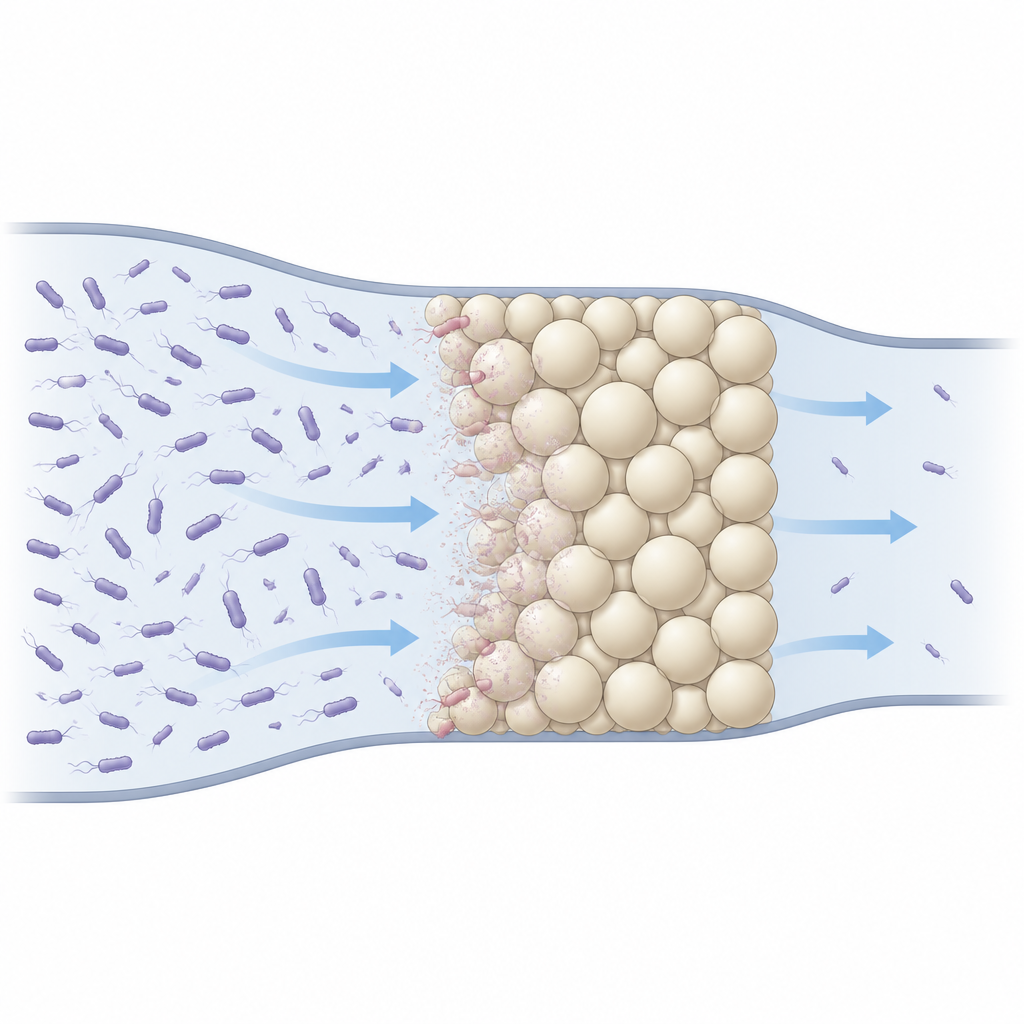
The researchers tested tiny solid particles coated with a common disinfectant called a quaternary ammonium compound. Instead of letting the chemical float freely in the water, they fixed it onto the surface of mineral microparticles. Bacteria must touch these particles to be harmed, so the disinfectant stays in one place rather than spreading throughout the water. The team asked if this contact-based design could strongly reduce bacteria and resistance genes in wastewater, while avoiding the usual downside of chemical disinfectants: helping tough microbes and their resistance traits to thrive.
Stopping many kinds of bacteria in their tracks
First, the scientists worked with well known laboratory bacteria, including strains carrying extra DNA pieces that usually help them resist disinfectants. When they added increasing amounts of the coated particles to bacterial cultures, growth dropped sharply and then stopped altogether at higher doses. Even bacteria that carried resistance genes on plasmids gained no advantage. This showed that the contact-based killing at the particle surface overpowered the known resistance tricks that normally protect microbes from the same chemical when it is dissolved in water.
Reusable particles that target genes as well as germs
The team then checked whether the particles could be reused. After one cycle of use, washing, and drying, the particles still worked just as well as new ones. A second reuse led to a small drop in performance, but they continued to remove most bacteria. The scientists also looked at how bacteria share resistance genes by passing plasmids to one another. In carefully controlled experiments with two different species, the presence of particles did not boost this gene sharing. Instead, it completely shut down detectable transfer, even at levels where some bacteria survived.
Cleaning real wastewater without boosting risky microbes
Next, the particles were tested on treated wastewater from a city plant. Under conditions chosen from the lab tests, total bacterial levels fell by more than five orders of magnitude. Genetic tests showed that many different resistance genes, including those important in hospitals, became much less common. The overall pool of mobile DNA elements that help genes jump between microbes also shrank or stayed stable. When the team examined which types of bacteria remained, they found that groups containing known human pathogens actually became less abundant, and the community shifted toward species not linked to disease.
What this means for safer water
In simple terms, these coated particles act like a final antibacterial filter that works by contact rather than by flooding water with chemicals. They can be reused at least once, cut down both germs and resistance genes, and do not appear to favor dangerous bacteria or the sharing of resistance traits. While more work is needed in flowing systems and different kinds of wastewater, the study suggests that contact-based particles could become a useful add on step to help keep rivers, lakes, and eventually people less exposed to antibiotic resistant microbes.
Citation: Redondo, M., Klümper, U., Pereira, A. et al. Reusable immobilised quaternary ammonium particles reduce microbial and resistome burdens without promoting resistance selection during wastewater post-treatment. npj Clean Water 9, 38 (2026). https://doi.org/10.1038/s41545-026-00584-5
Keywords: wastewater treatment, antimicrobial resistance, quaternary ammonium particles, water disinfection, resistance genes