Clear Sky Science · en
Co-doped ZnO/Ti3C2 MXene hybrids with synergistic interfacial engineering for superior tetracycline photodegradation: experiment and theory
Why cleaner water matters
Antibiotics that help us fight infections can become a problem once they leave our bodies. Large amounts pass through unchanged and end up in rivers, lakes, and even drinking water, where they can drive the rise of drug resistant bacteria. This study explores a new material that uses light to break down one widely used antibiotic, tetracycline, in water, pointing toward safer and more effective ways to clean contaminated supplies.
Turning sunlight into a cleaning tool
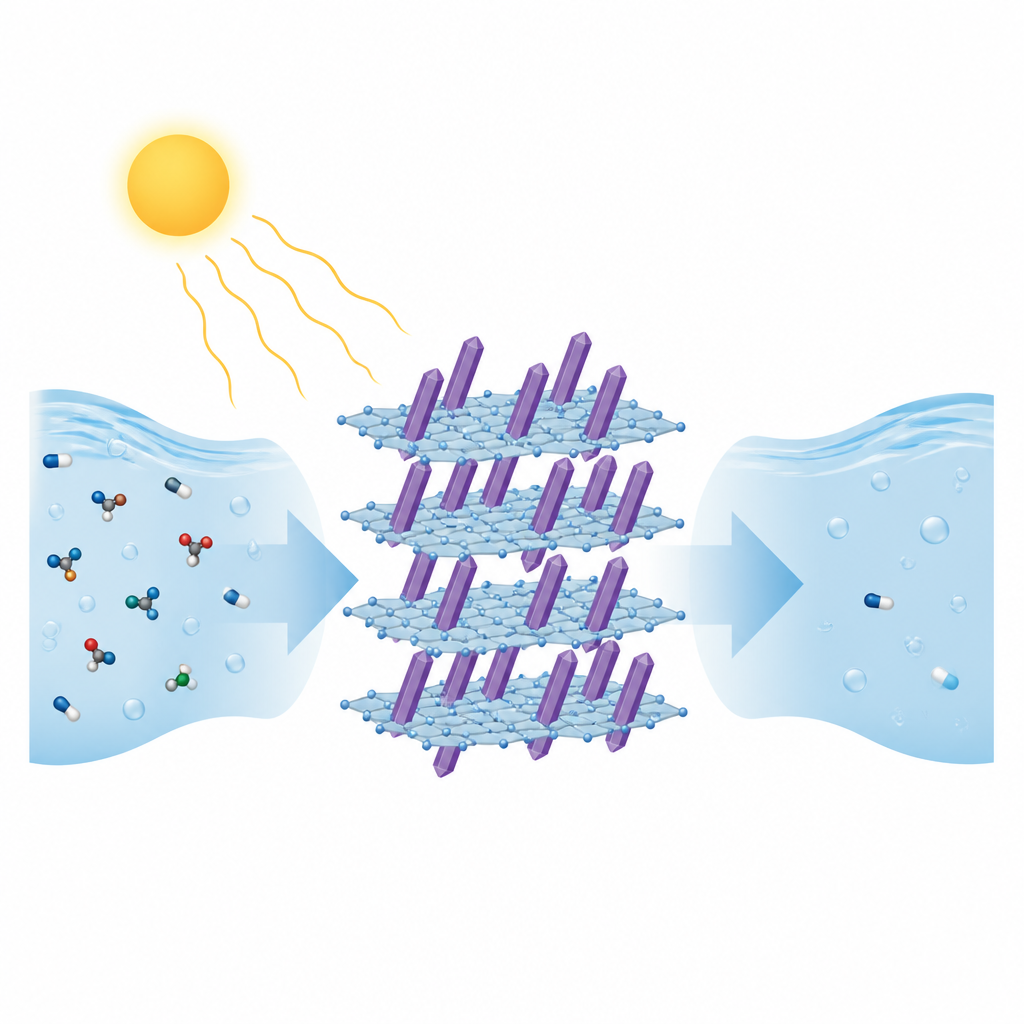
The researchers focus on photocatalysts, materials that use light to trigger chemical reactions which can dismantle stubborn pollutants. A common photocatalyst, zinc oxide, is cheap and stable but does not use visible sunlight very efficiently and wastes many of the charges it creates. To fix this, the team modified zinc oxide in two ways: they added a small amount of the metal cobalt and they combined it with ultra thin conductive sheets called MXene, made from titanium carbide. Together, these changes were designed to help the material absorb more of the solar spectrum and move electrical charges to where they can do the most good.
Building a smarter cleaning surface
Using a water based growth method, the team grew tiny cobalt doped zinc oxide prisms directly on MXene sheets, forming a close contacting hybrid. Detailed imaging and X ray measurements showed that cobalt atoms fit into the zinc oxide structure and created controlled defects, while the MXene formed flat, layered scaffolds. These features increased the surface area and created many junctions where charges could move from the light absorbing zinc oxide into the highly conductive MXene. Computer simulations backed this picture, revealing how cobalt narrows the energy gap of zinc oxide and how the contact with MXene encourages electrons to flow in a preferred direction across the interface.
How the material attacks antibiotic molecules
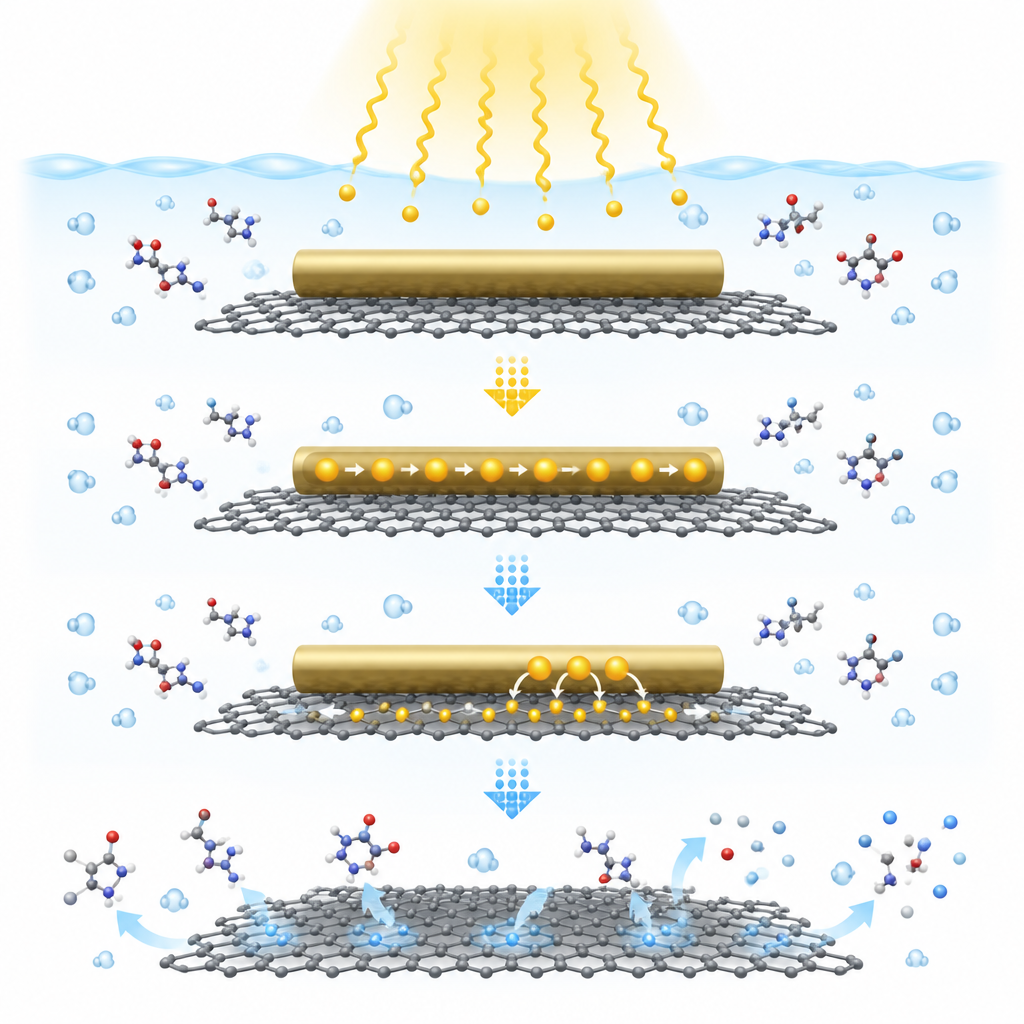
When the hybrid material was placed in tetracycline contaminated water and exposed to simulated sunlight, it removed the drug far more effectively than either plain zinc oxide or cobalt doped zinc oxide alone. The best version, containing about 12 percent MXene by weight, broke down nearly 94 percent of tetracycline in an hour under solar like light and almost completely under ultraviolet light. Tests with additives that block specific reaction pathways and measurements of short lived species showed that two aggressive forms of oxygen, superoxide and hydroxyl radicals, were mainly responsible for tearing apart the tetracycline molecules. The hybrid material produced these reactive species in greater amounts because electrons and holes stayed separated longer and could take part in surface reactions instead of cancelling each other out.
Robust performance in real world conditions
The team also checked how well the catalyst worked under different conditions that resemble natural waters. They found that performance depended on pH: it improved from acidic to neutral conditions and then dipped slightly in strongly alkaline water, where electrical repulsion reduces contact between the pollutant and the catalyst surface. Common dissolved ions, such as sulfate and bicarbonate, had little effect, and the material remained active over multiple cleaning cycles with very little metal leaking into the water. It also degraded several other medicines, not just tetracycline, and still worked reasonably well in tap and river water, where many other substances compete for reaction sites.
What this means for future water treatment
Overall, the study shows that carefully combining cobalt doped zinc oxide with MXene sheets can turn sunlight into an efficient tool for breaking down antibiotics in water. By fine tuning how the materials share and move electrical charges, the researchers created a catalyst that is more active, more stable, and effective under realistic conditions. While not yet a ready made product, this approach offers a promising path for designing next generation filters and reactors that help keep antibiotic pollution, and the spread of resistance, in check.
Citation: Vengamamba, K.P., Kim, B., Jo, E.M. et al. Co-doped ZnO/Ti3C2 MXene hybrids with synergistic interfacial engineering for superior tetracycline photodegradation: experiment and theory. npj Clean Water 9, 42 (2026). https://doi.org/10.1038/s41545-026-00573-8
Keywords: photocatalysis, antibiotic removal, tetracycline, MXene, water treatment