Clear Sky Science · en
Machine learning reveals disruptive nutrient pollution shifts in Chinese rivers to 2100
Why future river health matters
Clean rivers underpin safe drinking water, food production, and healthy ecosystems. This study looks ahead to the end of this century to ask how pollution from nutrients such as nitrogen and phosphorus might change across China’s vast river network. Using millions of recent water measurements combined with modern data science, the researchers uncover surprising shifts in when and where pollution may strike, with lessons that reach far beyond China’s borders.
Tracking a hidden form of water stress
Excess nutrients wash off farm fields, city streets, and factory grounds into rivers, where they can trigger algal blooms, rob water of oxygen, and threaten human health. The team assembled more than three million daily records from over 1,600 monitoring sites across China, covering key indicators of nutrient pollution. They combined these with detailed information on climate, land use, terrain, population, and economic activity to build a single Nutrient Pollution Index that captures overall river water quality at each site.
Using smart tools to see the future
To peer into the future, the researchers trained region specific machine learning models, a type of artificial intelligence that can handle many interacting influences at once. These models learned how today’s nutrient levels respond to weather, landscape patterns, and human activities. The team then drove the trained models with international projections of future climate and socioeconomic change through the year 2100, under a scenario with strong fossil fuel use and rapid development. This allowed them to estimate how nutrient pollution might evolve month by month and basin by basin, while also probing which drivers matter most and where critical tipping points may lie.
Seasons reshaped by warming
Today, many Chinese rivers show sharp seasonal swings, with pollution peaks often tied to summer rains and winter stagnation. The study finds that by late century these familiar patterns are likely to flatten. On average, nutrient pollution is projected to increase, but the contrast between seasons weakens. In three of the four main seasonal types they identified, pollution rises strongly in spring and autumn while dropping in summer, as shifting rainfall and temperature break the old link between fertilizer use, monsoon downpours, and river flow. Even basins that are currently relatively clean show steady increases through the year once climate warming and modest human pressures are factored in.
From eastern hotspots to a more even burden
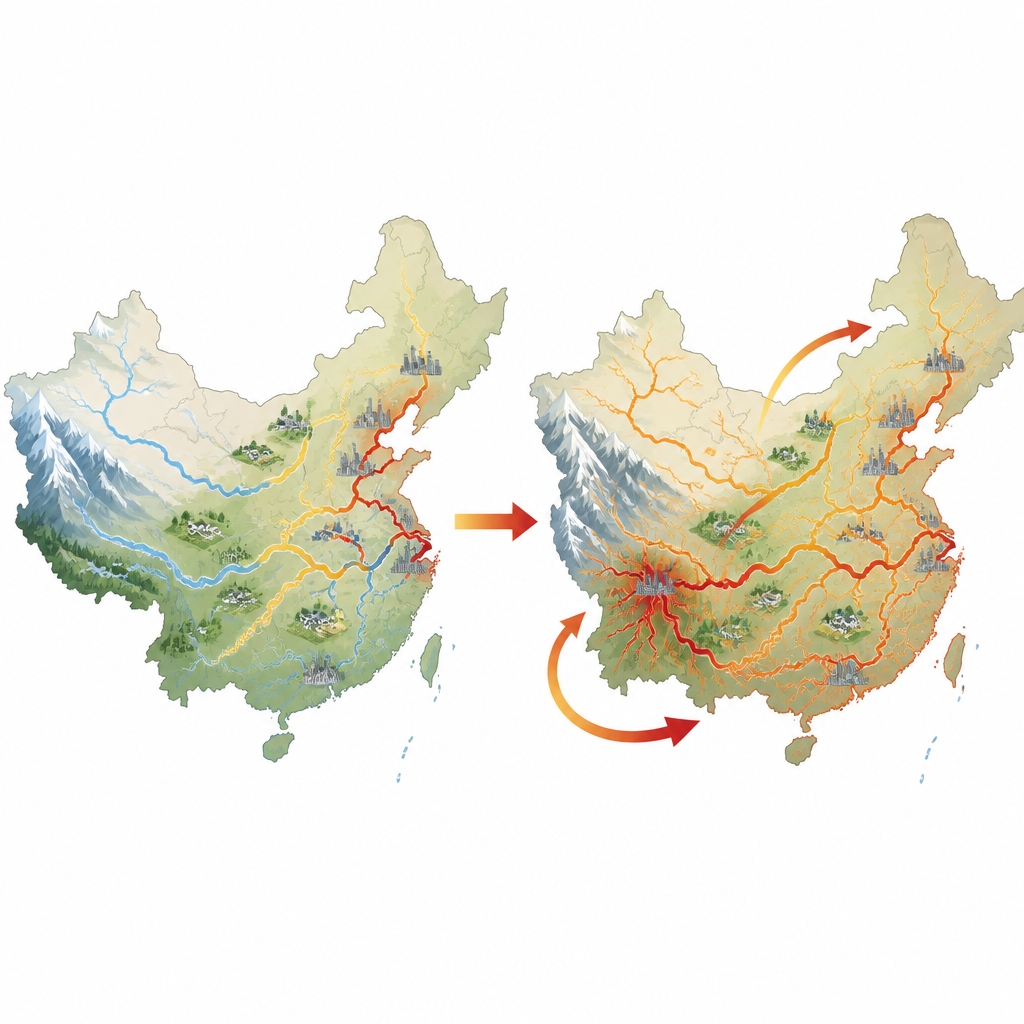
At present, the worst nutrient pollution clusters in the heavily farmed and industrialized east, while high mountain regions in the west and southwest remain comparatively clean. The projections reveal a disruptive change: although eastern basins stay more polluted in absolute terms, many of the largest relative increases occur in today’s coldspots along the edges of the Tibetan Plateau and in the Yunnan–Guizhou highlands. Overall, differences between regions shrink as formerly pristine basins see nutrient loads climb, and the center of pollution risk drifts westward and southward. This trend raises concerns about environmental fairness, because these regions often have fewer people, lower incomes, and less capacity to manage rising pollution.
Landscapes and thresholds as quiet drivers
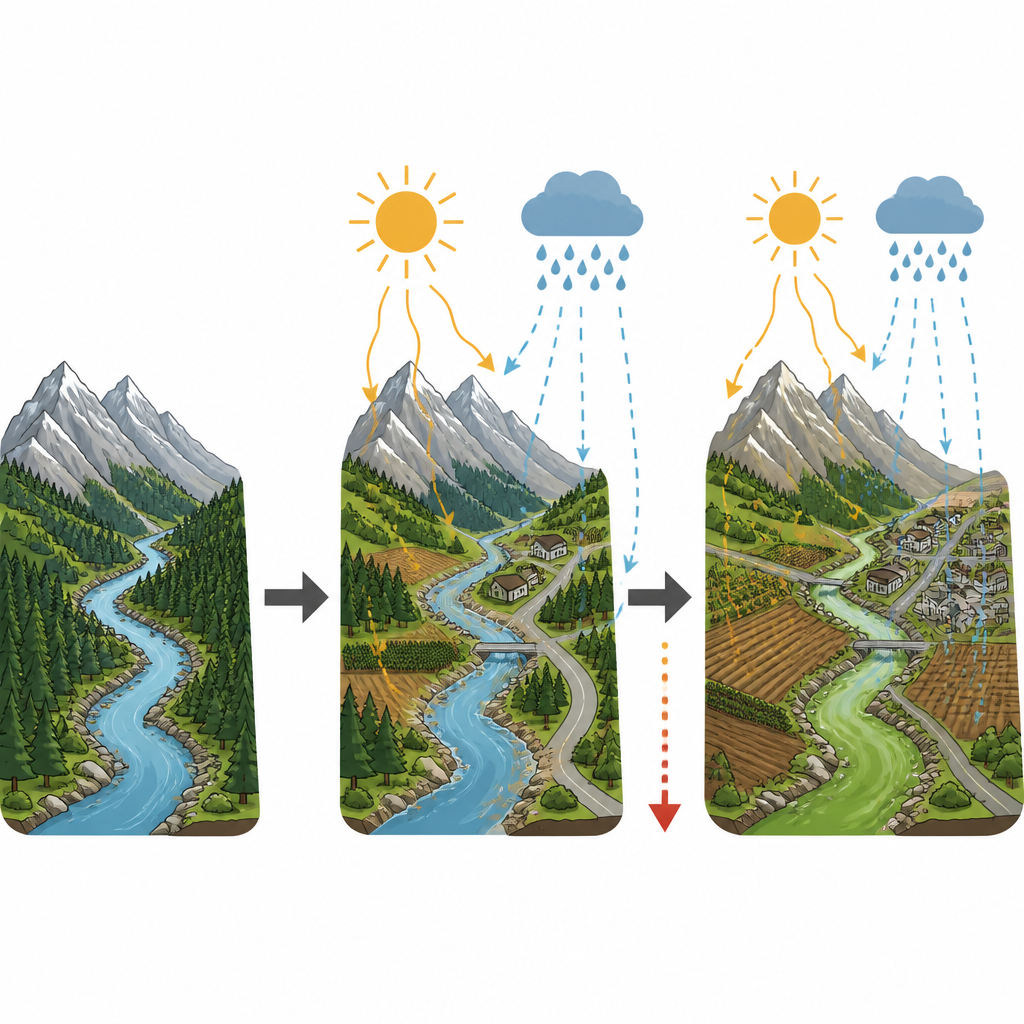
One of the study’s most striking findings is that the way land is arranged across the landscape matters more for future nutrient pollution than climate change alone. Measures of how forests, croplands, cities, and other land covers are pieced together explain a larger share of variation in river quality than temperature or rainfall. The models also reveal critical thresholds: points at which small increases in rainfall, vegetation, pavement, or farm area flip rivers from relatively clean to rapidly worsening conditions. In many coldspot basins, future development is expected to push these drivers beyond their historical thresholds, hinting at possible tipping points where pollution could rise much faster than in the past.
What this means for water security
For non-specialists, the takeaway is clear. The future of river health in China, and likely elsewhere, will not simply follow past trends or climate change alone. Instead, it will depend strongly on how landscapes are planned and managed, especially in regions that are currently clean but vulnerable. By identifying when and where thresholds may be crossed, this study suggests that early, targeted land use planning and pollution controls could prevent some rivers from slipping into a new, more polluted state. Proactive, region tailored management that looks beyond traditional seasons and long standing hotspots may be key to securing clean water in a rapidly changing world.
Citation: Zhang, X., Zhang, H., Yin, D. et al. Machine learning reveals disruptive nutrient pollution shifts in Chinese rivers to 2100. npj Clean Water 9, 39 (2026). https://doi.org/10.1038/s41545-026-00571-w
Keywords: nutrient pollution, river water quality, machine learning, land use change, China rivers