Clear Sky Science · en
Recirculation of powdered activated carbon improves the adsorption of organic micropollutants in membrane hybrid processes
Cleaning Hidden Chemicals from City Wastewater
Every time we wash our hands, take medicine, or do laundry, tiny traces of chemicals leave our homes and end up at wastewater treatment plants. Many of these so‑called “micropollutants” slip through standard treatment and flow back into rivers and lakes. This study explores a smarter way to upgrade existing treatment plants so they can capture more of these invisible contaminants, using less material and energy than many might expect.
A New Layer Added to Conventional Treatment
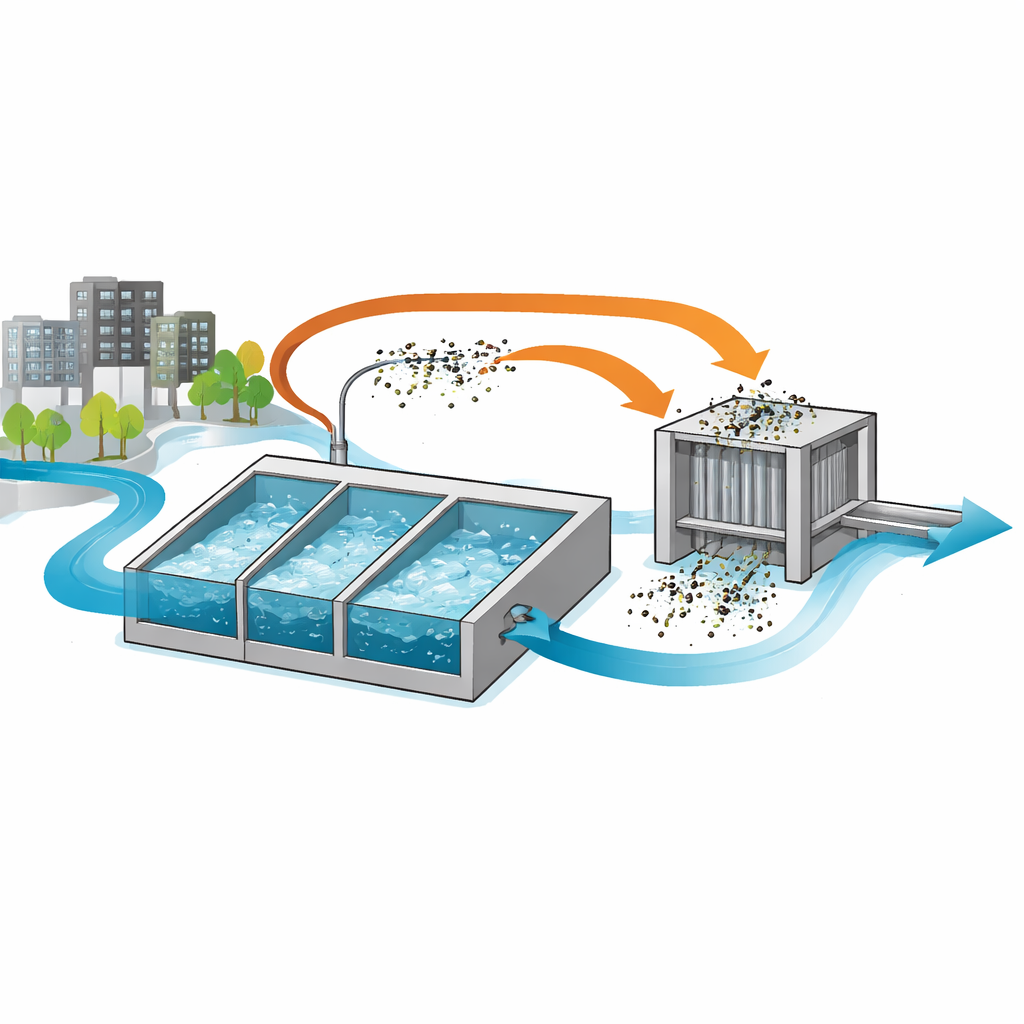
Modern European rules now require many wastewater plants to add an extra “quaternary” treatment step to remove organic micropollutants such as drug residues and industrial chemicals. One promising option combines very fine sieving membranes with powdered activated carbon, a porous black material that acts like a sponge for trace chemicals. In the pilot plant studied here, wastewater first passed through a conventional biological stage where microbes break down much of the easily degradable pollution. After that, the water was sent to an ultrafiltration stage, where powdered carbon was mixed directly into the feed pipe and onto the membrane surface instead of in a large separate contact tank. This compact design saves space but leaves only seconds to minutes for the carbon to do its job – a tough challenge when trying to trap stubborn trace substances.
Making the Same Carbon Work Twice
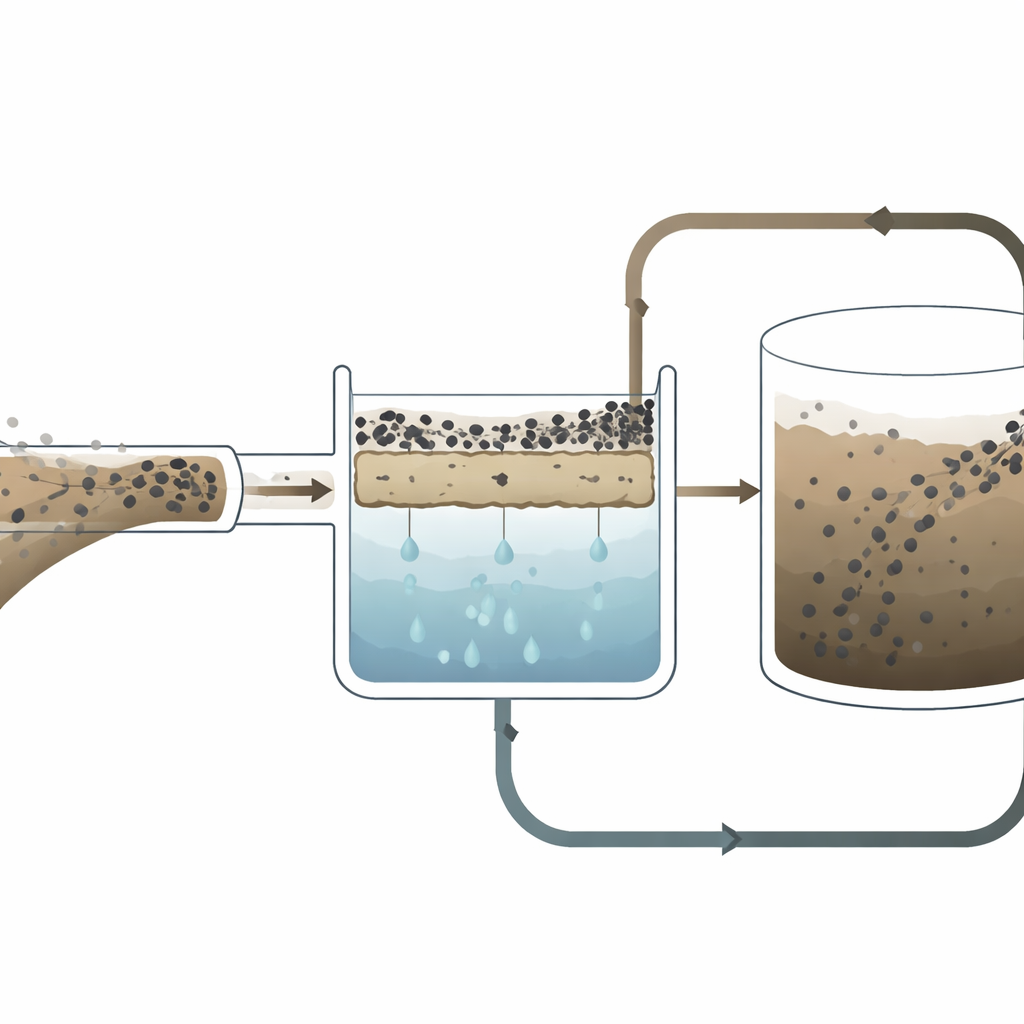
The researchers tested whether the same portion of powdered carbon could be used more efficiently by sending it backwards in the process before finally removing it with the sludge. In their setup, carbon particles that had partially filled up with micropollutants at the membrane stage were collected during membrane backwashing and then pumped back into the upstream biological tanks. There, they spent many hours to days in contact with water that still contained higher concentrations of trace chemicals. This counter‑current arrangement – where fresh water moves forward while carbon loops backward – is similar in spirit to efficient heat exchangers and helps keep the driving force for adsorption high. Pilot trials showed that, with this recirculation, fine powdered carbon achieved the 80% removal target for regulated micropollutants using only about half the carbon dose previously needed.
Why Smaller Carbon and Long Contact Times Matter
To understand why this approach works so well, the team ran laboratory tests comparing “fine” carbon particles with much smaller grain size to conventional ones. The smaller particles soaked up organic molecules faster and reached a higher total loading within 48 hours, because more of their internal surface area is accessible. In the compact inline system, the combination of a short pipe section and the membrane cake layer allowed fine carbon to reach only about half to two‑thirds of its maximum loading. By looping that partially filled carbon back into the biological stage for many additional hours, the remaining capacity could be used instead of being thrown away. In contrast, a more traditional process with a large dedicated contact tank (the so‑called Ulm process) already gave the carbon enough time to fully load, so sending it back upstream had little extra benefit.
Shifting Where and How Pollutants Are Removed
Detailed measurements of individual chemicals revealed that recirculation shifted much of the micropollutant removal into the biological tanks, even though bulk organic carbon measurements changed only slightly. Compounds that bind easily to carbon, such as benzotriazole, were almost entirely removed before reaching the membrane, and more stubborn substances like candesartan still showed marked additional reduction when carbon was recirculated. At the same time, overall dissolved organic carbon stayed nearly constant, suggesting that the process became more selective for trace pollutants relative to the background organic matter. The study also found that standard optical measurements used as quick surrogates for micropollutant removal remain useful under these new operating conditions, and the authors suggest simple “bonus” removal values that engineers can add when planning full‑scale systems with carbon recirculation.
What This Means for Future Wastewater Upgrades
For non‑specialists, the key message is that clever process design can be as important as inventing new materials when it comes to cleaning water. By letting the same batch of powdered carbon see the water twice – first briefly at the membrane, then for a long time in the biological tanks – the plant can meet strict new European targets for micropollutant removal using up to 50% less carbon. The study shows that such membrane‑carbon hybrids can be stable in long‑term operation, fit into existing treatment layouts, and even improve some sludge properties, all while producing water clean enough for uses such as bathing or non‑drinking reuse. In short, smarter circulation of an old material offers a practical path to protect rivers and lakes from the chemical fingerprint of everyday life.
Citation: Zimmermann, M., Staaks, C., Hoffmann, M. et al. Recirculation of powdered activated carbon improves the adsorption of organic micropollutants in membrane hybrid processes. npj Clean Water 9, 24 (2026). https://doi.org/10.1038/s41545-026-00561-y
Keywords: wastewater treatment, micropollutants, powdered activated carbon, ultrafiltration membranes, water reuse