Clear Sky Science · en
Beyond the flush: a review of wastewater circular systems
From Wastewater to Hidden Wealth
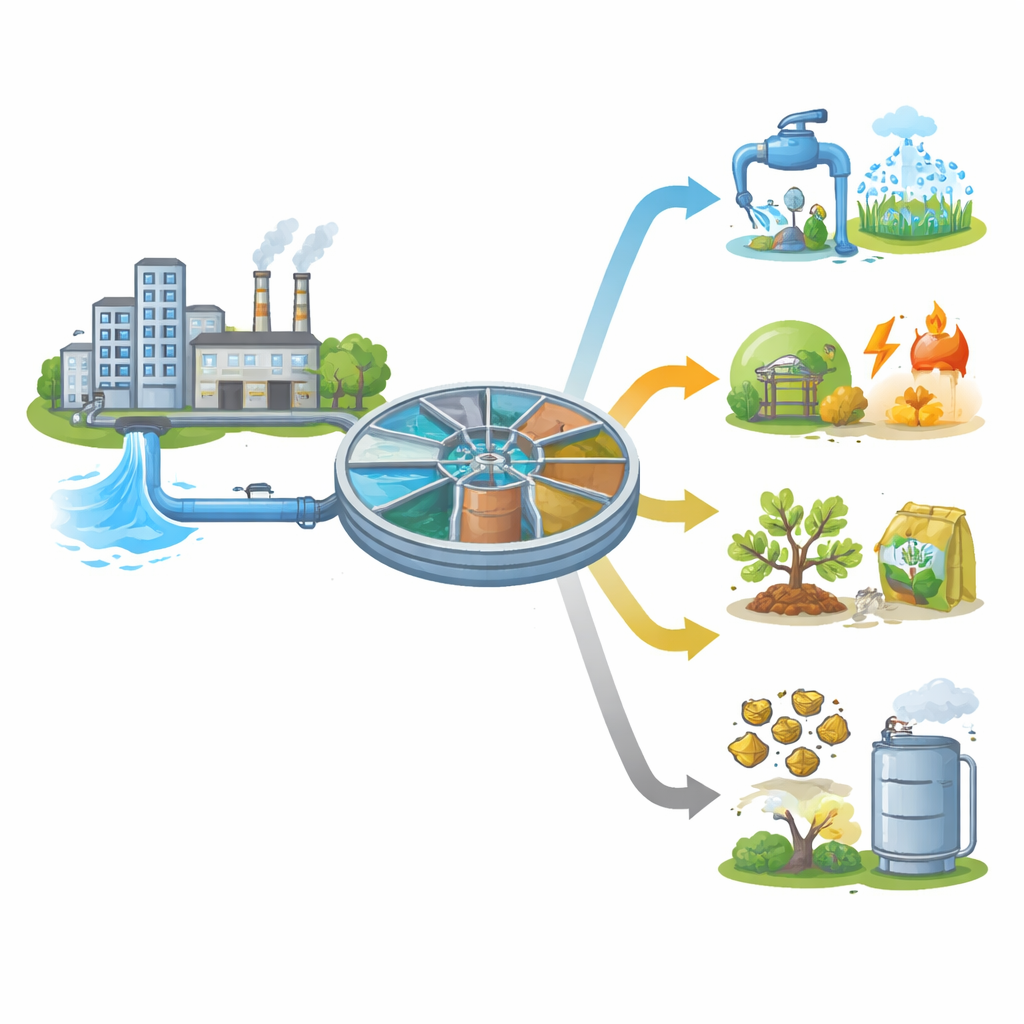
Most of us think of what goes down the drain as something to get rid of as quickly and safely as possible. This review argues that this everyday “waste” is actually a vast, untapped source of clean water, energy, plant nutrients, useful metals, and even climate benefits. As cities face growing water shortages, rising energy costs, and pressure to cut pollution, reimagining sewers and treatment plants as resource factories could change how we supply water, food, and power in a warming world.
Why Sewers Matter in a Thirsty World
The authors start by framing a stark reality: by 2050, more than half of humanity is expected to live in water‑stressed regions. At the same time, we already generate over 360 cubic kilometers of wastewater each year, much of it still discharged with little or no treatment. Instead of being seen as a dangerous burden, this stream can be viewed as a backup reservoir for cities—a continuous flow carrying not just water, but also organic matter, heat, nitrogen, phosphorus, potassium, and tiny amounts of valuable minerals. The review shows that, in principle, the chemical energy in wastewater is several times greater than the energy needed to clean it, and that the nutrients it carries could cover a significant share of fertilizer demand in some regions.
A New Way to Count What’s in the Pipes
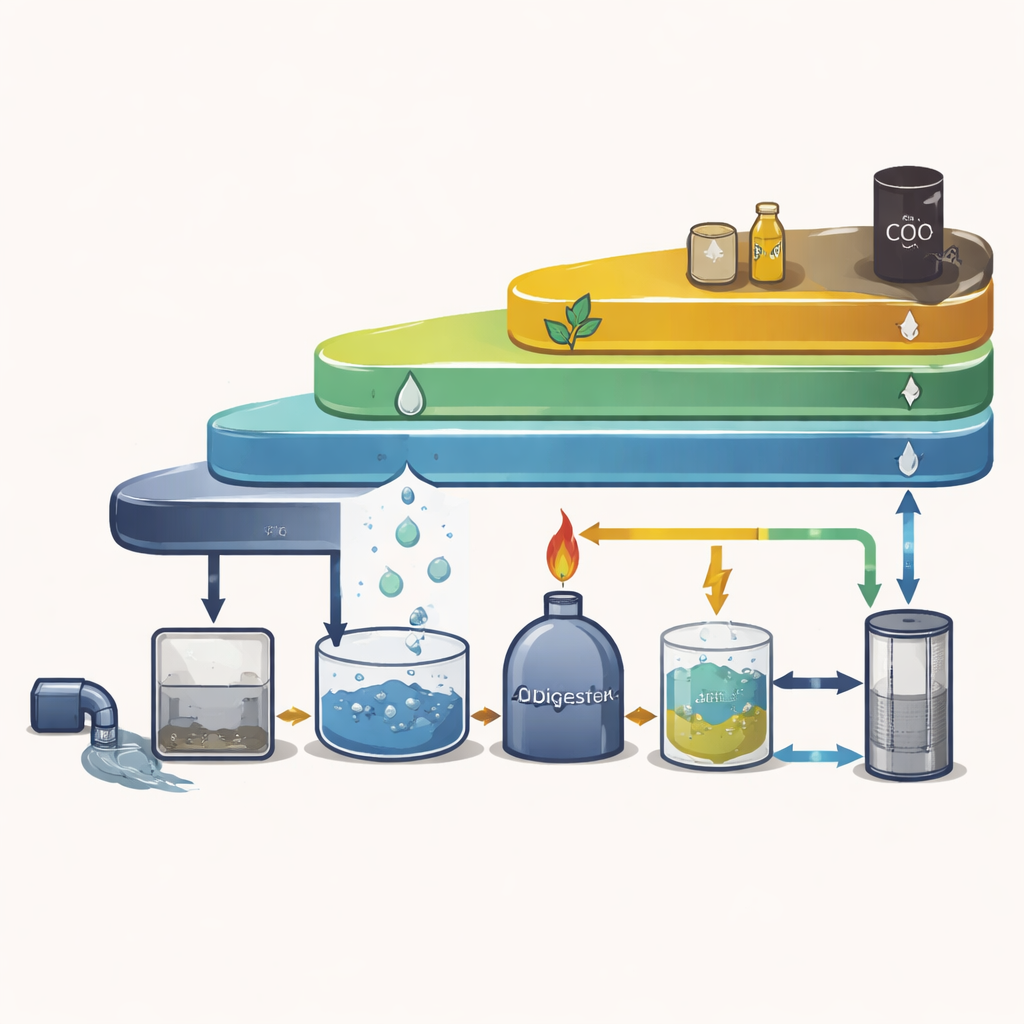
To turn this promise into practice, the paper introduces a “resource stack” model—essentially a ranked inventory of everything that can be recovered from a cubic meter of sewage. At the base of the stack is water, because it is the largest fraction and the most urgent need: modern treatment trains can return 70–90 percent of incoming water at a quality suitable for irrigation, industry, or even drinking. Above that lies energy, mostly in the form of biogas from anaerobic digestion and dissolved methane that can be captured rather than released. The next layer is nutrients like nitrogen and phosphorus that can be crystallized into slow‑release fertilizers, followed by trace materials such as lithium, rare earths, gold, and palladium, which exist at tiny concentrations but can have high strategic value. At the top sits carbon, not as a pollutant to vent, but as a biogenic gas that can be locked into minerals, fuels, or products and potentially earn carbon credits.
Designing Treatment Plants as Resource Factories
Knowing what can be recovered is only half the puzzle; the other half is how to arrange pipes and tanks so these gains are actually realized. For that, the authors describe a “treatment‑train design space,” which treats a plant as a set of plug‑and‑play modules—front‑end screens and clarifiers, biological reactors, digesters, nutrient‑capture units, advanced filters, and polishing steps. By mixing and matching these blocks, engineers can build trains that achieve different balances of clean water, energy, nutrient recovery, and pollutant removal. The framework makes clear that choices in one part of the system ripple through others: for example, diverting more carbon to a digester improves biogas production but can leave less food for microbes that remove nitrogen in the main treatment line, changing both energy use and fertilizer potential downstream.
Real‑World Examples and Real‑World Hurdles
Case studies from around the world show these ideas moving from diagrams to steel and concrete. Singapore’s Tuas Nexus complex pairs sewage treatment with solid‑waste processing so that food scraps and sludge are co‑digested to produce enough biogas to help power both facilities, while advanced membranes and reverse osmosis produce high‑purity water that feeds the city’s tap supply. In Austria, the Strass plant runs as an energy‑positive facility, regularly generating more electricity than it uses. Other plants in North America and Europe recover solid fertilizer granules called struvite, and industrial parks in Denmark link multiple factories so that one company’s wastewater fuels another’s processes. Yet the review also catalogues stubborn obstacles: high up‑front costs, complex operation, the lack of clear rules and markets for recovered products, and public unease about drinking water that was once sewage or using biosolids on fields.
What This Means for Everyday Life
For non‑specialists, the main message is that toilets and drains are part of a much larger story about how societies use and reuse resources. If we continue to treat wastewater as something to push “beyond the flush” and forget, we forfeit a powerful tool for coping with drought, reducing fertilizer bills, cutting greenhouse gases, and easing pressure on mines and rivers. The review argues that with smart plant design, supportive policies, transparent monitoring, and genuine community engagement, wastewater systems can shift from being quiet energy hogs at the edge of town to multi‑purpose hubs that supply safe water, renewable energy, recycled nutrients, and cleaner environments. In short, rethinking what happens after we flush could play a central role in building more resilient and circular cities.
Citation: Ganesapillai, M., Vinayak, A.K., Tiwari, A. et al. Beyond the flush: a review of wastewater circular systems. npj Clean Water 9, 31 (2026). https://doi.org/10.1038/s41545-026-00557-8
Keywords: wastewater reuse, resource recovery, circular economy, nutrient recycling, water–energy nexus