Clear Sky Science · en
Autogenous vaccines: an alternative approach to disease control in poultry
Why this matters for eggs and chicken
Chicken and turkey meat now supply a large share of the world’s protein, so keeping flocks healthy affects food prices, animal welfare, and antibiotic use. This article explains how “made to order” vaccines, created from germs found on a specific farm, are being used to control stubborn poultry diseases when standard vaccines are not enough. It also explores what these custom vaccines can and cannot do, and how they fit into safer, more sustainable farming.
Tailor made protection for local germs
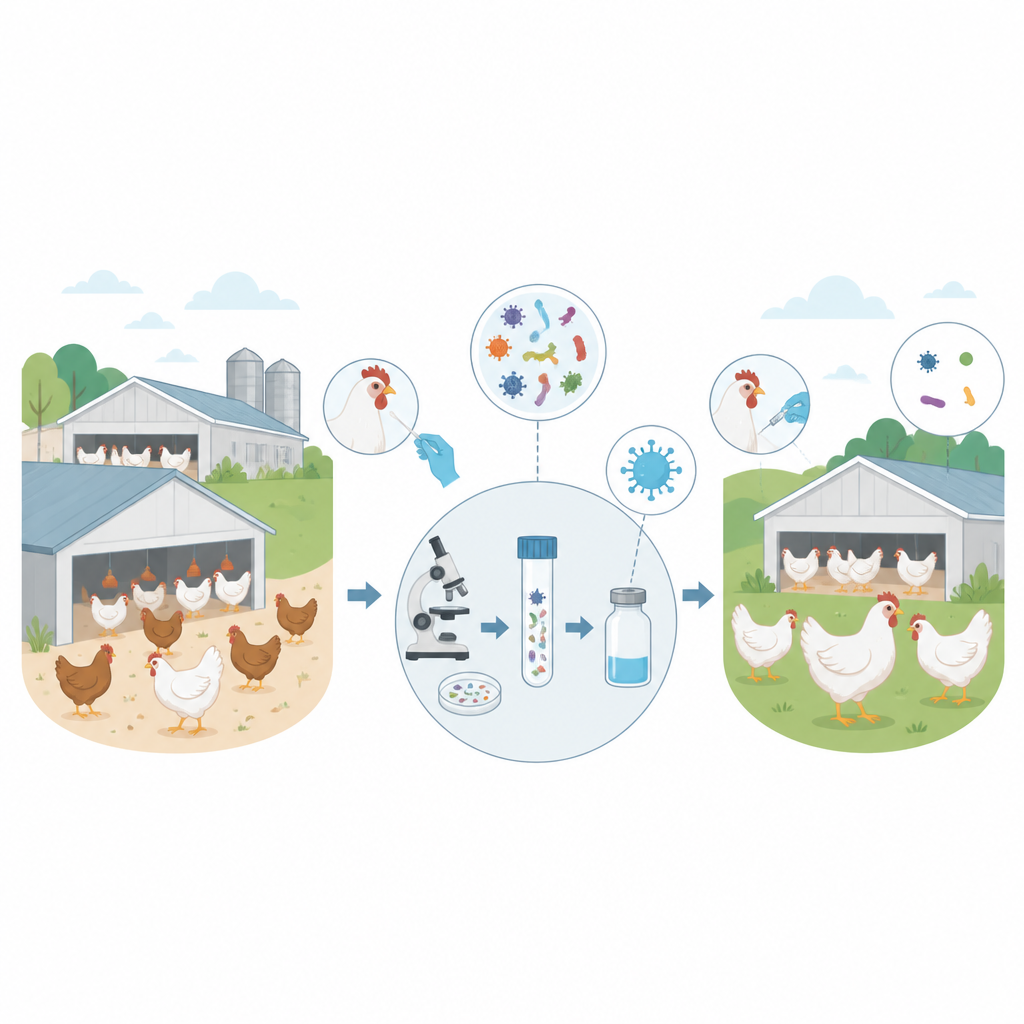
Standard vaccines are designed for the most common and long lasting disease threats, and must work across many countries and production systems. But bacteria and viruses in poultry barns keep evolving, and local strains can drift away from the ones included in licensed products. Autogenous vaccines offer a way to close this gap. They are made from germs isolated directly from sick birds in a particular flock or in closely linked farms. Once those germs are inactivated and mixed with an immune boosting ingredient, the resulting vaccine is sent back to the same population of birds, aiming for a closer match between vaccine and field strains.
How custom vaccines are made
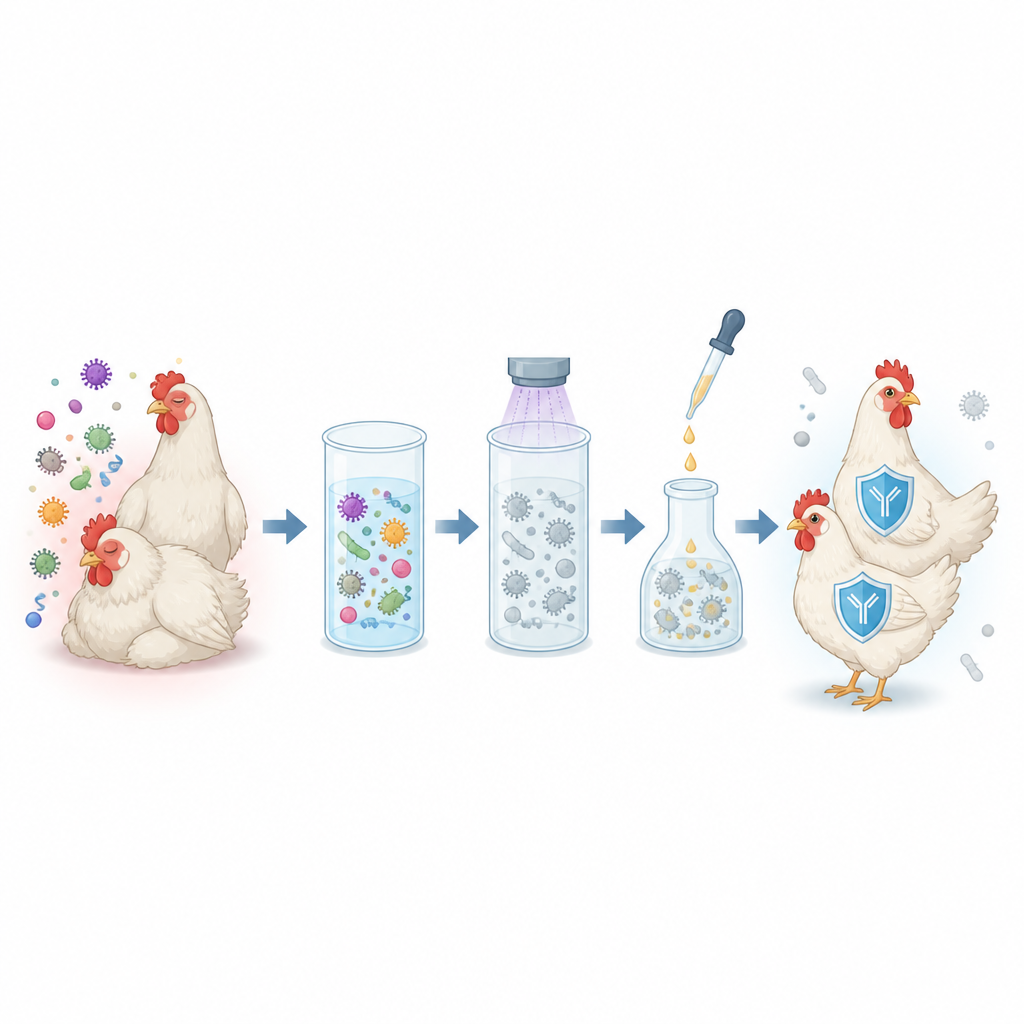
Developing an autogenous vaccine begins with samples from diseased birds or from routine monitoring. Bacteria can usually be isolated and identified within a few days, while viruses may require several weeks and more complex methods such as genetic sequencing. After the culprit strains are confirmed and judged important for that farm, they are grown under controlled conditions, chemically inactivated so they can no longer cause disease, and combined with adjuvants such as mineral oil or aluminum salts that strengthen the immune response. Quality checks focus on purity, full inactivation, and freedom from contamination. Because formal proof of long term safety and protection is usually waived, regulators instead require strict manufacturing rules, documentation, and limited shelf life.
Balancing benefits, limits, and unknowns
Autogenous vaccines can be produced in weeks rather than years, which is critical when new variants of viruses like infectious bronchitis or avian influenza appear. Studies cited in the article show that, when vaccine strains closely match local viruses, flocks often have higher antibody levels, lower viral loads, less shedding, and better survival than with standard vaccines alone. Custom vaccines have also helped reduce losses from bacterial problems such as colibacillosis, infectious coryza, and Salmonella, cutting mortality, trimming condemnation at slaughter, and lowering the need for antibiotics. However, their coverage is narrow: they mainly protect against the strains included in the bottle, and may not shield birds from unrelated or future variants. Because detailed field trials are rare, batch to batch potency can vary, and much of the evidence comes from farm performance rather than controlled experiments.
Role in reducing antibiotic use and protecting chicks
A major appeal of autogenous vaccines is their potential to replace routine preventive antibiotic treatments. Case reports describe farms that, after adopting flock specific vaccines against Escherichia coli or Campylobacter, saw fewer disease outbreaks and used fewer antimicrobial drugs. Custom vaccines for breeder hens can also boost the level of protective antibodies passed through the egg yolk to chicks, giving them temporary “borrowed” immunity during their first fragile weeks of life. The review explains how these maternal antibodies rise and fall for different pathogens, and how timing of chick vaccination must be adjusted so that borrowed antibodies do not block the bird’s own response to later shots.
Looking ahead to smarter flock health
The authors conclude that no single vaccine strategy fits every poultry farm. Licensed vaccines remain the backbone of protection because they are well tested, broad in scope, and convenient. Autogenous vaccines add a flexible layer of defense when troublesome local strains escape standard products, or when no licensed vaccine exists. Used alongside strong hygiene, surveillance, and good record keeping, they can help reduce antibiotic use and economic losses. Future work aims to improve the consistency and speed of these custom vaccines, possibly by using newer platforms like mRNA or DNA technologies and by building shared databases of poultry germs. For non specialists, the message is that custom vaccines are a promising tool, but they must be applied thoughtfully and monitored carefully to keep both birds and the food supply healthy.
Citation: Haach, V., Silveira, K.R.D. & Bastos, A.P.A. Autogenous vaccines: an alternative approach to disease control in poultry. npj Vaccines 11, 99 (2026). https://doi.org/10.1038/s41541-026-01429-5
Keywords: autogenous vaccines, poultry health, flock specific immunity, antimicrobial reduction, maternal antibodies