Clear Sky Science · en
Evaluating varicella-zoster virus vaccine immunogenicity through Fc-mediated antibody functions: the roles of ADCP and ADCC
Why this study matters for everyday health
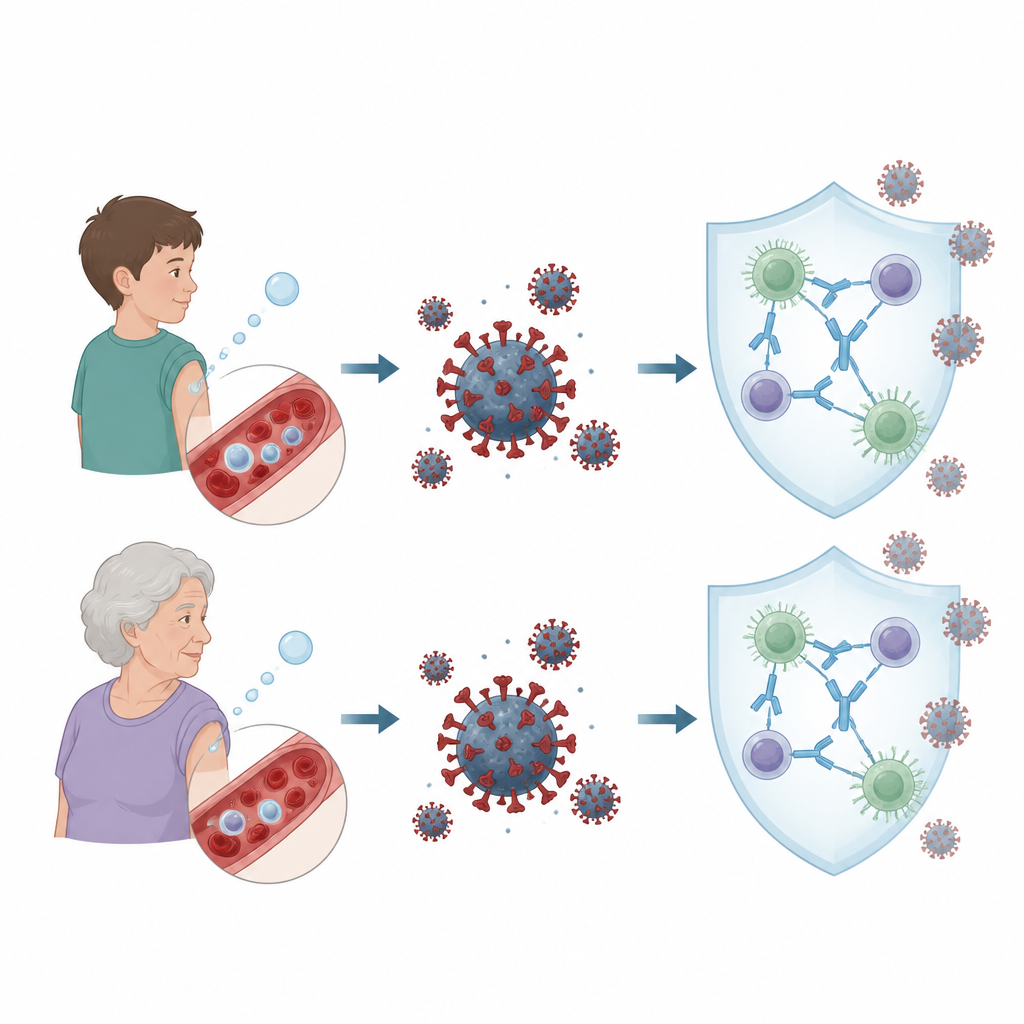
Chickenpox in childhood and shingles later in life are caused by the same virus, varicella zoster virus, yet our immune system controls these illnesses in different ways. As more countries rely on vaccines to prevent both infections, doctors need better tools to judge how well those vaccines work. This study explores the quality, not just the quantity, of antibodies made after chickenpox and shingles shots, helping explain why protection can last or fail in different ages.
Looking beyond simple antibody counts
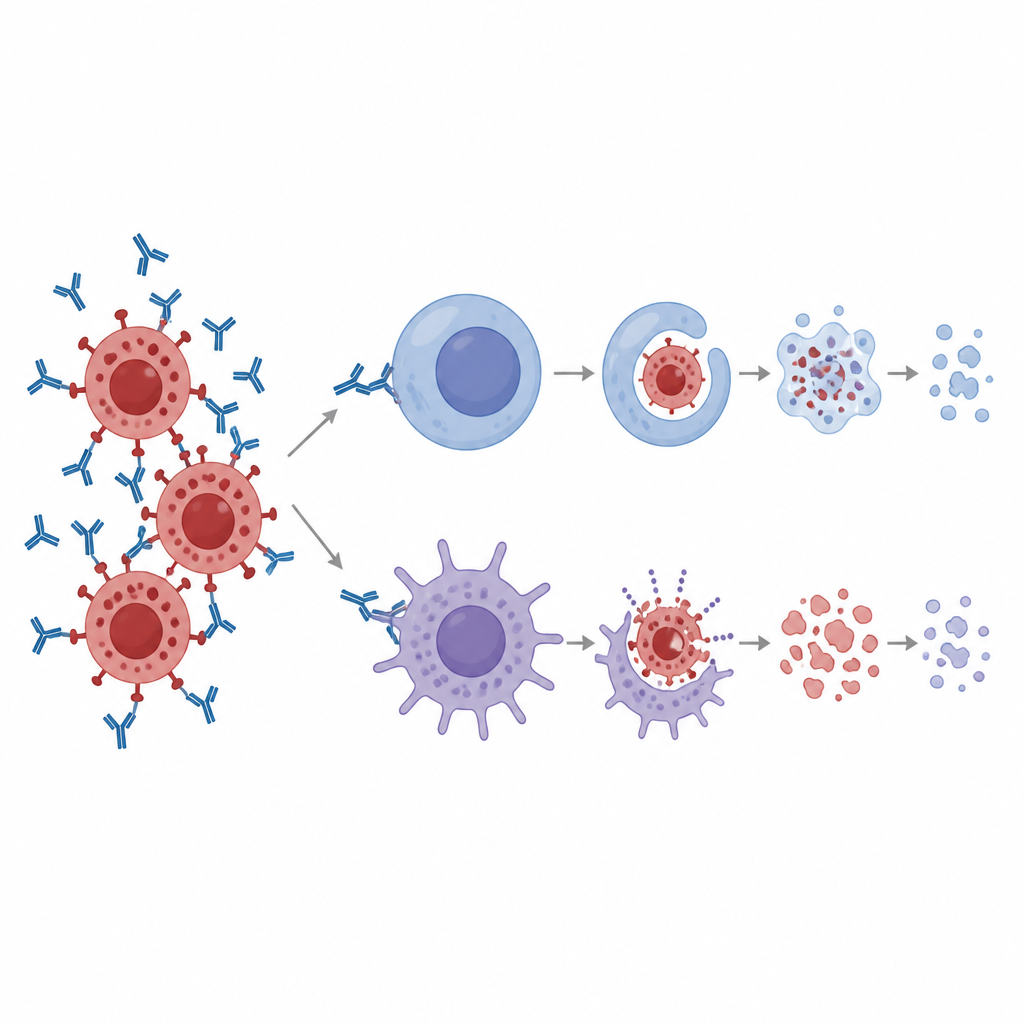
Traditional blood tests after vaccination focus on how many antibodies are present or whether they can block the virus from entering cells. However, many viruses, including the chickenpox and shingles virus, often hide inside our own cells, where blocking entry is no longer enough. The authors examined two lesser known antibody jobs: helping immune cells swallow infected cells and helping them kill those cells. By developing laboratory tests that mimic these jobs, they aimed to capture a fuller picture of how vaccines prepare the body for real infections.
How the new tests were built and checked
To model infection, the researchers grew human cells already carrying the virus and then mixed them with blood from vaccinated people. For one test, they added cells that behave like garbage collectors, watching how well antibodies guided them to engulf the infected cells. For the other test, they added natural killer cells, the body’s hit squad, and measured how effectively antibodies helped these killers deliver toxic molecules into infected targets. They carefully tuned cell ratios, timing, and blood dilutions, and then confirmed that the tests were stable from day to day, between technicians, and even across three different laboratories.
What they found in children and adults
The team studied four common vaccines: two chickenpox shots given to one year old children and two shingles vaccines given to adults over 50. Before vaccination, young children had almost no detectable functional activity, while Korean adults already showed moderate activity from past exposure. After vaccination, all groups showed clear jumps in both engulfing and killing functions. In children, a single chickenpox dose produced functional activity on par with that seen in adults after a shingles shot. Standard antibody tests also rose after every vaccine, but one detailed test that tracks antibodies binding to virus on cell surfaces lined up especially well with the new functional measures.
Different antibody flavors by age
Antibodies come in subtypes that act like different tools in a toolbox. Two of these, called IgG1 and IgG3, are particularly good at recruiting helper cells. The study discovered that chickenpox vaccination in children favored IgG3, while shingles vaccination in adults favored IgG1. Even though children had lower total antibody levels, their higher IgG3 levels were strongly linked to effective engulfing and killing of infected cells. In adults, IgG1 showed the tighter link with these protective functions. This suggests that the body changes its preferred antibody tools over a lifetime, which in turn shapes how vaccines work.
What this means for future vaccines
Overall, the research shows that chickenpox and shingles vaccines do more than raise antibody counts: they train antibodies to work hand in hand with early responder immune cells to clear virus infected cells. The new lab tests reliably capture these subtle actions and match closely with an established marker of protection for chickenpox. For lay readers, the key message is that not all antibodies are equal; how well they guide immune cells may matter as much as how many we have. These methods could help vaccine developers design and compare future shots that offer strong, long lasting protection against both childhood chickenpox and adult shingles.
Citation: Xayaheuang, S., Hwang, JY., Kim, Y. et al. Evaluating varicella-zoster virus vaccine immunogenicity through Fc-mediated antibody functions: the roles of ADCP and ADCC. npj Vaccines 11, 102 (2026). https://doi.org/10.1038/s41541-026-01424-w
Keywords: varicella zoster virus, chickenpox vaccine, shingles vaccine, antibody function, immune cells