Clear Sky Science · en
An oral Eimeria-vectored vaccine induces protective immunity against chicken infectious anemia
Why this matters for chickens and for us
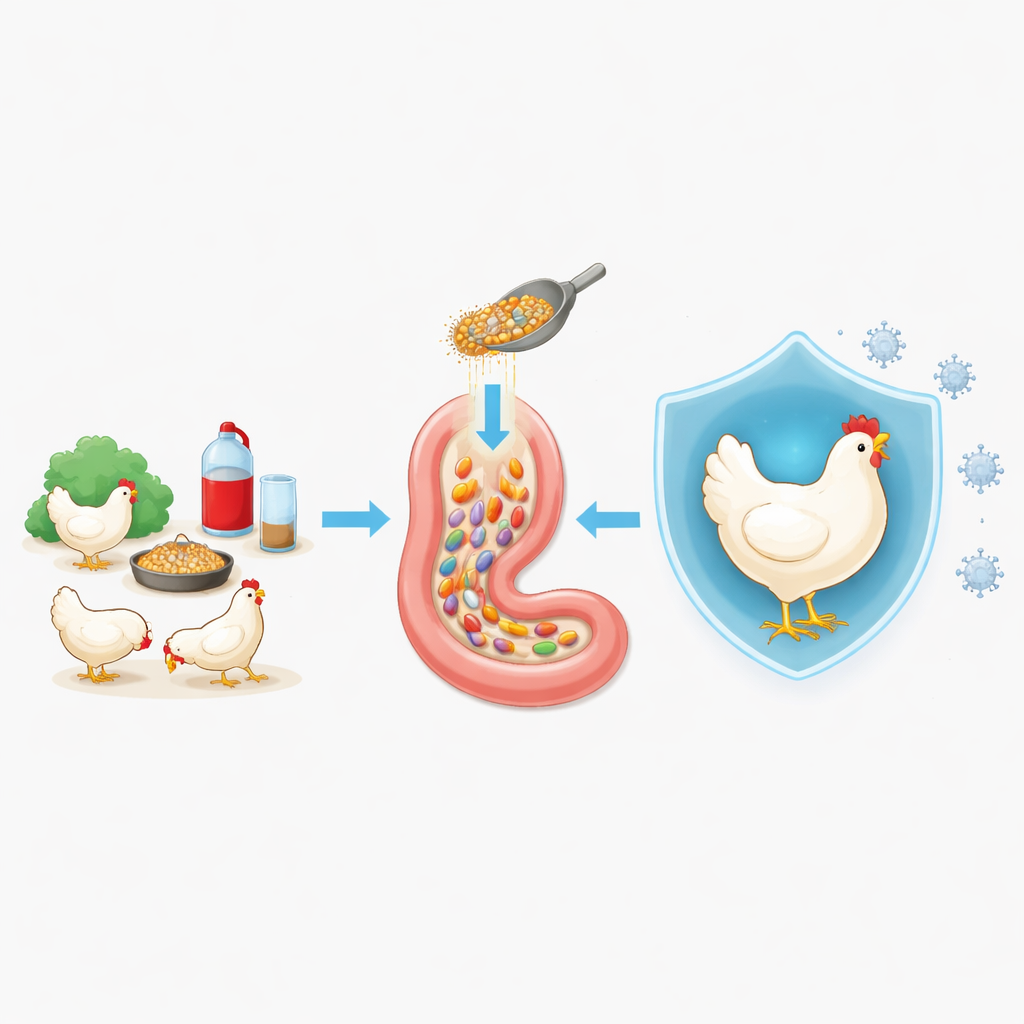
Modern poultry farms depend on healthy birds to supply affordable meat and eggs. Yet tiny viruses can silently damage young chicks’ immune systems, making them sickly and harder to protect with routine vaccines. This study tests an inventive idea: turning a common gut parasite of chickens into an edible vaccine factory that can train chicks’ defenses early in life against chicken infectious anemia, a major cause of weakness, poor growth, and losses for farmers.
A sneaky virus that weakens young chicks
Chicken infectious anemia virus targets the cells that make blood and key immune cells in young birds. Infected chicks can become anemic, bruise easily, grow slowly, and die more often. Even when they survive, their weakened immune systems leave them wide open to other infections and reduce how well standard vaccines work. Existing vaccines against this virus are far from perfect: live vaccines can sometimes regain strength and cause disease, inactivated vaccines often need repeated injections, and newer DNA or protein vaccines struggle to provoke strong, lasting protection—especially in very young birds, when protection is most needed.
Turning a gut parasite into a vaccine courier
The researchers built on an unusual strength of poultry biology. Many chickens naturally encounter Eimeria, a single-celled parasite that lives in the gut and already serves as the basis of some live vaccines against coccidiosis. Because Eimeria thrives on mucosal surfaces—the moist linings of the intestine—it can stimulate strong local and whole-body immune responses when swallowed. In this work, the team genetically reprogrammed the species Eimeria tenella so that it produced high levels of two key surface pieces from the chicken infectious anemia virus, called VP1 and VP2. These viral building blocks are what the immune system needs to learn to recognize the virus without exposure to the whole pathogen.
Building and taming the vaccine parasite
Using an advanced multi-plasmid transfection system, the scientists inserted several copies of the VP1 and VP2 genes, along with bright fluorescent markers and a built-in immune booster fragment called C3d, into the parasite’s genome. They then used drug treatment and cell sorting to select only those parasites that carried the new genetic cargo, raising the proportion of engineered organisms to over 90 percent and confirming stable production of the viral proteins. When these modified parasites infected chickens, they completed their life cycle but produced fewer offspring and caused milder intestinal effects than the wild type. In other words, the vaccine strain was still able to “show” viral fragments to the bird’s immune system, but it was less damaging than its natural counterpart.
How the oral vaccine trains the immune defenses
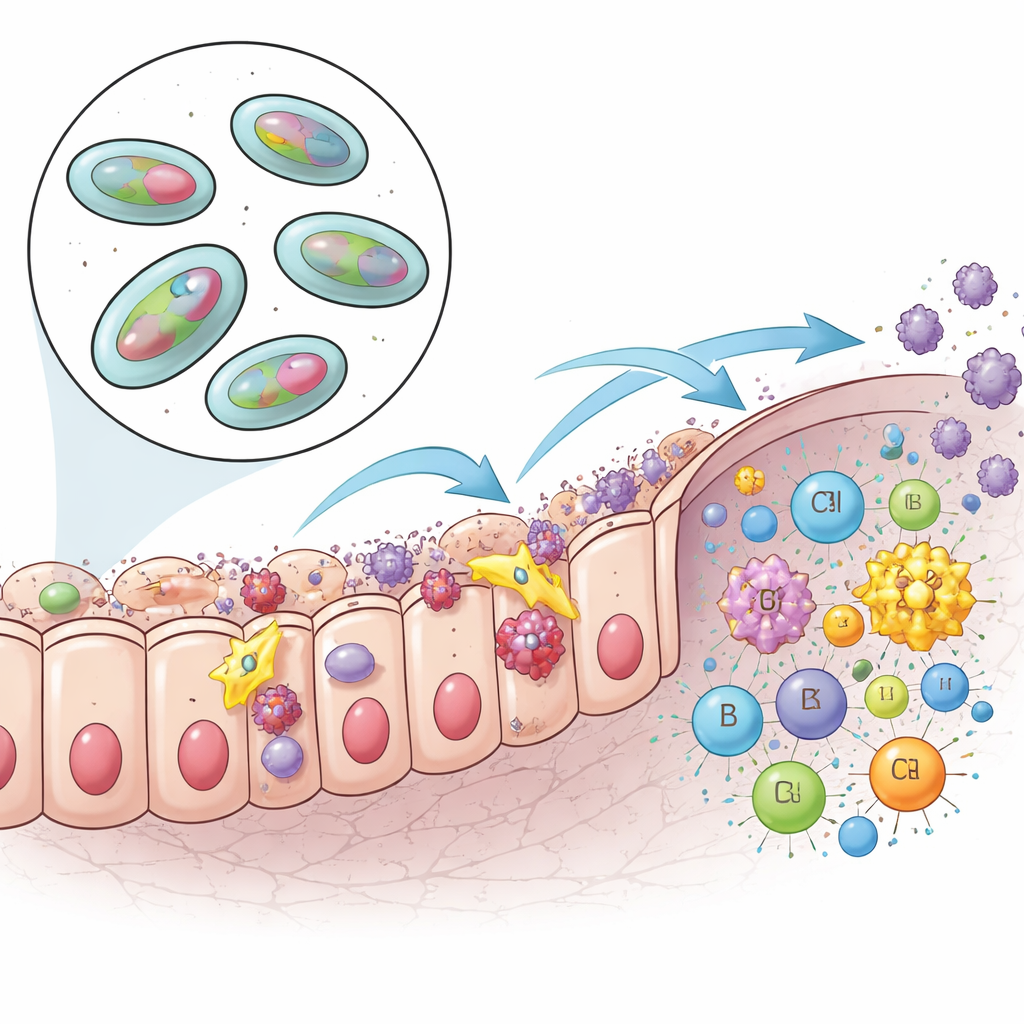
The team then tested whether swallowing these engineered parasites could train the birds’ defenses against chicken infectious anemia virus. Chicks received a small oral dose of the modified Eimeria, followed by a larger booster dose two weeks later. After the second dose, their blood contained much higher levels of antibodies specific to the VP1 and VP2 viral pieces than did birds given normal parasites. Immune cell tests showed more white blood cells capable of releasing interferon-gamma, a powerful alarm signal that helps coordinate antiviral responses. At the same time, the birds shed fewer parasite eggs after the booster, a sign that their immune systems were not only recognizing the added viral material but also limiting the parasite’s own replication.
Real-world test against the disease
To see whether this immune training really protected against disease, the researchers deliberately exposed vaccinated and control birds to the infectious anemia virus. Unprotected birds showed classic severe damage: pale, fatty bone marrow, shriveled thymus glands, smaller spleens, and spotted livers—organs critical for blood formation and immunity. In contrast, birds that had eaten the engineered Eimeria looked almost like uninfected controls, with largely normal organs. Measurements of viral genetic material in the blood and tissues showed clearly lower virus levels in the vaccinated group at multiple time points, confirming that the oral vaccine had blunted infection, even though it did not eliminate the virus completely.
What this approach could mean for poultry health
This study shows that a carefully modified gut parasite can double as an edible delivery system for viral vaccine components, protecting young chickens from a serious immunosuppressive disease. By harnessing the parasite’s natural route of infection—through the mouth and gut—the approach allows stress-free mass vaccination via feed or water, while stimulating both antibody and cellular defenses. Although challenges remain in scaling up production of such engineered parasites, the work points to a future where a single, safe oral vaccine could shield flocks against multiple pathogens at once, improving animal welfare, farm efficiency, and ultimately the security of the food supply.
Citation: Liao, Y., Wang, L., Shi, Y. et al. An oral Eimeria-vectored vaccine induces protective immunity against chicken infectious anemia. npj Vaccines 11, 86 (2026). https://doi.org/10.1038/s41541-026-01416-w
Keywords: oral poultry vaccine, Eimeria vector, chicken infectious anemia virus, mucosal immunity, transgenic parasites