Clear Sky Science · en
MtrE Loop2-specific multiple antigenic peptide vaccine and monoclonal antibody confer complement-dependent protection against Neisseria gonorrhoeae
Why a New Approach to Gonorrhea Matters
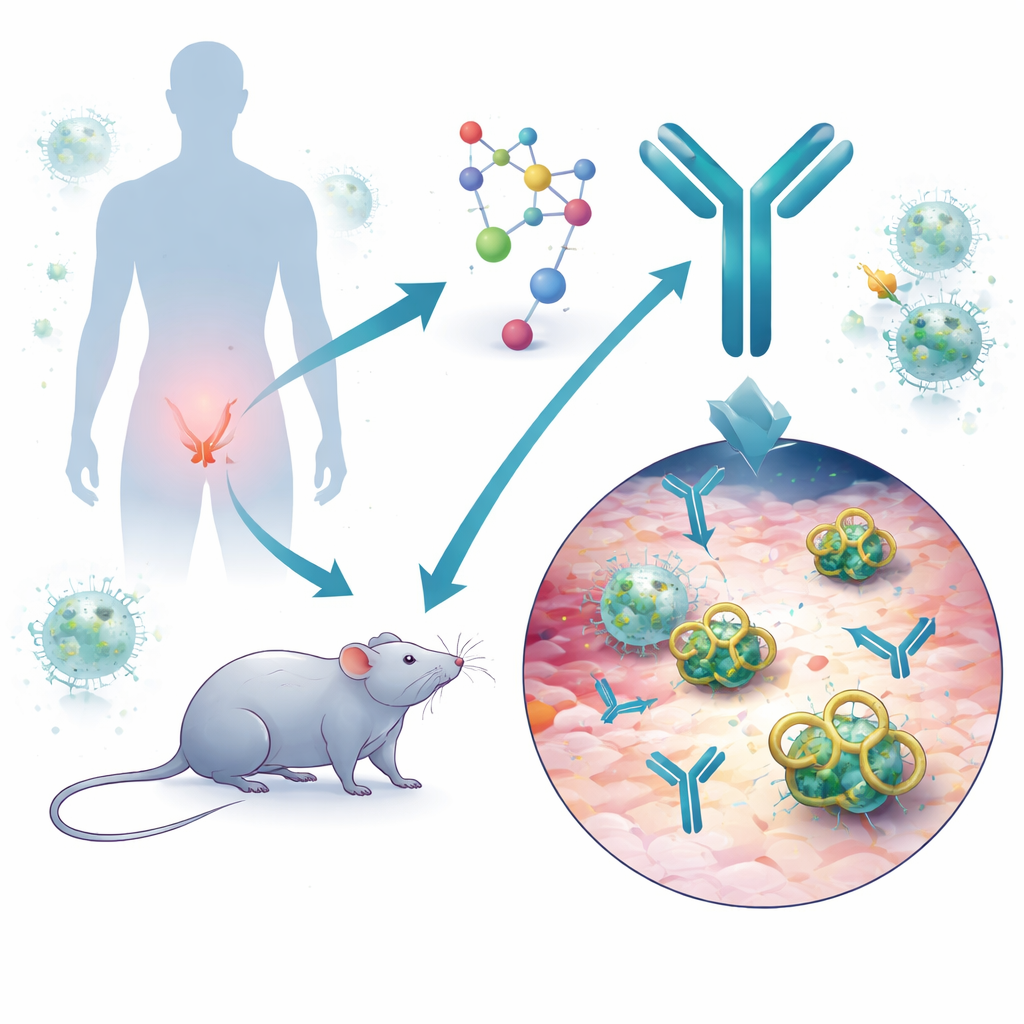
Gonorrhea, a common sexually transmitted infection, is becoming harder to cure as the bacterium behind it, Neisseria gonorrhoeae, learns to resist our last remaining antibiotics. With tens of millions of new infections worldwide each year, doctors worry about a future where simple treatments no longer work. This study explores an alternative strategy: training the immune system to attack a tiny, stable part of a gonorrhea surface protein, using both a precision-made vaccine and a lab-designed antibody, to help the body clear even drug‑resistant strains.
A Tiny Target on a Tough Bacterium
The researchers focused on a protein called MtrE, which forms a channel in the gonorrhea bacterium’s outer membrane. This channel helps the microbe pump out toxic substances, including some antibiotics, and is important for its survival during infection. A small exposed segment of this protein, known as Loop2, is highly conserved—meaning it looks very similar across many gonorrhea strains, including those that resist standard drugs. That makes Loop2 an attractive bullseye: it is accessible to antibodies on the bacterial surface and unlikely to change quickly, so a vaccine aimed at it could work broadly.
Building a Focused Peptide Vaccine
Instead of using whole proteins or killed bacteria, the team created “multiple antigenic peptides” (MAPs). These are small copies of the Loop2 segment arranged like branches on a compact scaffold, designed to grab the attention of immune cells. Two versions were made: one with just the Loop2 branches, and one with an added short sequence intended to help immune cells chop up and present the peptide more efficiently. Both were given to mice along with an immune‑stimulating adjuvant. The vaccines triggered strong antibody responses, especially of the IgM type, and these antibodies were able to kill gonorrhea bacteria in test tubes when complement—a natural blood protein system that punches holes in microbes—was present.
Protection and Treatment in Mice
The crucial test was whether these vaccines could actually protect animals from infection. In a mouse model of vaginal gonorrhea, animals vaccinated in advance with either Loop2‑MAP cleared the bacteria faster and had lower bacterial counts than control animals, showing preventative (prophylactic) benefit. Even more striking, when mice were first infected and then given a single vaccine dose only hours later, they began clearing the infection within a few days. This rapid effect matched a surge in Loop2‑specific IgM antibodies, suggesting that quickly rising, complement‑activating antibodies can help the body push out an ongoing infection.
Designer Antibodies as a Drug Substitute
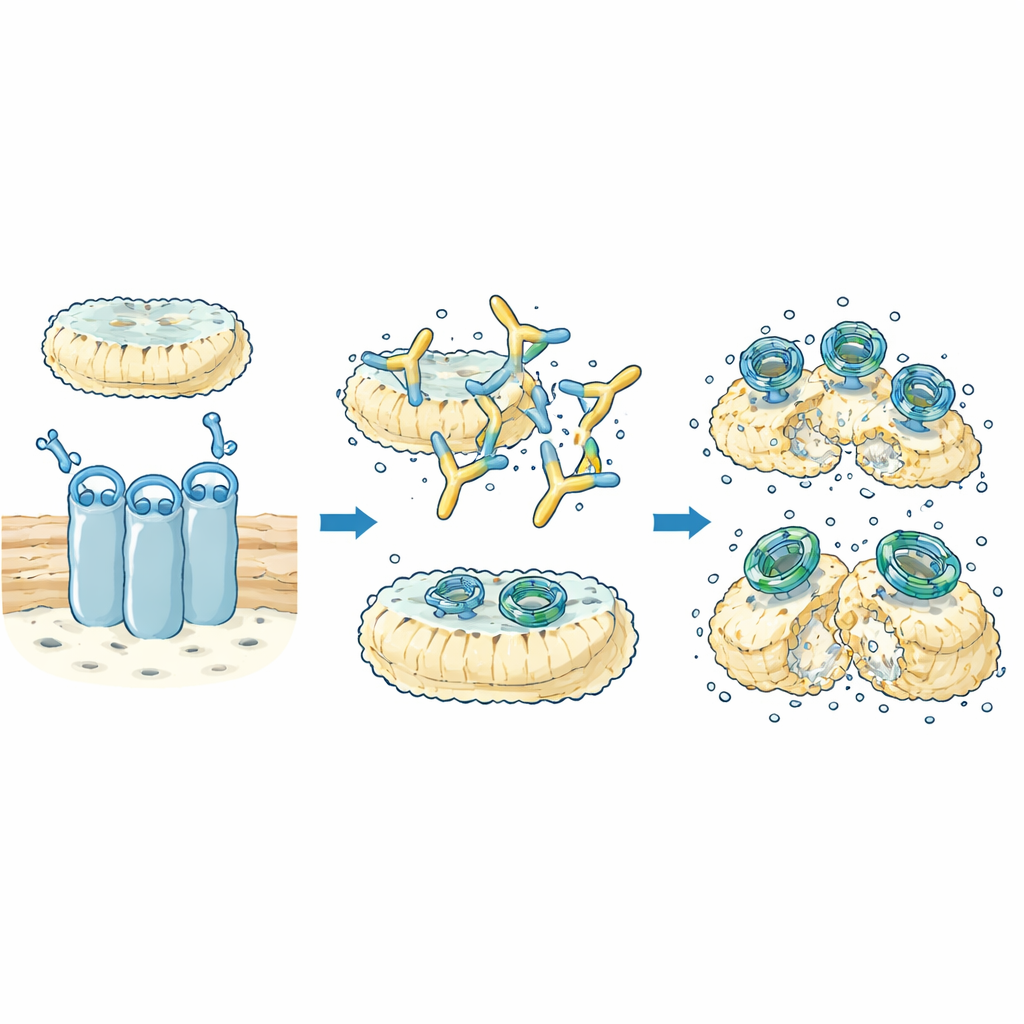
To see whether antibodies alone could serve as a treatment, the researchers isolated the most common antibody pattern (clonotype) from vaccinated mice using single‑cell sequencing. They then engineered a “chimeric” monoclonal antibody, called M01, that combined the mouse recognition regions with human antibody backbone regions suitable for future clinical use. M01 bound strongly to MtrE and Loop2 and showed powerful complement‑dependent killing of gonorrhea strains in the lab. When delivered directly into the vaginas of infected mice, M01 sped up bacterial clearance compared with control antibodies. Further versions of M01 were tweaked to either boost or block their ability to recruit complement. The enhanced version cleared infections even faster, while the non‑complement version lost its protective effect, firmly tying the antibody’s success to complement activity.
What This Could Mean for Future Care
To a layperson, the message is that this team has found a precise “Achilles’ heel” on the gonorrhea bacterium and shown that both vaccines and lab‑made antibodies aimed at this spot can help mice clear infection, even with dangerous drug‑resistant strains. The work highlights the body’s own complement system as a key partner in killing the bacteria. While mouse studies do not guarantee success in humans, these results suggest a path toward new tools—both preventative shots and antibody‑based treatments—that could one day reduce our reliance on fading antibiotics and help control gonorrhea’s growing threat.
Citation: Song, S., Ge, H., Yuan, D. et al. MtrE Loop2-specific multiple antigenic peptide vaccine and monoclonal antibody confer complement-dependent protection against Neisseria gonorrhoeae. npj Vaccines 11, 81 (2026). https://doi.org/10.1038/s41541-026-01412-0
Keywords: gonorrhea vaccine, multidrug-resistant bacteria, monoclonal antibodies, complement-mediated killing, peptide immunization