Clear Sky Science · en
Pooled analysis of PCV13 efficacy from controlled human infection trials in Malawi and the UK
Why this study matters
Pneumonia caused by the bacterium Streptococcus pneumoniae remains a major killer worldwide, especially in low income countries. A widely used vaccine, PCV13, helps protect against severe disease, but scientists still need to understand exactly how well it stops the bacteria from quietly living in the nose and throat, and whether men and women benefit in the same way. This study combines data from vaccine experiments in volunteers in Malawi and the United Kingdom to see how well PCV13 blocks bacterial carriage and how immune responses differ between sexes and settings.
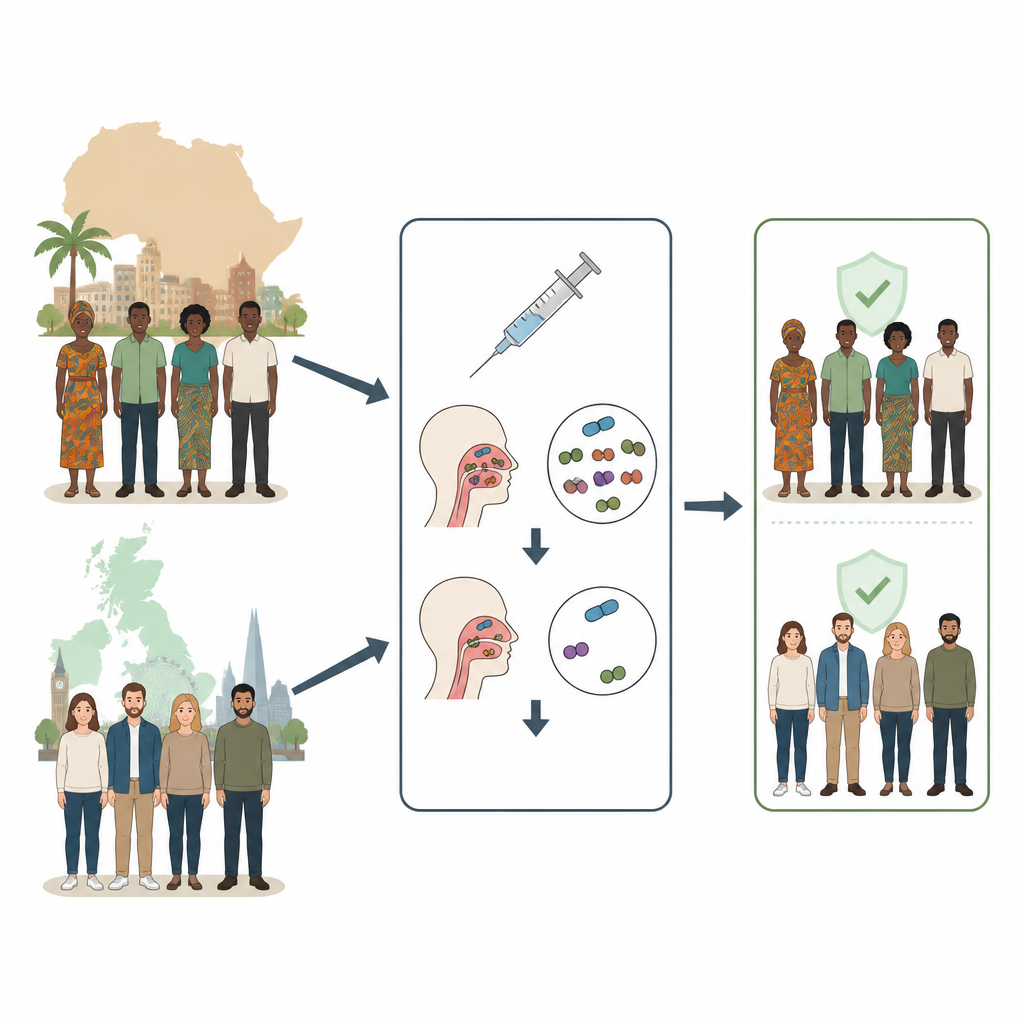
Two trials on two continents
The researchers drew on controlled human infection studies in which healthy adults first received either PCV13 or a comparison injection, then later had a carefully measured dose of pneumococcal bacteria placed in their noses. One trial took place in Blantyre, Malawi, a crowded urban area with high rates of pneumococcal disease and frequent natural exposure. The other was in Liverpool, UK, where overall disease levels and background exposure are lower and health care access is greater. Although routine childhood vaccination schedules differ between the two countries, all adult volunteers in these trials had never received a pneumococcal vaccine, allowing a cleaner look at the effect of PCV13 itself.
How the vaccine changed bacterial carriage
Across both studies, about one in four unvaccinated volunteers became temporary carriers of the serotype 6B strain after bacterial challenge. Among those who received PCV13, this risk fell sharply. When the teams pooled the data, vaccination was linked to a 76 percent reduction in the chance of carrying the bacteria in the nose. This strong protective effect appeared in both Malawi and the UK, even though the exact experimental conditions, such as the bacterial dose used in Malawi, varied by group. A sensitivity check that adjusted for these dose differences reached the same conclusion, suggesting the lower risk was genuinely due to vaccination.
Looking for differences between women and men
The scientists were especially interested in whether biological sex changed either the risk of carriage or the benefit of vaccination. In both Malawi and the UK, women tended to show slightly higher carriage rates than men, both with and without vaccination, but these differences were small and not statistically convincing. When the researchers used statistical models that combined all 300 participants, sex was not meaningfully linked to the risk of becoming a carrier, and there was no clear sign that PCV13 worked better in one sex than the other. However, the numbers of participants, especially within each sex and country, were modest, so the study could have missed subtle differences.
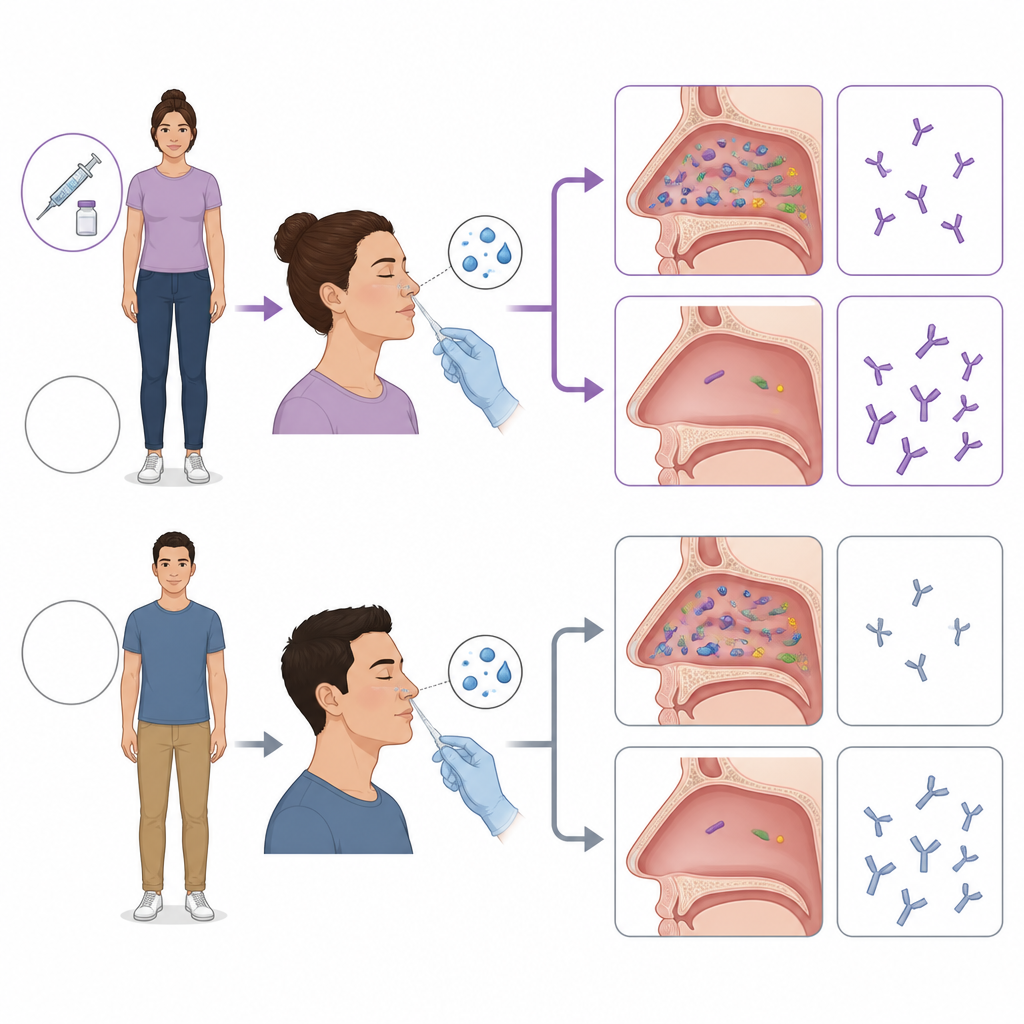
Immune responses in different places
The team also measured levels of protective antibodies in the blood before and after vaccination. Adults in Malawi started out with much higher baseline antibody levels than those in the UK, likely reflecting more frequent natural exposure to pneumococcal bacteria in this high transmission setting. PCV13 boosted antibody levels in both countries. In Malawi, vaccinated women showed higher antibody levels after vaccination than vaccinated men, and a larger fold increase from baseline, hinting that women there may mount a somewhat stronger response. This pattern was less clear in the UK, and combining the datasets showed only modest, mostly non significant sex differences overall. These variations may relate not only to biology, such as hormones and genes, but also to environment, prior infections and technical differences in laboratory measurements.
What the findings mean
For a non specialist reader, the main message is that PCV13 worked well in these carefully controlled experiments, greatly lowering the chance that volunteers became carriers of a common pneumococcal strain in their noses after exposure. This matters because blocking silent carriage is a key step in reducing spread and, ultimately, severe disease. The study did not find strong evidence that men and women benefit differently from the vaccine, though it suggests that women may sometimes produce higher antibody levels. By pooling data from Malawi and the UK, the work also shows how combining studies from very different settings can sharpen estimates of vaccine performance, while highlighting the need for larger, harmonised trials to fully understand how sex, environment and prior exposure shape protection.
Citation: Kudowa, E., Tembo, G., Chirwa, A.E. et al. Pooled analysis of PCV13 efficacy from controlled human infection trials in Malawi and the UK. npj Vaccines 11, 101 (2026). https://doi.org/10.1038/s41541-026-01381-4
Keywords: pneumococcal vaccine, PCV13, controlled human infection, sex differences, pneumococcal carriage