Clear Sky Science · en
Metabolic gene expression-based stratification and prognostic risk predictive model of head and neck squamous cell carcinoma
Why tumor fuel choices matter
Head and neck cancers are common in many parts of the world and are often deadly when they spread or come back after treatment. This study looks at how these tumors "fuel" themselves, asking whether differences in their internal chemistry can sort patients into groups with better or worse chances of survival. By reading patterns in tumor genes and proteins, the researchers show that not all head and neck cancers are alike and that their fuel choices may help doctors forecast risk and tailor treatment.

Different ways a tumor powers itself
Cancer cells do not all burn nutrients in the same way. Some rely more on a process in tiny power stations called mitochondria, while others lean on chemical routes that supply building blocks and help control harmful oxygen byproducts. The team focused on two such routes: one that generates energy inside mitochondria and another that feeds a pathway that makes DNA and keeps cell chemistry in balance. Both are known to be important in how tumors grow, spread, and resist drugs.
Sorting patients into four fuel types
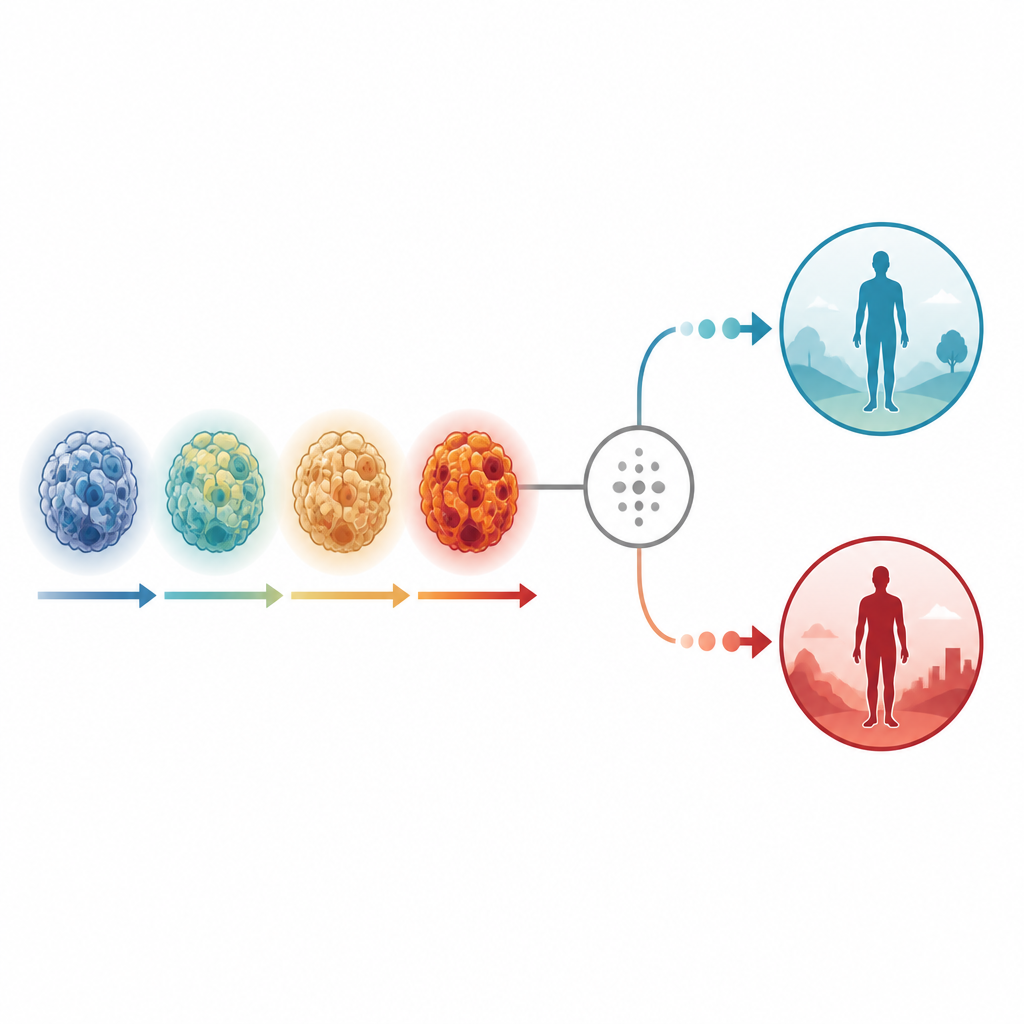
Using genetic data from 472 people with head and neck squamous cell carcinoma, the researchers grouped tumors according to the activity of genes linked to these two fuel routes. This produced four clear types. One, called quiescent, showed low activity in both routes and made up about half the cases. Two others leaned mainly on one route or the other. The smallest group, called mixed, was switched on in both routes at once. When the team compared these groups with patient records, quiescent tumors were more often early stage and linked to the longest survival, while mixed tumors had the highest cell growth scores and the poorest survival.
Checking the pattern in real tumor samples
To test whether these fuel types were real and not just an artifact of one dataset, the authors turned to large collections of tumor protein measurements and to samples from five people undergoing surgery for oral cancer. Across these independent protein datasets, the same major fuel patterns appeared, again with a dominant quiescent group and a smaller mixed group. In the surgical samples, three of the four types were seen. Proteins involved in energy production and in supplying raw material for growth tended to rise in tumor tissue compared with nearby normal tissue, especially in pathways that support rapid cell division.
Building a risk score from tumor chemistry
Because the mixed fuel type had the worst outcomes, the researchers used its gene pattern to construct a risk score. They applied a statistical method that sifts through many genes and keeps only those that add useful information. This yielded thirteen genes tied to the two key fuel routes. By combining the activity of these genes into a single number, they could divide patients into high and low risk groups. Across internal tests and an outside dataset, people in the high risk group died sooner than those in the low risk group, and the score performed at least as well as earlier models that used broader sets of metabolic genes.
Hints for tailoring future treatments
The study also explored how these fuel types might respond to medicines. By comparing tumor gene patterns with laboratory drug screens, the team found that the mixed group, which has the poorest outlook, may be more sensitive to drugs that block mitochondrial energy production and to certain kinase inhibitors. While these findings are not ready for routine care, they suggest that knowing a tumor’s fuel type could help guide drug choice in the future and support efforts to develop treatments that target cancer metabolism.
What this means for patients
In simple terms, this work shows that head and neck cancers can be divided into fuel-efficient and fuel-hungry types, and that these differences are linked to how fast the disease progresses. A gene-based risk score built from this fuel map can help identify patients who may need closer monitoring or more aggressive therapy. With further testing in larger groups, such metabolic fingerprints could become part of personalized care, helping doctors match each patient to the treatment strategy most likely to keep the cancer in check.
Citation: Sau, S., Gupta, A., Sinha, S. et al. Metabolic gene expression-based stratification and prognostic risk predictive model of head and neck squamous cell carcinoma. npj Syst Biol Appl 12, 69 (2026). https://doi.org/10.1038/s41540-026-00689-0
Keywords: head and neck cancer, tumor metabolism, oxidative phosphorylation, pentose phosphate pathway, prognostic risk model