Clear Sky Science · en
Neuronal and glial networks interact with traumatic brain injury to modulate cognition in ABCD study
Why some kids struggle after a "mild" concussion
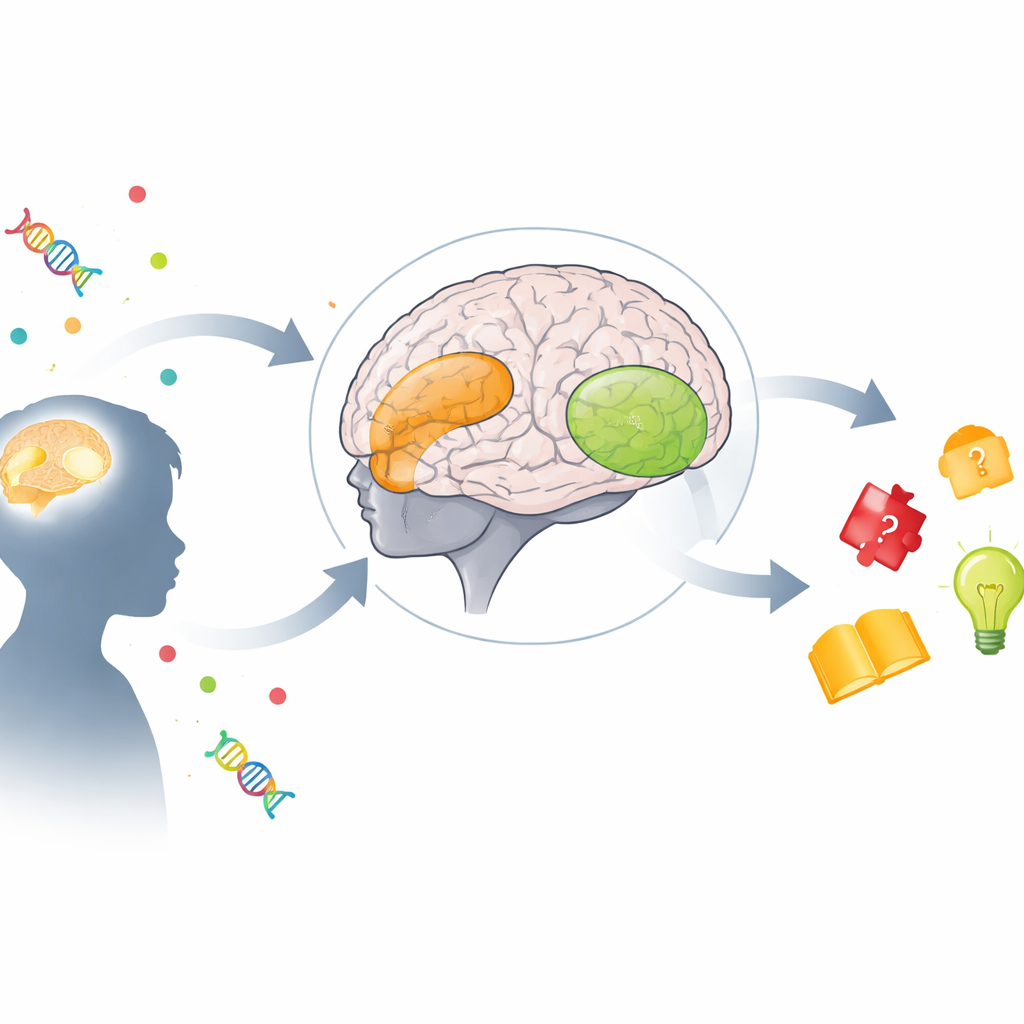
Mild traumatic brain injury, often called a concussion, is common in children and teens and usually considered temporary. Yet some young people bounce back quickly while others have lingering problems with learning and memory. This study asks a pressing question for families, clinicians, and educators: how do a child’s genes and brain cell networks interact with a concussion to shape cognitive recovery, and can that knowledge eventually help predict who needs extra support?
Looking at genetics in thousands of children
The researchers drew on the Adolescent Brain Cognitive Development (ABCD) study, a large U.S. project following more than 11,000 children over a decade. Within this group, over 400 had experienced a mild brain injury and nearly 1,500 had an orthopedic injury, such as a broken bone, but no head trauma. Using detailed cognitive tests, the team focused on a single summary score that reflects learning and memory abilities. They then scanned the children’s DNA across the entire genome, asking whether particular genetic variants change their association with learning and memory depending on whether a child had sustained a concussion or a non-head injury.
From single genes to whole biological pathways
Rather than hunting for one or two “concussion genes,” the team embraced an “omnigenic” view: many genes with small effects, working together in networks, likely shape recovery. They looked for clusters of genetic signals inside known biological pathways. This uncovered 137 pathways whose activity patterns differed between children with concussions and those with bone injuries. The enriched pathways centered on energy production in cell powerhouses (mitochondria), the organization of the cell skeleton and transport systems, communication between nerve cells at synapses, the growth and guidance of nerve fibers, and activation of support cells called glia. Many of the strongest genetic signals mapped to genes already linked to memory, chronic pain, or brain diseases such as Alzheimer’s, suggesting shared molecular themes between concussion, cognition, and neurodegeneration.
Zooming in on brain cell types and regions
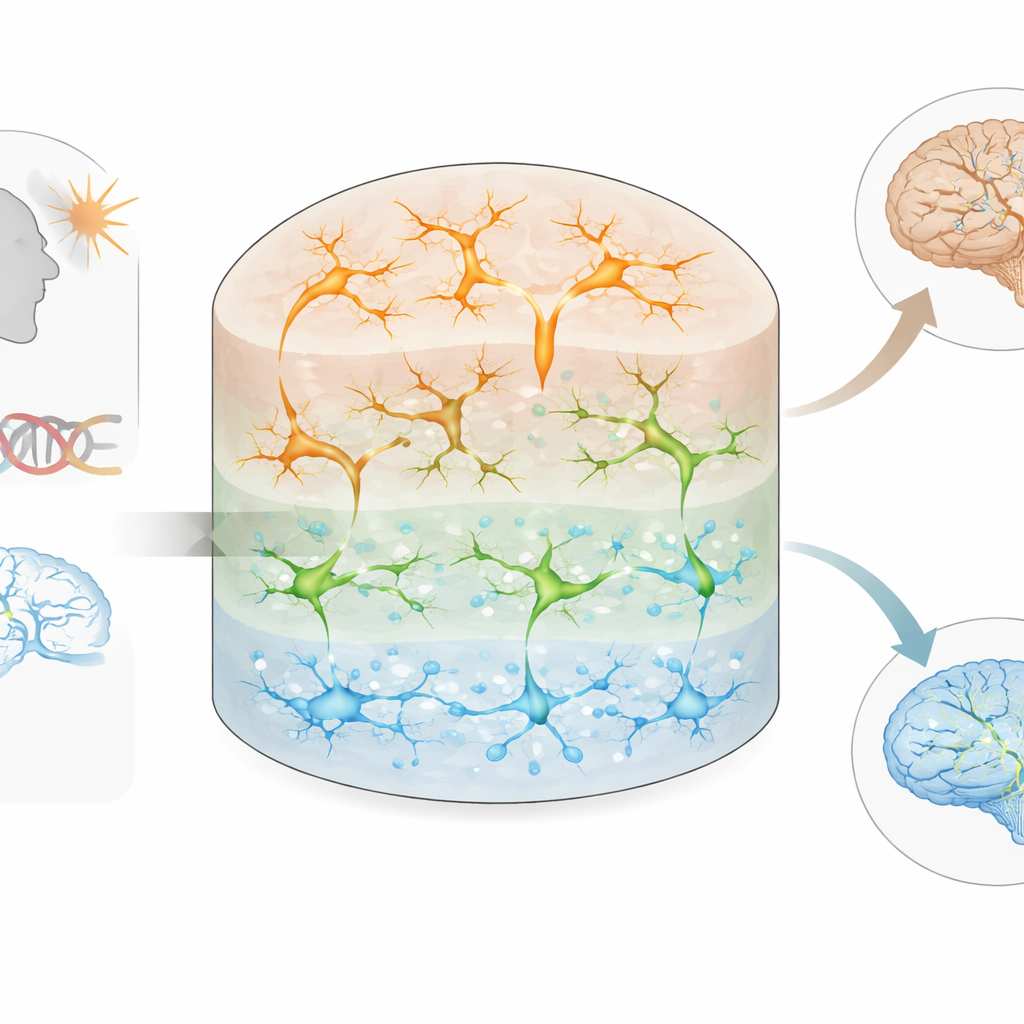
To understand where in the brain these genetic effects might play out, the authors combined the human genetic results with single-cell gene activity maps from mouse hippocampus and cortex—regions crucial for memory and higher thinking. They built wiring diagrams of how genes regulate one another in specific cell types: excitatory neurons, inhibitory neurons, and myelin-forming oligodendrocytes. Within these networks they identified “key drivers,” genes that sit at strategic hubs and influence many partners. In excitatory neurons, key drivers included APP and MAPT, familiar players in Alzheimer’s disease that help shape synapses and structural stability. Inhibitory neurons were dominated by genes controlling mitochondrial energy production, such as COX5A and NDUFS6, hinting that energy balance in these cells may be critical for cognitive recovery. In oligodendrocytes, genes like MOG and TSPAN2, which are essential for myelin and glial development, stood out across several brain regions.
Turning biology into a predictive score
The team next tested whether these pathway-level genetic patterns could help forecast learning and memory performance. They built polygenic risk scores—numerical summaries of many genetic variants—specifically restricted to the most strongly implicated pathways. Models that included these scores predicted children’s learning and memory better than models using age, sex, and injury type alone. Importantly, a score based on gene-by-injury interactions performed slightly better than one based only on main genetic effects, suggesting that how genes respond to concussion, not just their baseline influence, matters for outcome. However, the improvement was modest, and the authors caution that the current models are not yet ready for clinical use and must be tested in independent pediatric groups.
What this means for children with concussions
In plain terms, this work shows that a child’s response to a “mild” brain injury depends not only on where in the head the impact occurs, but also on the fine-tuned conversation between genes and specific brain cell types. Networks that guide nerve-cell communication, power the cells’ energy needs, and maintain insulating myelin appear to be especially important for learning and memory after concussion. While no single gene determines recovery, combinations of many variants, acting through these pathways, help explain why outcomes vary so widely. Over time, such systems-level maps of the injured brain could guide laboratory experiments, point to new drug targets, and, with further refinement and validation, inform tools to identify which children are most at risk for lasting cognitive difficulties and may benefit from closer monitoring or tailored rehabilitation.
Citation: Cheng, M., Mao, M., Meng, W. et al. Neuronal and glial networks interact with traumatic brain injury to modulate cognition in ABCD study. npj Syst Biol Appl 12, 60 (2026). https://doi.org/10.1038/s41540-026-00681-8
Keywords: pediatric concussion, learning and memory, gene–environment interaction, brain cell networks, polygenic risk