Clear Sky Science · en
Machine learning estimation of FVIII pharmacokinetic parameters in Chinese children with severe Hemophilia A
Why this research matters for families
For children living with severe hemophilia A, staying ahead of dangerous bleeding episodes usually means frequent hospital visits and many blood draws to find the right dose of clotting medicine. This study explores whether modern artificial intelligence can safely cut down the number of needle sticks while still giving doctors the information they need to tailor treatment for each child.
Finding the right dose for each child
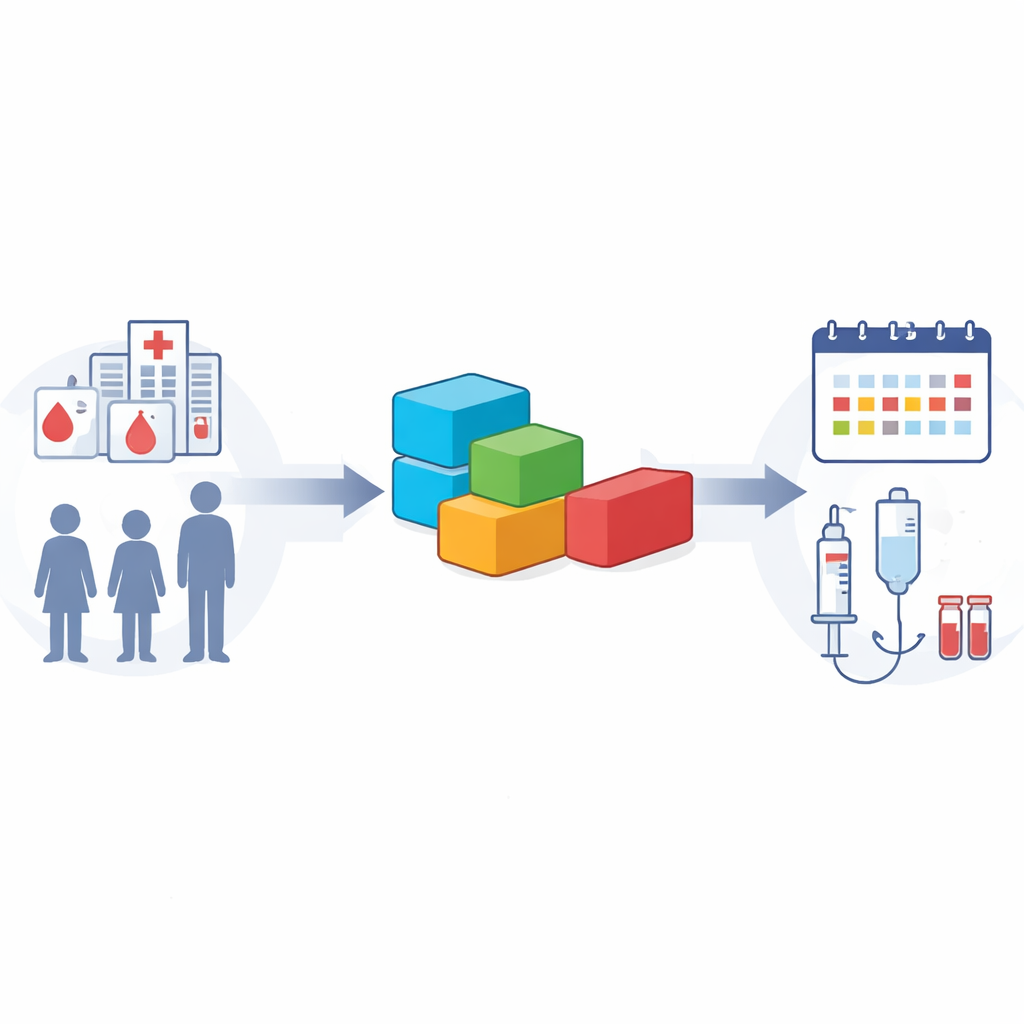
Hemophilia A is a genetic condition in which the blood lacks enough of a protein called factor VIII, making it hard to stop bleeding. The mainstay of care is regular infusions of factor VIII concentrate to prevent bleeds rather than just treating them after they occur. But children differ widely in how quickly their bodies remove factor VIII from the bloodstream. If the dose is too low or given too far apart, the child may bleed; if it is too high or too frequent, treatment becomes more burdensome and costly. Traditionally, doctors estimate two key properties of factor VIII in each patient—how much the blood level rises right after an infusion (in vivo recovery, or IVR) and how long it stays in the body (half-life)—using detailed pharmacokinetic testing that can require up to 11 blood samples.
Old tools versus new data-driven helpers
Current clinical tools, such as the widely used WAPPS-Hemo platform, rely on mathematical models of how drugs move through the body. These models are powerful and scientifically grounded, but they need special software, expert setup, and carefully timed blood samples, which can be hard to achieve in busy pediatric clinics. The researchers asked whether machine learning—computer programs that learn patterns directly from data—could offer a simpler, more flexible alternative. They collected routine clinical information from 88 Chinese children with severe hemophilia A, including age, height, weight, blood type, several factor VIII level measurements after a standard infusion, and laboratory markers related to clotting.
Teaching machines to read sparse blood tests
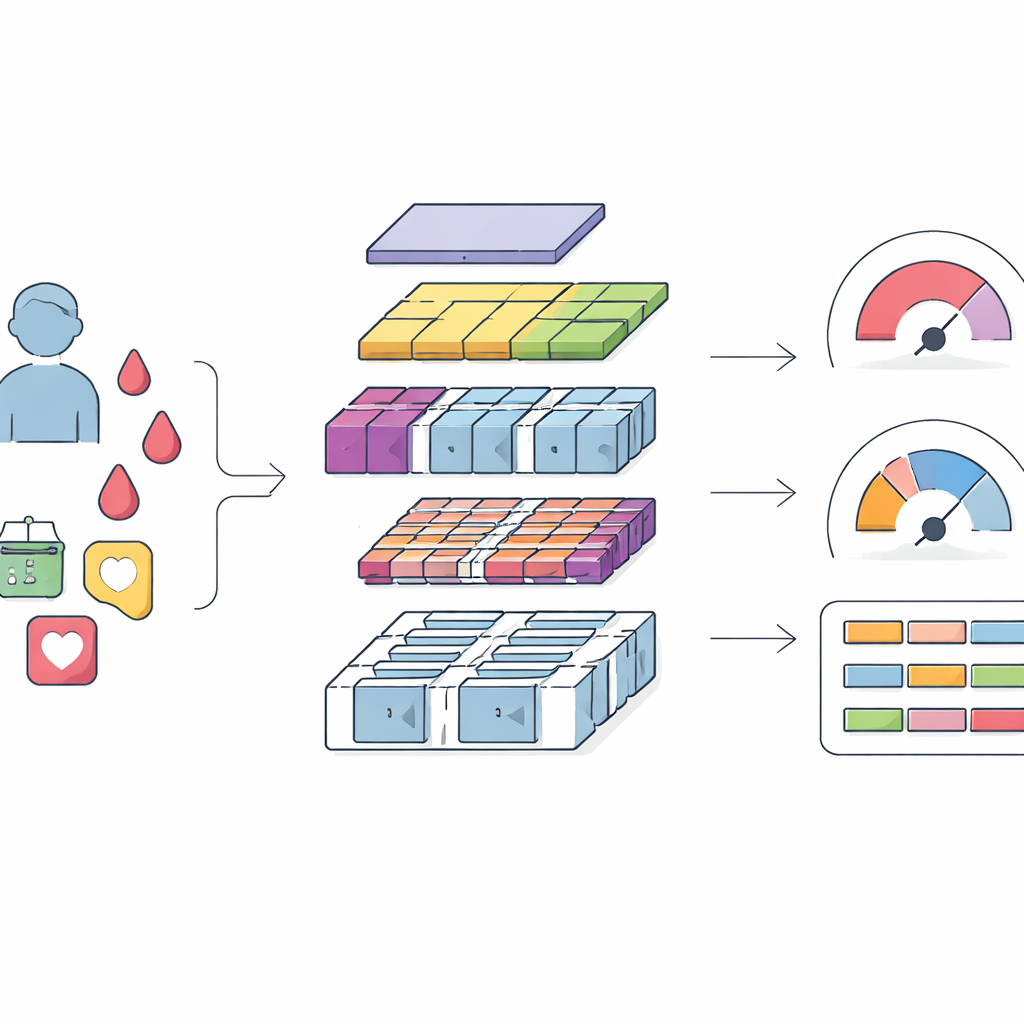
The team tested a spectrum of machine-learning approaches: simple linear formulas, decision-tree ensembles, standard neural networks, a transformer model designed for tables, a "scientific" model that bakes in known drug behavior, and a modern language-model-based system that treats each child’s data like a short piece of text. Importantly, they limited themselves to just three post-infusion factor VIII measurements, reflecting what is realistic in everyday care. They then compared how well each method predicted IVR and half-life against values obtained from full, six-point pharmacokinetic studies, and against estimates from WAPPS-Hemo used with the same sparse sampling.
What the machines discovered
All of the machine-learning models matched or outperformed the traditional tool when predicting the immediate rise in factor VIII after dosing. Here, the simplest methods—straightforward linear models—actually did best, suggesting that early response depends on a small number of dominant factors and does not require complex algorithms. Half-life, which reflects slower elimination and many interacting influences, proved harder to predict. In this task, the more flexible models, especially the transformer-based language model, clearly pulled ahead and cut errors by more than 90 percent compared with WAPPS-Hemo under the tested conditions. The study also showed that three well-chosen sampling times (around 1, 3, and 24 hours after infusion) strike a good balance between accuracy and practicality, and that reasonable estimates may still be possible with even fewer samples.
Seeing inside the black box
To make sure the algorithms were learning medically sensible patterns rather than chance correlations, the researchers used explanation tools to rank which inputs mattered most. For IVR, the single strongest influence was the factor VIII level measured one hour after infusion, followed by dose per kilogram—exactly what clinicians would expect. For half-life, later measurements, especially at 24 hours, along with age, blood group, baseline factor VIII, and a related protein called von Willebrand factor, were most important. These are all known to affect how long factor VIII persists in the body. The "scientific" machine-learning model, which encodes the expected exponential fall of drug levels, showed stable performance even when data were very sparse, suggesting that blending equations and data-driven learning can improve robustness.
What this could mean for patient care
This work indicates that carefully designed machine-learning models can estimate the two pharmacokinetic numbers doctors actually use—IVR and half-life—using far fewer blood samples than traditional testing and with better accuracy than a leading clinical platform in this pediatric Chinese cohort. For families, this could translate into fewer clinic visits, fewer needle sticks, and treatment schedules that are better tuned to each child’s biology. The authors stress that their results come from a single center and a relatively small group of patients, so larger, multi-center studies are needed before such tools can be widely adopted. Still, the study points toward a future in which smart, locally deployable AI systems help make personalized hemophilia care more precise, less invasive, and more accessible.
Citation: Wang, Y., Ai, D., Wang, S. et al. Machine learning estimation of FVIII pharmacokinetic parameters in Chinese children with severe Hemophilia A. npj Syst Biol Appl 12, 51 (2026). https://doi.org/10.1038/s41540-026-00674-7
Keywords: hemophilia A, factor VIII, pharmacokinetics, machine learning, pediatric precision dosing