Clear Sky Science · en
Gut microbiota-driven remodeling of fresh and oxidized edible oils revealed by integrated GC-MS and UPLC-HRMS/MS metabolomics
Why your cooking oil and your gut are a team
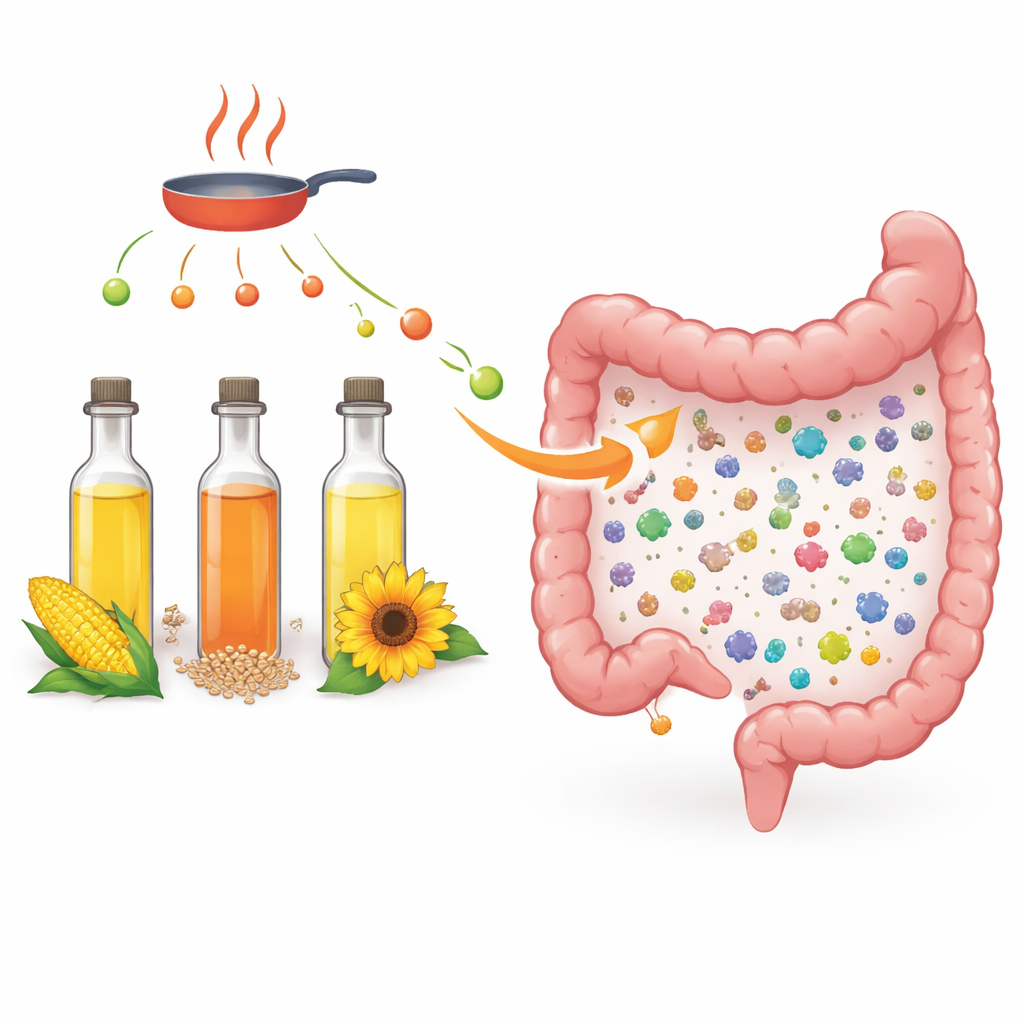
When we fry food or store cooking oils for a long time, those golden liquids quietly change. They form new chemicals that can affect flavor, nutrition, and possibly our health. Once we eat them, these altered oils don’t just pass through us unchanged. They meet the trillions of microbes living in our intestines, which can further transform what’s in the oil. This study explores how everyday plant oils—corn, sesame, and sunflower—are reshaped first by heat and then by gut microbes, helping us understand what really happens to “used” oils inside the body.
What happens to oils when we heat them
The researchers began by mimicking what happens when oils are repeatedly heated, as in frying. They warmed fresh corn, sesame, and sunflower oils and confirmed that oxidation—essentially a form of slow burning—had taken place. Using advanced chemical “fingerprinting” tools, they cataloged dozens of molecules in both fresh and heated oils. They saw that heating broke down the large fat molecules into smaller components and boosted certain reactive chemicals called aldehydes, especially ones known to be markers of rancidity. Helpful natural protectors in the oils, such as vitamin-like tocopherols, were noticeably depleted, showing they had been used up while trying to neutralize damage.
How gut microbes rewrite the oil’s chemical story
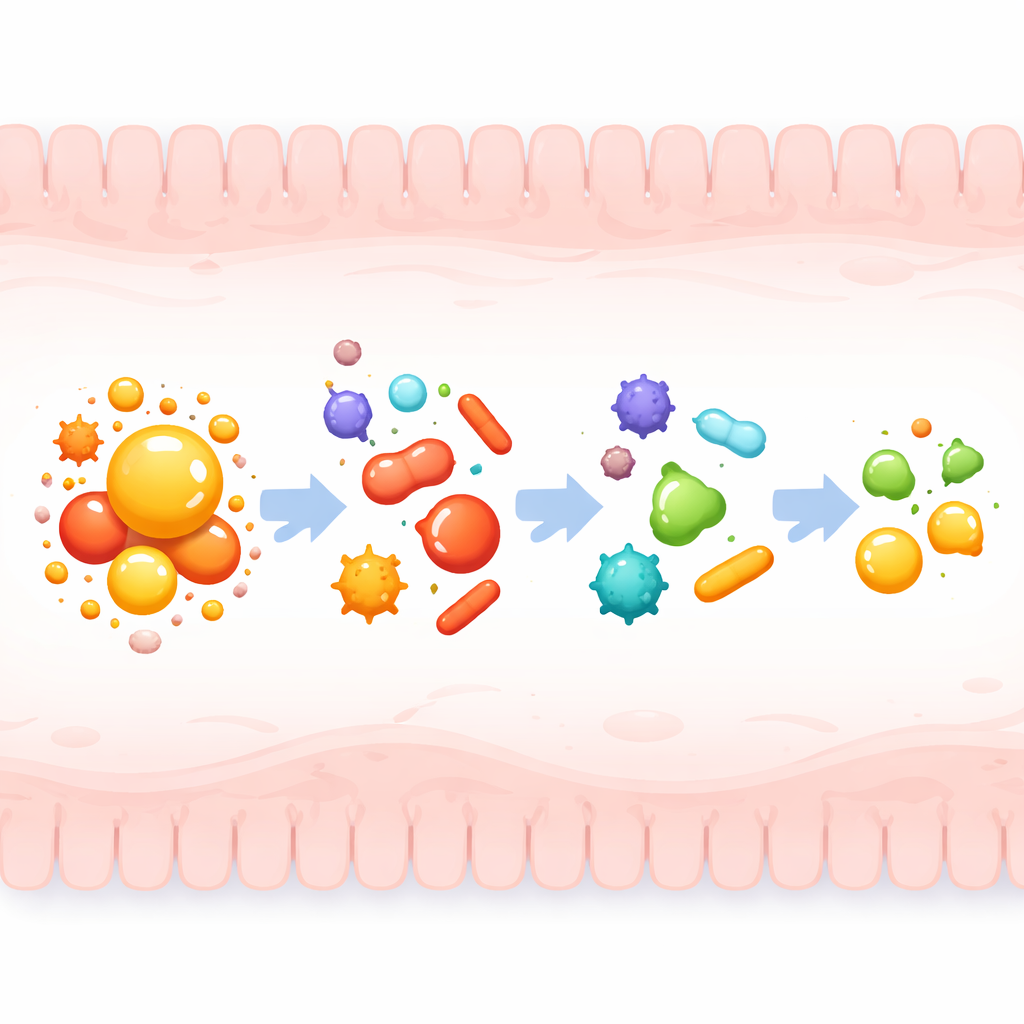
The next stage asked what happens after we eat these oils. The team mixed both fresh and heated oils with living human gut microbes in carefully controlled laboratory conditions. Compared with oils that were incubated without microbes, the microbe-exposed oils showed striking changes. Many oxidation-related compounds and processing contaminants, including certain aldehydes, oxalic acid, and diethylene glycol, dropped sharply in abundance. This suggests that gut microbes can “use up” or break down some potentially harmful oil-derived chemicals, altering what actually reaches the rest of the body.
New compounds appear when microbes get to work
Gut microbes did not just erase unwanted molecules; they also created new ones. The researchers detected about two dozen substances that appeared only after microbial incubation. These included small acids, amino acids and their breakdown products, simple phenols, and indole-based compounds that arise from the microbial digestion of dietary proteins. Two in particular stood out: phenol and indole increased dramatically, signaling that the microbes were actively processing aromatic amino acids such as tyrosine and tryptophan. Some of these microbial products are known or suspected to influence gut lining integrity, immune responses, or cell health, underscoring that the transformation is not purely a detox process.
Peptides, lipids, and other hidden players
By adding a second, more sensitive analytical method, the team uncovered a hidden layer of chemistry beyond basic fats and acids. They found numerous small chains of amino acids (peptides), ring-shaped peptide fragments, indole-based alkaloids, and specialized fats called sphingolipids, especially in sunflower oil and in samples exposed to gut microbes. Some of these compounds likely originate from the seeds themselves or from mild protein breakdown during processing, while others only appeared after microbial action. This shows that edible oils are more than simple fat mixtures—they carry a suite of lesser-known molecules that can be remodeled within the gut into new, biologically active substances.
What this means for everyday eating
Overall, the study paints a picture of edible oils as evolving materials rather than static ingredients. Heat pushes oils to form reactive byproducts and to lose some of their natural defenses. Once ingested, gut microbes remove part of this chemical burden, including several oxidation markers and contaminants, but at the same time generate new compounds that may have their own health effects, good or bad. For the everyday cook, this work reinforces basic advice: avoid repeatedly overheating oils and be mindful of how often you reuse frying oil. For scientists and health professionals, it shows that understanding oil safety requires looking not just at what is in the bottle, but also at what our resident microbes turn those molecules into once they reach the gut.
Citation: El-Shamy, S., Bakry, S.M., Zayed, A. et al. Gut microbiota-driven remodeling of fresh and oxidized edible oils revealed by integrated GC-MS and UPLC-HRMS/MS metabolomics. npj Sci Food 10, 144 (2026). https://doi.org/10.1038/s41538-026-00861-0
Keywords: edible oils, gut microbiota, lipid oxidation, metabolomics, food safety