Clear Sky Science · en
Microbial biopriming and germination cooperatively remodel brown lentil seeds (Lens culinaris L.) metabolome and antidiabetic functionality
Why lentil sprouts matter for blood sugar
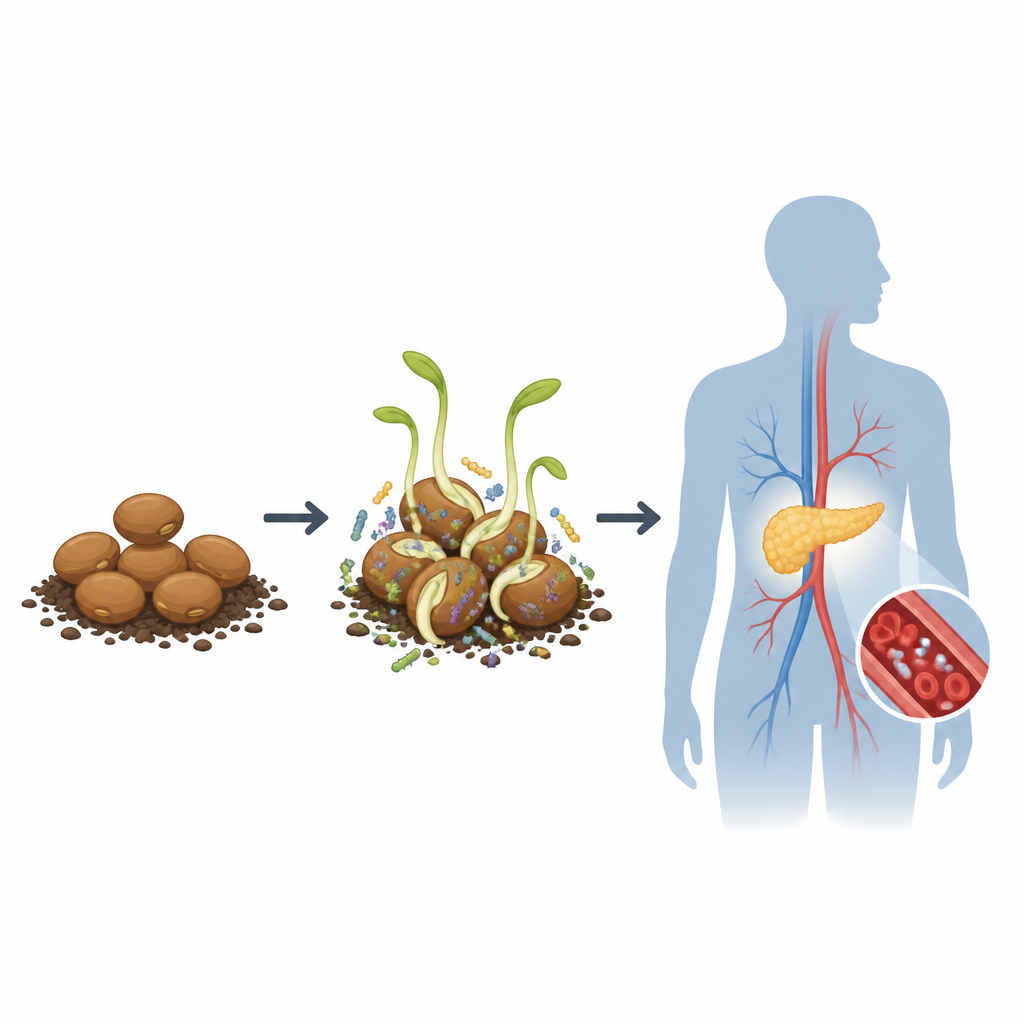
Lentils are already seen as a smart choice for people watching their blood sugar, but this study asks a new question: can we team up tiny helpful microbes with the natural sprouting of lentils to make them even better for managing glucose? Using advanced chemical tests, the researchers show how microbe-treated lentil sprouts gain extra plant compounds that, in the lab, slow starch digestion and help cells take up more sugar. For anyone interested in food-based approaches to diabetes care, this work points toward simple seed treatments that could turn an everyday pulse into a more powerful functional food.
From dry seeds to living sprouts
The team compared four types of brown lentil samples: raw dry seeds, ordinary sprouts, and sprouts first coated with one of two friendly bacteria species. During sprouting, lentils wake up from dormancy, burn stored sugars and amino acids for energy, and begin building new tissues. The researchers tracked 69 different small molecules, ranging from basic nutrients to more specialized plant chemicals. They found that raw seeds were rich in storage sugars and building-block amino acids, while sprouted seeds showed clear signs of these reserves being used up to fuel growth.
New plant chemicals boosted by microbes
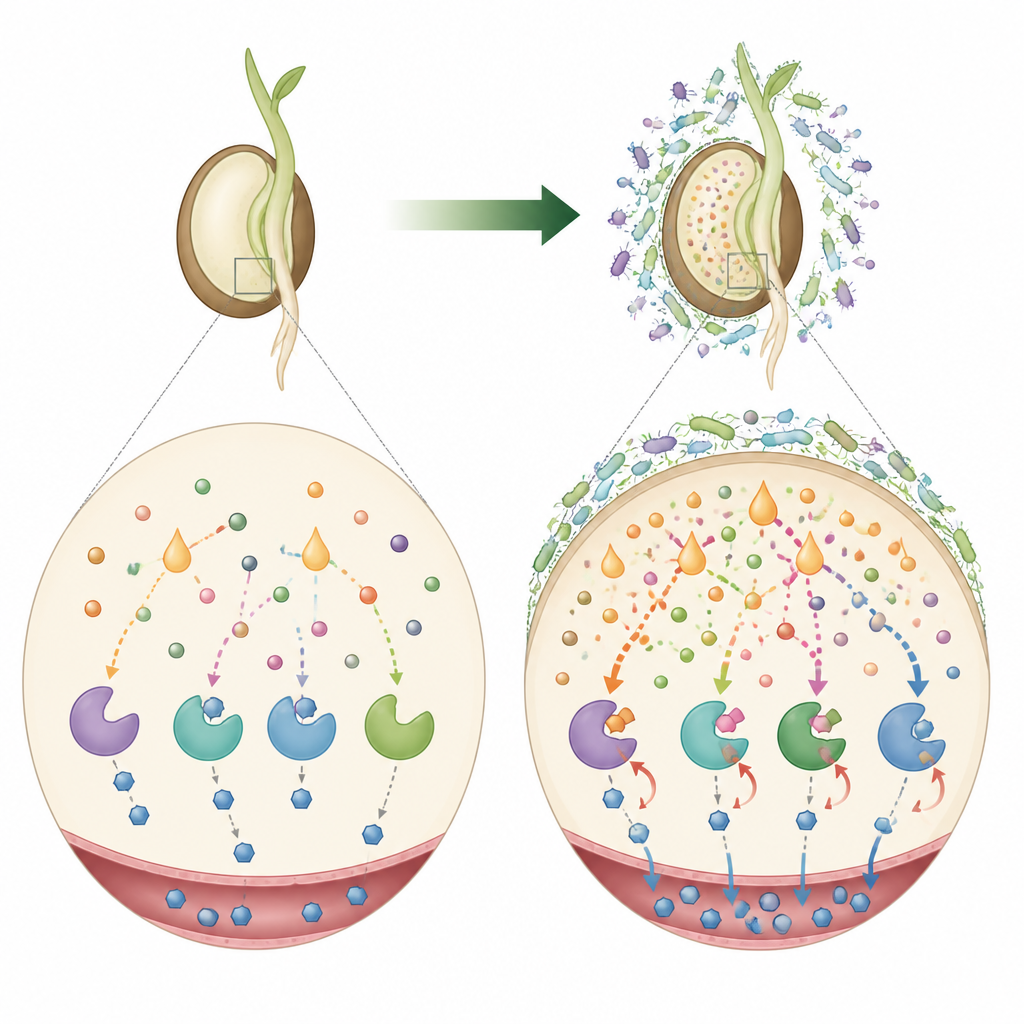
As the lentils sprouted, they produced noticeably higher levels of natural protective compounds such as phenolic acids and flavonoids, many of which have been linked to health benefits. When the seeds were first coated with beneficial bacteria, these increases became even more pronounced, and the exact pattern depended on the microbe used. One bacterial partner favored the build-up of compounds like rosmarinic acid, syringic acid, quercetin, apigenin, and healthy fats such as linolenic acid. The other boosted different molecules, including resveratrol, isorhamnetin, certain plant hormones called gibberellins, and specific amino acids and plant sterols. These tailored chemical fingerprints show that microbes can nudge sprouting seeds toward different nutritional profiles.
How these changes relate to blood sugar
To see whether these chemical shifts actually matter for blood sugar control, the scientists tested how the different lentil extracts affected two key digestive enzymes that break down starch, as well as how they influenced glucose uptake in yeast cells, a common lab model. All lentil samples showed some ability to slow the enzymes and to encourage cells to pull glucose out of their surroundings, but the sprouted samples worked better than raw seeds. Most strikingly, the microbe-primed sprouts were the most active of all, nearly matching a standard antidiabetic drug in some tests. Statistical modeling linked this stronger activity to higher levels of certain phenolic acids and flavonoids, such as sinapic, ferulic, and caffeic acids, apigenin, resveratrol, naringenin, and isorhamnetin, along with helpful fats like linolenic acid.
What this could mean for future foods
By tying together detailed chemistry with functional tests, the study suggests that pairing sprouting with carefully chosen microbes can push lentils beyond being simply nutritious to acting as targeted helpers for blood sugar control. While these results come from lab assays rather than human trials, they hint that “microbe-assisted” lentil sprouts could be developed as ingredients for nutraceuticals or functional foods aimed at people at risk of type 2 diabetes. In plain terms, the work shows that treating lentil seeds with friendly bacteria before sprouting can reshape their natural chemistry in ways that may better support healthy glucose handling.
Citation: Ghallab, D.S., Ghareeb, D.A., Shawer, E.E. et al. Microbial biopriming and germination cooperatively remodel brown lentil seeds (Lens culinaris L.) metabolome and antidiabetic functionality. npj Sci Food 10, 160 (2026). https://doi.org/10.1038/s41538-026-00824-5
Keywords: lentil sprouts, microbial priming, antidiabetic activity, phenolic compounds, functional foods