Clear Sky Science · en
The regulation mechanism of α-linolenic acid bioavailability by flaxseed lignan macromolecules in O/W emulsions
Why this healthy fat story matters
Many people do not get enough of alpha linolenic acid, a plant based omega 3 fat found in flaxseed oil. This nutrient has been linked with healthier hearts and better control of inflammation, but it is easily damaged and not always well absorbed. This study explores how natural compounds from flaxseed hulls can be used in a simple oil in water drink to protect this fragile fat in the gut and help the body take up and use more of it.
A closer look at flaxseed helpers
Flaxseed hulls are rich in plant substances called lignans, which in nature are bundled together into large chains. The researchers worked with these chains, called flaxseed lignan macromolecules, and with a heat treated version made at baking like temperatures, referred to as FLM 150. They mixed flaxseed oil, water, a plant based emulsifier and different lignan forms to create smooth oil droplets, similar to what might appear in a fortified beverage. The goal was to see whether these lignans could both shield alpha linolenic acid from damage and change how it moves through the gut wall into the body’s circulation. 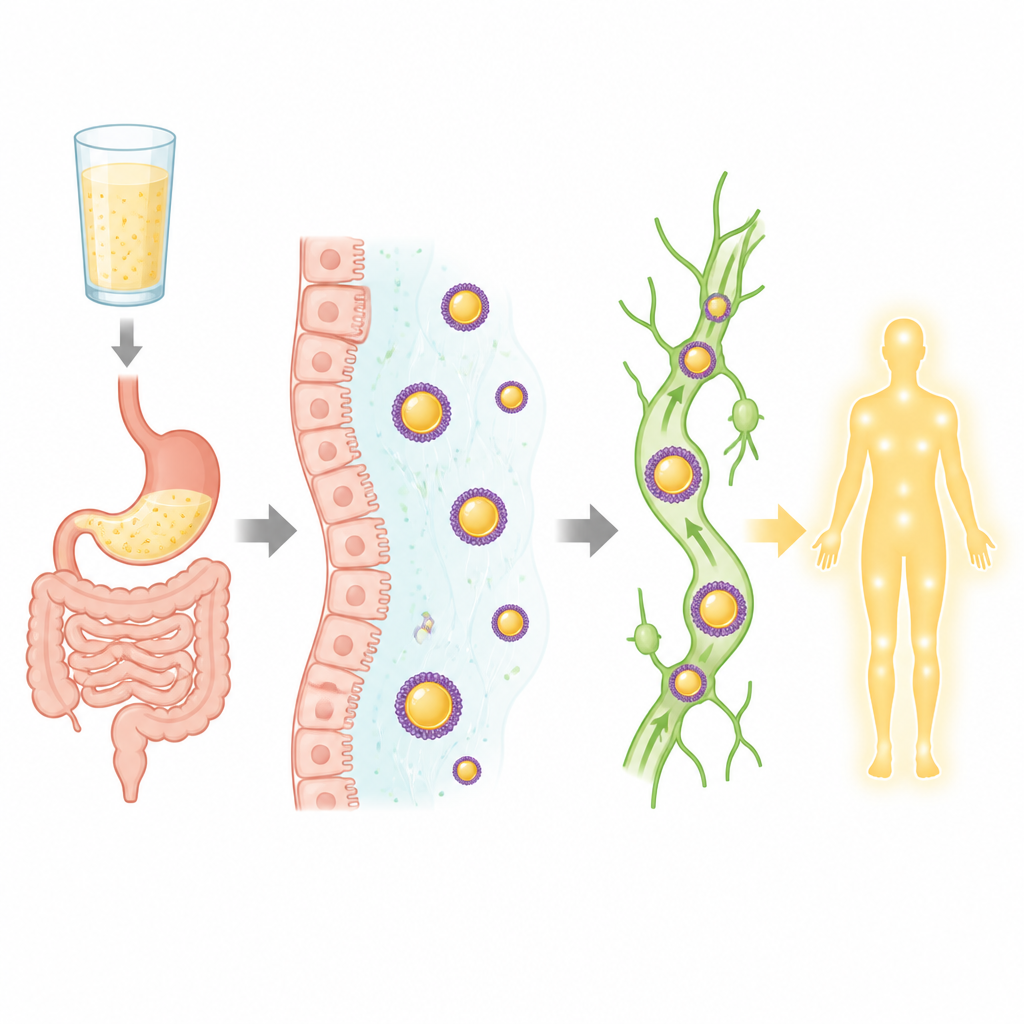
What happens in the mucus and gut wall
Before nutrients reach the cells lining the intestine, they must pass through a slimy mucus coating that acts like a filter. Using mucus taken from pig intestine and a human cell layer grown in dishes, the team tracked tiny oil based particles carrying alpha linolenic acid. Heat treated lignans made the mucus slightly thicker and slowed how fast these particles slipped through, but once they reached the cell layer something different happened. In the cell test, droplets containing FLM 150 or a simple lignan unit called SDG helped almost double the amount of alpha linolenic acid that crossed into the “blood side” of the model, suggesting that these natural additives improve how intestinal cells take up this fat.
Following the fat into the body
To see what happens in a living animal, the scientists surgically placed tiny tubes in the lymph vessels of rats. Lymph is the first highway that fat from a meal uses to leave the gut. When the animals were given plain flaxseed oil, or the same oil as a fine emulsion, alpha linolenic acid rose in lymph and then slowly declined. Adding untreated lignan chains to the emulsion increased both the size of fat rich particles in lymph and the peak levels of the omega 3 fat. With the heat treated FLM 150, the effect was even stronger: within the first hour, lymph levels of alpha linolenic acid were nearly five times higher than with the standard emulsion. At the same time, measures of fat oxidation in lymph dropped sharply, showing that the lignans helped protect this delicate fat from turning rancid. 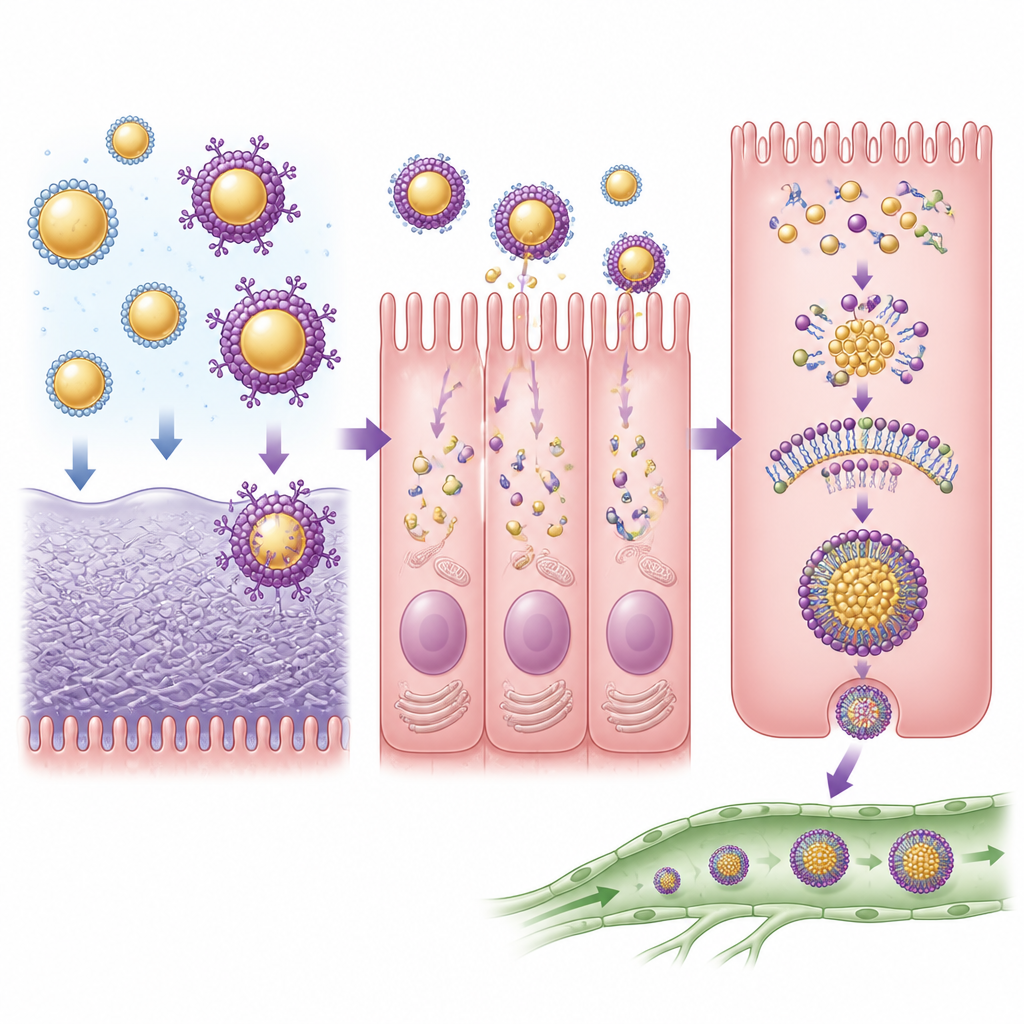
How the body repackages the nutrient
The study also used detailed fat profiling to see how absorbed alpha linolenic acid was built into different types of fats inside the body. Emulsions with FLM or FLM 150 encouraged the gut cells to turn basic fat building blocks back into triglycerides, the main storage and transport form of fat, loading them into large particles that move through lymph. In contrast, another lignan form called SECO pushed more alpha linolenic acid into phospholipids, the fats that make up cell membranes. These patterns suggest that each lignan form nudges enzymes in the intestinal wall in slightly different directions, altering whether the omega 3 ends up mainly as transport fat, membrane fat, or is sent further along other metabolic paths.
What this means for everyday nutrition
Put simply, the work shows that carefully chosen flaxseed lignans, especially the heat treated FLM 150, can make flaxseed oil based omega 3 fats both better protected and more readily absorbed when delivered in a drink like emulsion. By strengthening the mucus barrier, easing entry into gut cells, and steering how fats are rebuilt and shipped out through lymph, these natural compounds act as quiet “traffic controllers” for a valuable nutrient. While the findings come from lab dishes and rats, they point toward new ways to design functional foods that help people get more benefit from plant based omega 3 fats without changing their diet dramatically.
Citation: Cheng, C., Yu, X., Wang, L. et al. The regulation mechanism of α-linolenic acid bioavailability by flaxseed lignan macromolecules in O/W emulsions. npj Sci Food 10, 161 (2026). https://doi.org/10.1038/s41538-026-00814-7
Keywords: alpha linolenic acid, flaxseed oil, lignans, emulsion delivery, intestinal absorption