Clear Sky Science · en
Comparative analysis of aroma profiles and determination of key constituents in organically and conventionally produced white wines
Why wine lovers care
Many shoppers reach for an organic wine label believing it signals a purer, more natural drink, but what actually changes inside the bottle is harder to see. This study peeks under the cork by comparing the smell‑giving chemicals in Czech white wines made with organic and conventional methods, revealing clear signatures that set the two styles apart and offering a scientific way to check how a wine was produced.
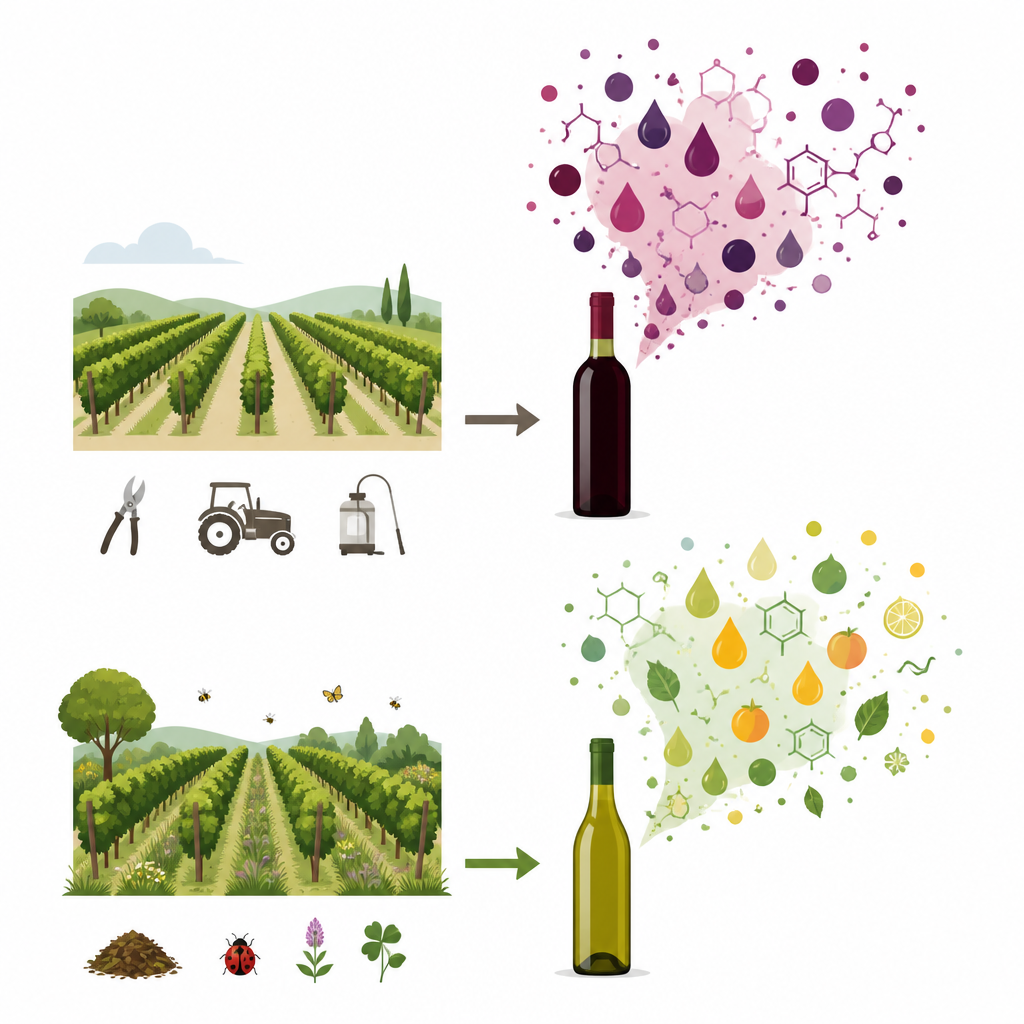
How wine aroma is built
The scent of wine is a layered story. Some smells come straight from the grapes, others are created when yeast and bacteria turn grape juice into wine, and still more appear as the wine ages. Together, hundreds of tiny airborne chemicals form the familiar notes of fruit, flowers, spice, or butter that we sense when swirling a glass. Because farming and cellar choices shape these stages, the mix of aroma compounds can quietly record whether a wine was made with heavier technical control or with the lighter touch often linked to organic practice.
Sniffing with instruments, not noses
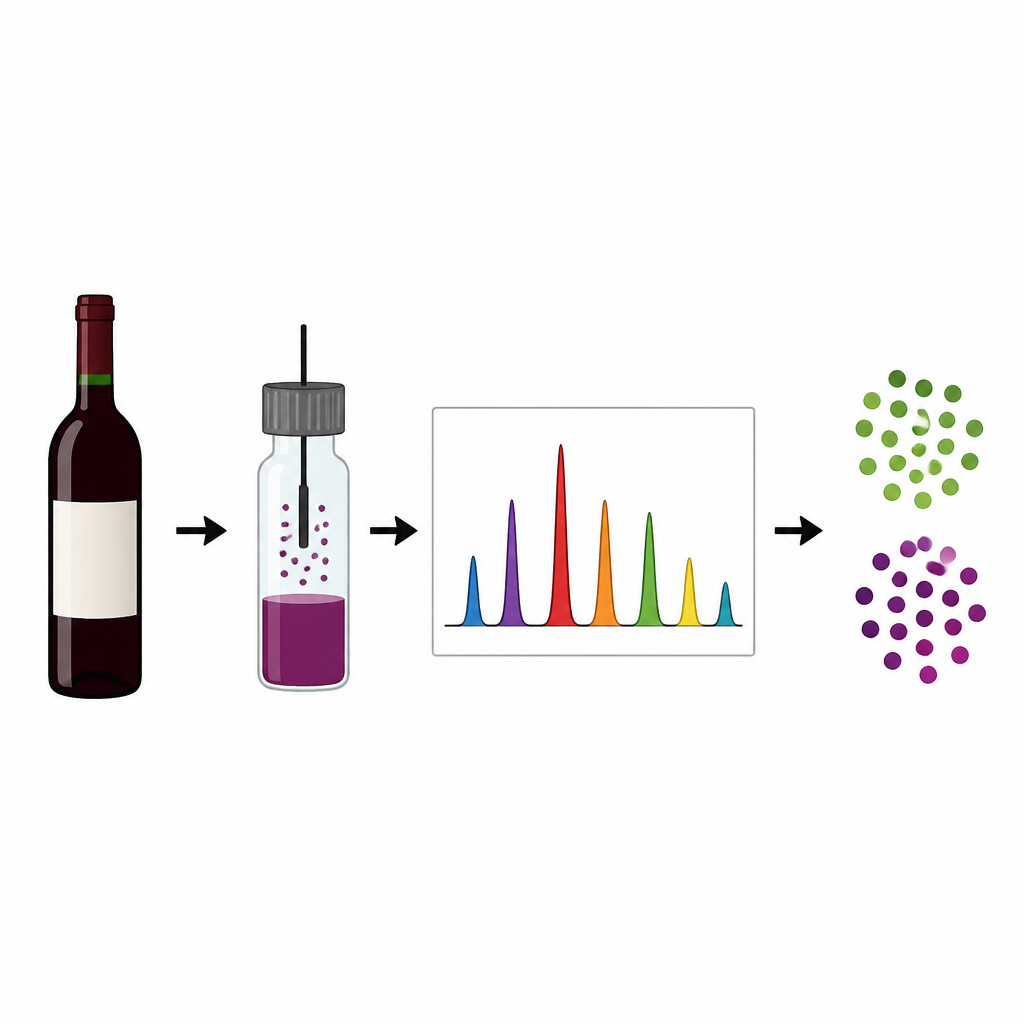
To read this hidden record, the researchers examined 78 bottled white wines from two Czech regions, covering many grape varieties and including both organic and conventional products. Instead of relying on tasting panels, they used a technique that traps the wine’s volatile compounds from the air above the liquid and then separates them in a gas‑filled column. Each compound appears as a peak in a chromatogram, a kind of chemical barcode, whose pattern reflects the wine’s aromatic profile.
Finding the best way to capture aromas
Capturing as many scent compounds as possible required fine‑tuning. The team systematically varied how hot the samples were and how long the extraction fiber stayed in contact with the wine’s vapors. By analyzing how the number of detectable peaks changed, they found that a moderate temperature and a relatively long extraction time worked best. These conditions favored not just the light, easily evaporated molecules but also heavier, less volatile ones that can strongly influence a wine’s character.
Reading the chemical fingerprint
Once they had stable measurements, the scientists used statistical tools designed to sift through large, overlapping datasets. They built a model that learned to distinguish organic from conventional wines based on their full sets of aroma peaks. This model proved extremely accurate, correctly classifying all wines in both a training group and a separate test group. In other words, the combined pattern of volatile compounds formed a reliable fingerprint of each production style, even though many different grape varieties were involved.
Key differences between organic and conventional wines
Looking closer, the team identified a group of specific compounds that contributed most to telling the wines apart. Organic wines consistently showed much higher levels of markers linked to malolactic fermentation, a bacterial step that softens sharp acidity, suggesting this process is more common or more complete in these wines. In contrast, conventional wines contained far more of a fragrant compound derived from controlled yeast fermentation and displayed distinct balances between certain fruity esters and their related acids. These patterns point to differences in microbial activity, use of additives, and cellar handling between the two approaches.
What this means in the glass
For everyday drinkers, the study shows that organic and conventional white wines do not just differ on the label; they also differ in the invisible bouquet of compounds that create aroma. While tasters might or might not always notice clear sensory contrasts, the chemistry reveals consistent shifts tied to farming and winemaking choices. This chemical fingerprint could help verify how a wine was produced and deepen our understanding of how vineyard and cellar practices quietly shape the scents that rise from the glass.
Citation: Bajer, T., Šmejda, P., Kubáleková, J. et al. Comparative analysis of aroma profiles and determination of key constituents in organically and conventionally produced white wines. npj Sci Food 10, 166 (2026). https://doi.org/10.1038/s41538-026-00811-w
Keywords: wine aroma, organic wine, white wine, volatile compounds, wine authentication