Clear Sky Science · en
Integrated metabolomics analysis of pigment metabolite accumulation and color development of fresh Dendrobium officinale juice after processing
Why this orchid drink changes color
Many herbal drinks made from the orchid Dendrobium officinale start out green but turn a surprising purple after cooking. This study asked a simple question with big implications for food makers and consumers: what exactly inside the juice is changing to create that new color, and does the change affect its healthful properties?
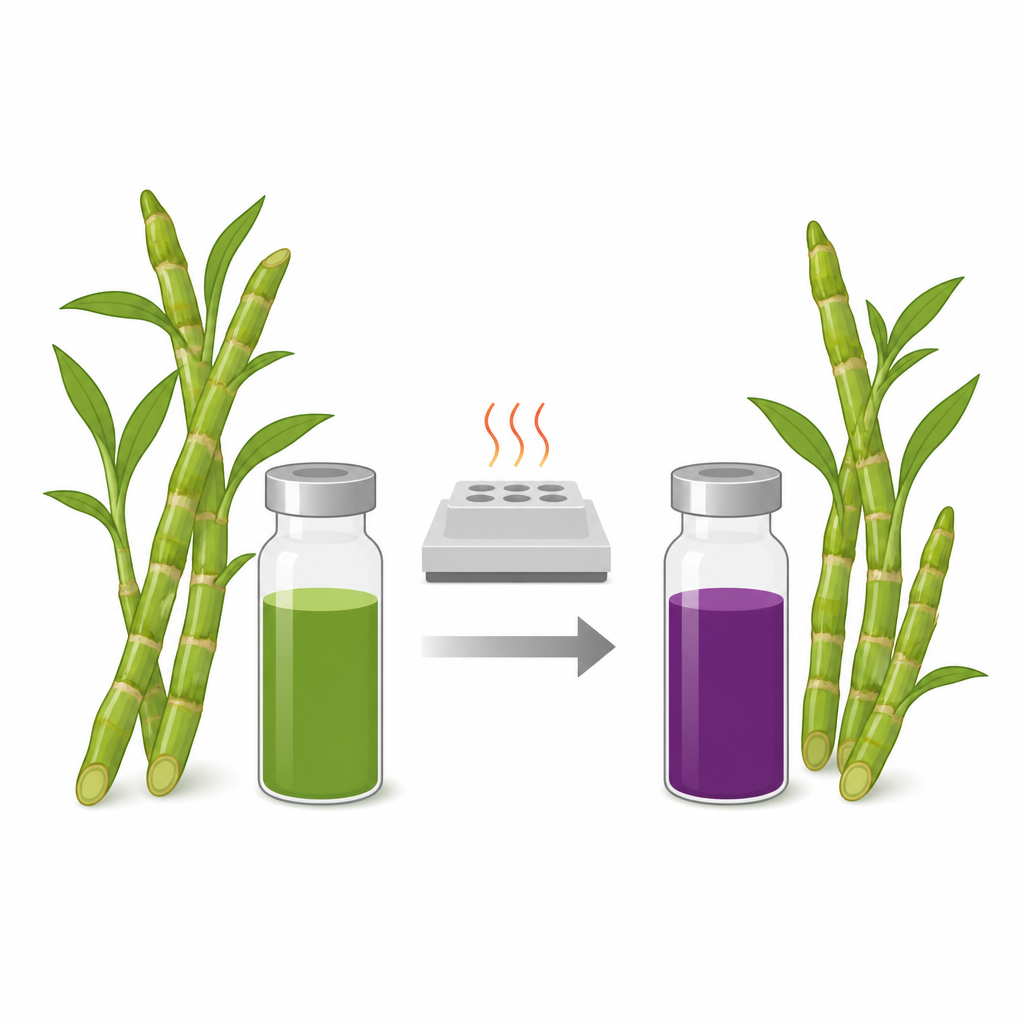
From green stems to purple juice
Dendrobium officinale is a traditional edible orchid whose fresh stems are green and used in teas, tonics, and functional foods. When the stems are crushed into fresh juice and then boiled, the liquid slowly shifts from green to light purple. The researchers first measured this color change with a color meter, confirming that the processed juice became brighter and moved from green tones toward red and blue tones, matching what the eye sees. The pH changed very little, so the shift could not be explained simply by the juice becoming more or less acidic.
Looking for hidden color molecules
To find the compounds behind this shift, the team used metabolomics, a broad chemical survey that can detect hundreds of different small molecules at once. In total they identified 1314 different substances in the green and purple juices, with 275 showing clear changes after processing. Many of these belonged to families known to affect color in plants, especially phenolic acids, flavonoids, and anthocyanins. Because the juice is water based, oil-like molecules contributed little to the color; instead, water-soluble pigments were the main suspects.
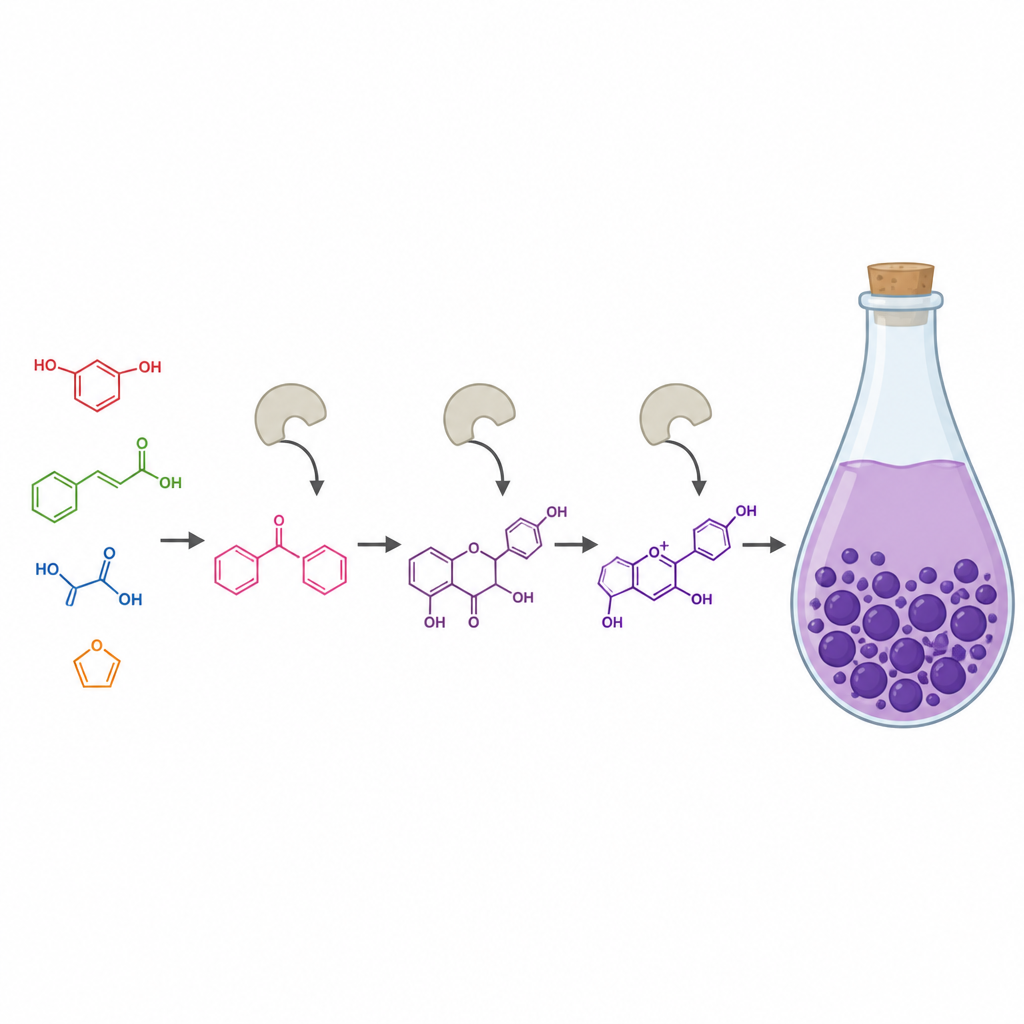
Pinpointing the purple makers
The scientists then focused on pigment molecules in detail. They found dozens of phenolic acids and flavonoids whose levels generally rose after heating, and a set of anthocyanins whose levels changed sharply. One group, called delphinidin-type anthocyanins, more than doubled in amount and matched the stronger blue-purple tone of the processed juice. Statistical links between specific phenolic acids, flavonoids, and these delphinidin compounds suggested that they are connected in a single production line inside the juice, beginning from the amino acid phenylalanine and feeding into the plant’s usual pathway for making colorful pigments.
Testing the pathway with helpers and blockers
To check this idea, the team ran controlled processing tests. When they added extra phenylalanine to the fresh juice before heating, the color change sped up, and key enzymes that build anthocyanins became more active. Compounds along the expected route—from simple acids to colorless intermediates and then to delphinidin-based pigments—shifted in the predicted directions. In contrast, when they added a chemical that blocks the first enzyme in this chain, the juice stayed much less purple and the activities of downstream enzymes dropped. These experiments showed that new anthocyanins are being built during processing, not just unmasked from existing stores.
Color, antioxidants, and what it means for consumers
The researchers also measured how well the juice could neutralize several types of free radicals, a common way to estimate antioxidant capacity. After processing, the purple juice scavenged all three kinds of test radicals more effectively than the original green juice. The improvement lined up with the higher levels of anthocyanins, flavonoids, and phenolic acids, all known for antioxidant activity. Together, the findings indicate that the green-to-purple shift mainly reflects fresh formation and accumulation of delphinidin-type pigments along a phenylalanine-based pathway, helped by heat but also able to proceed slowly at room temperature.
What this means for future foods
In simple terms, cooking Dendrobium officinale juice turns on an internal pigment factory that builds purple anthocyanins from a basic building block, phenylalanine. These new pigments deepen the color and at the same time boost the juice’s antioxidant potential. Understanding this process can help producers design processing steps that give a stable, appealing purple color while preserving or enhancing beneficial compounds, and it offers a scientific explanation for a color change that traditional drink makers have observed for generations.
Citation: Ni, W., Zhou, Z., Mao, S. et al. Integrated metabolomics analysis of pigment metabolite accumulation and color development of fresh Dendrobium officinale juice after processing. npj Sci Food 10, 162 (2026). https://doi.org/10.1038/s41538-026-00810-x
Keywords: Dendrobium officinale, anthocyanins, food color change, phenylalanine pathway, antioxidant activity