Clear Sky Science · en
The future of digital innovation in transforming food safety systems in the developing world
Why safer food and smart tools matter
Food poisoning is not just an upset stomach; in many poorer countries it is a major threat to children, farmers, and small food businesses. This article explains how digital tools, such as mobile phones, sensors, and artificial intelligence, could help these countries spot unsafe food faster, protect consumers, and support fair trade with the rest of the world.
The scale of the food safety problem
Hundreds of millions of people worldwide face hunger and unreliable access to safe food, with Africa and South East Asia carrying a heavy share of foodborne illness. Many low and middle income countries still rely on paper records, scattered inspections, and weak laboratory services, which makes it hard to detect hazards early or to trace a problem back to its source. Informal markets, where much everyday food is sold, often lack clean water, cold storage, and modern processing, leaving families exposed to avoidable risks.
How digital ideas can fit hard local realities
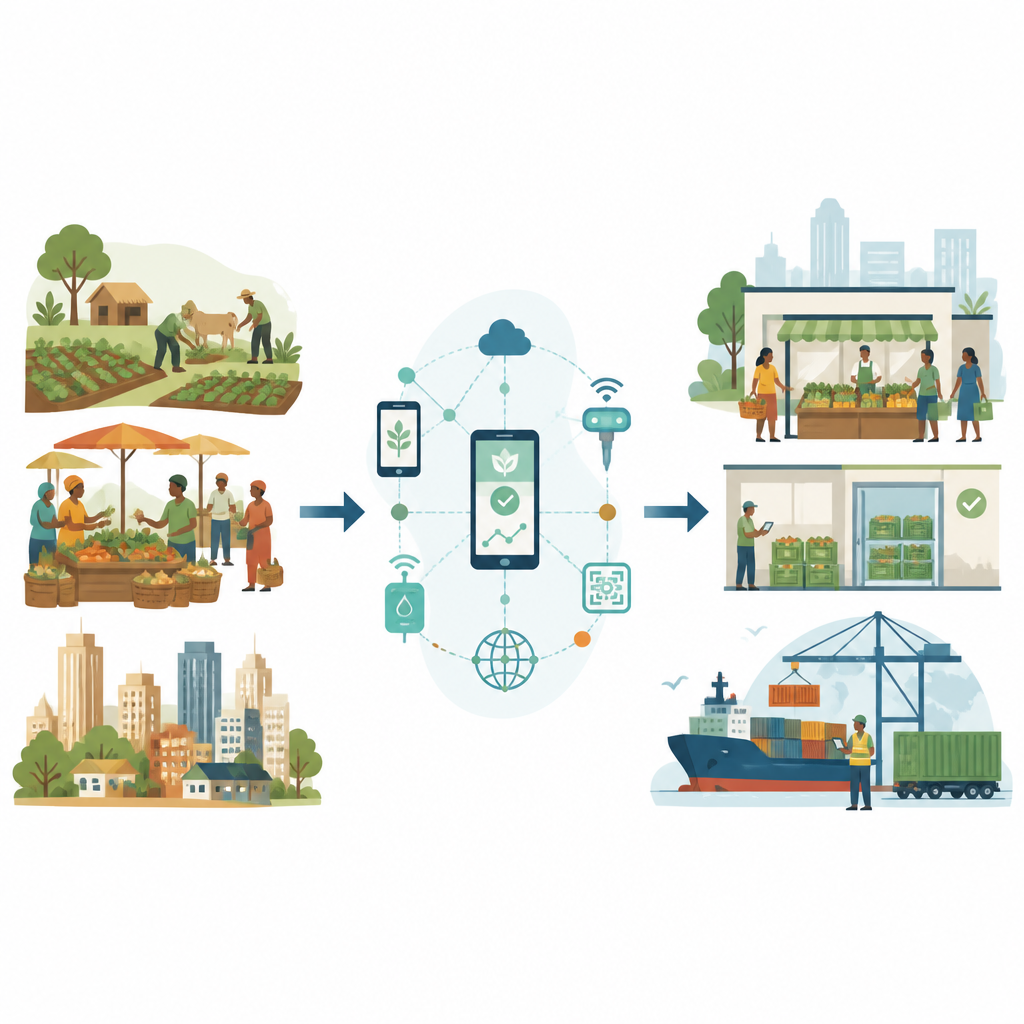
It is tempting to picture food safety going instantly high tech, but the article stresses that basic limits like patchy electricity, poor internet coverage, and tight budgets shape what is realistic. To work in remote villages and crowded markets, digital tools may need to run on simple phones, work offline, and use low power devices that can send short bursts of data when networks are available. Shared platforms can spread costs for small firms, while open standards and local software developers can help governments avoid being trapped in costly, closed systems that are hard to replace or connect with others.
A step by step guide for going digital
To bring order to a confusing landscape of apps and platforms, the author proposes a seven layer framework for digital food safety in developing countries. It starts with solid basics, such as clear food rules, risk based inspection, and reliable testing, before adding technical layers like mobile tools, electronic certificates, remote inspections, and early warning systems. Other layers focus on checking the risks of new technologies, choosing and paying for tools in ways that favor open connections, sharing data safely and fairly, and training inspectors, lab staff, and policy makers so that new systems are actually used well.
What we learned from global experience
Lessons from the Vienna Food Safety Forum and other case studies show how data driven approaches can make inspections and border checks more targeted. For example, some authorities now use past violations, complaints, and trade data to decide which shipments to inspect more closely. Electronic certificates have shortened clearance times and reduced fraud by allowing border agencies to verify documents directly. New sensing tools, such as portable “electronic noses” and advanced lab methods, can check whether foods really come from where they claim, helping to expose fraud in products like coffee or dairy.
Making smart use of artificial intelligence
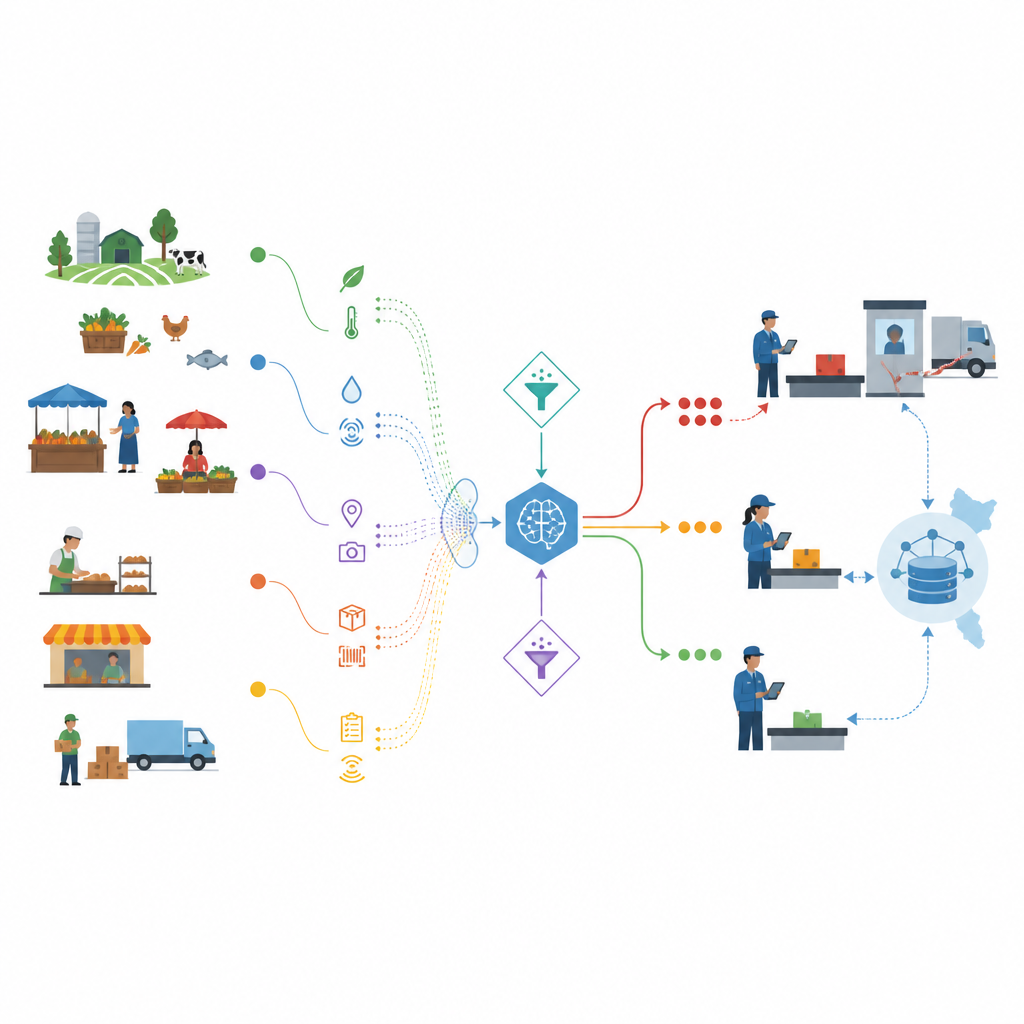
Artificial intelligence promises faster pattern spotting, from scanning global news for emerging food threats to helping inspectors pick which factories to visit. Yet poorly designed systems can be biased, unreliable, or over trusted. The article recommends that regulators keep a live register of digital risks, including data leaks, over reliance on automated advice, and problems when multiple AI tools interact. International standards now offer guidance on how to manage these risks, stressing human oversight, transparent methods, and ongoing checks of how systems perform in the real world.
Looking ahead to safer food for all
The article concludes that digital tools will only improve food safety if they are built around real local problems, guided by sound science, and backed by good public rules. The proposed framework gives regulators in poorer countries a map for choosing technologies, building shared data systems, and using AI responsibly. With steady investment in skills, regional cooperation, and open standards, these countries can move toward food systems that keep people safer while also supporting trade and economic growth.
Citation: Molnar, G. The future of digital innovation in transforming food safety systems in the developing world. npj Sci Food 10, 164 (2026). https://doi.org/10.1038/s41538-026-00809-4
Keywords: food safety, digital transformation, artificial intelligence, developing countries, traceability