Clear Sky Science · en
Stage-specific nutritional blueprints of date fruit revealed by integrated LC–MS metabolomics and ICP–OES profiling
Why the stages of a humble date fruit matter
Date fruits are more than sweet snacks; they are lifelines in desert regions and everyday treats around the world. This study peeks inside dates at four stages of ripening to reveal how their nutrients, sugars, and natural protective compounds change over time. The findings show that an unripe, tart date and a soft, brown one are almost like different foods, each offering distinct health-related benefits and uses for farmers, food makers, and consumers.
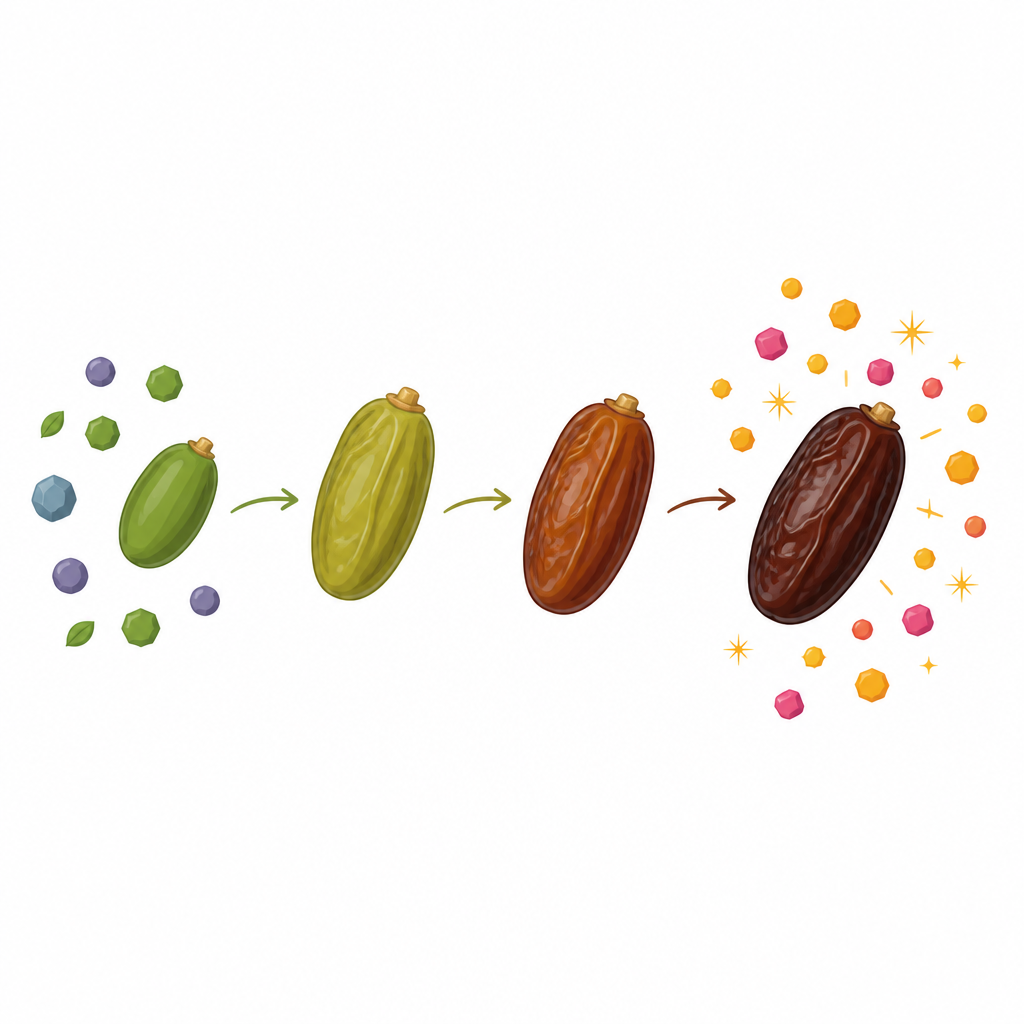
From hard and green to soft and sweet
The researchers focused on a popular date variety that passes through four stages: Hababouk, Kimri, Rutab, and Tamr. Hababouk and Kimri are small, green, and sour, while Rutab is starting to soften and sweeten, and Tamr is the fully ripe, chewy stage most people eat. Using modern chemical tools, the team tracked hundreds of small molecules and minerals as the fruit matured. They found that early stages are dominated by compounds that support growth and defense, while later stages favor sweetness, flavor, and storage of energy.
Hidden shifts in natural chemicals
Inside the dates, families of compounds rose and fell in distinct patterns as the fruit ripened. Early on, the fruit was rich in organic acids, amino acid related molecules, and a variety of protective plant chemicals called polyphenols and flavonoids, including strong antioxidants such as malic acid, ferulic acid, and diosmin. As ripening progressed, these gave way to more complex flavonoids, stable antioxidants like rutin and procyanidin B2, and a changing mix of lipids and small peptides. Sugars also followed a clear path: early stages contained more sugar building blocks and energy intermediates, while late Tamr dates were packed with free glucose, fructose, and special prebiotic sugars like stachyose that can nourish beneficial gut microbes.
Minerals peak early, sugars peak late
The mineral content of the fruit told a complementary story. The earliest stage, Hababouk, held the highest levels of potassium, magnesium, calcium, and trace elements such as zinc, iron, manganese, strontium, and copper. As the fruit swelled and filled with sugars, most of these minerals steadily declined. One exception was sodium, which spiked at the semi soft Rutab stage, likely as the fruit lost water and adjusted its internal salt balance. By the time the fruit reached the fully ripe Tamr stage, total mineral levels were lowest, though still nutritionally useful, while sugar content and energy density were at their peak.
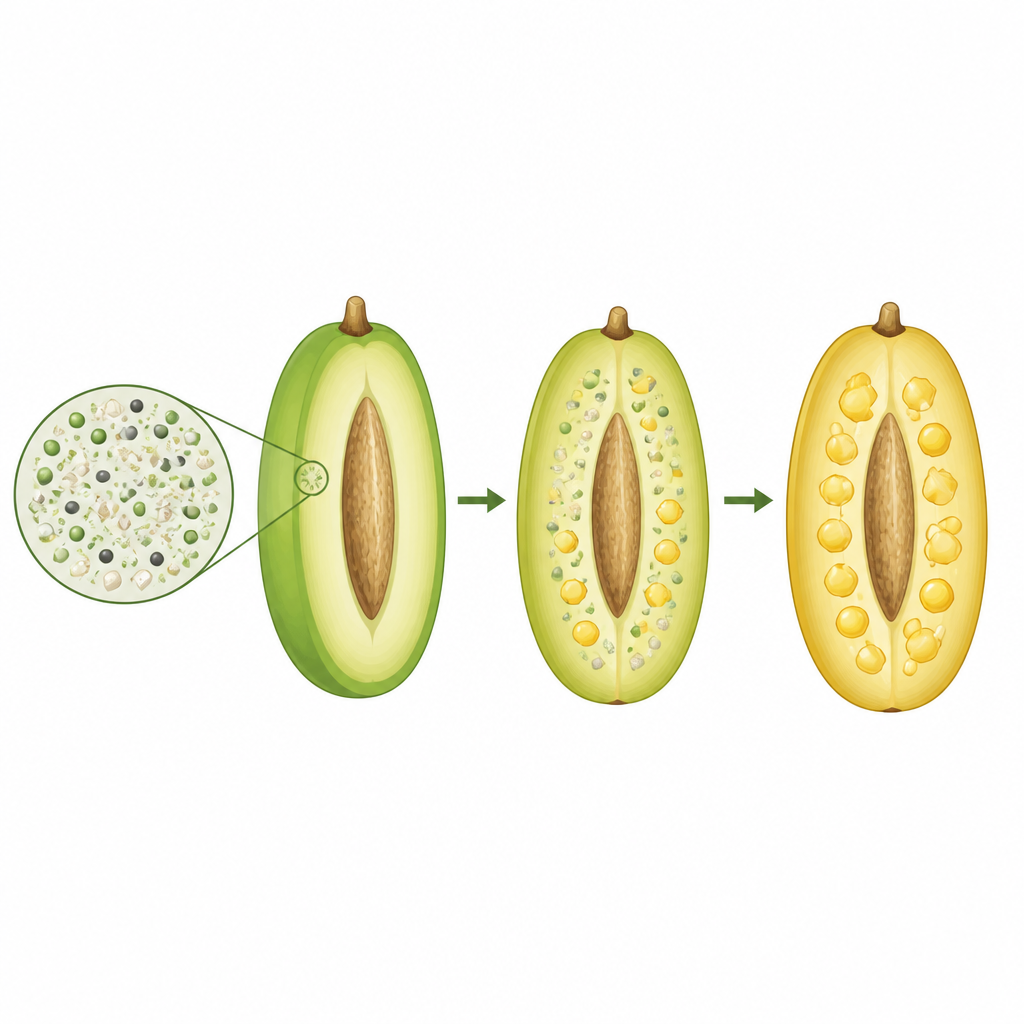
Links to body systems and potential health uses
When the researchers mapped these changing molecules onto known biological pathways, they saw strong activity in carbohydrate and amino acid metabolism, the core routes that handle energy and building blocks in living cells. Some of the date compounds have been associated in other studies with brain health, metabolic conditions, and cancer related processes, suggesting that date fruits may touch many of the same pathways that underlie human disease, although this study did not test health effects directly. Putting the chemical and mineral data together, the authors propose stage specific roles: early green dates as sources of concentrated minerals and antioxidants for extracts and powders, mid stage Rutab fruits as promising ingredients for brain and stress support products, and late Tamr dates as energy rich, prebiotic foods for gut and endurance focused applications.
What this means for your plate
Overall, the work shows that a date is not nutritionally one thing; its benefits shift as it ripens. Very early dates, though too sour to enjoy fresh, could be processed into mineral rich and antioxidant supplements. The familiar soft brown dates are ideal as natural energy bites that also deliver gut friendly sugars and heart supportive polyphenols, even if they contain fewer minerals. By mapping this stage by stage nutritional blueprint, the study offers growers and food companies a guide for choosing the right harvest time and processing methods to match specific health and culinary goals, while helping consumers appreciate that the sweetness of a date comes with a complex and changing inner chemistry.
Citation: Barathikannan, K., Sridhar, K., Rommala, M. et al. Stage-specific nutritional blueprints of date fruit revealed by integrated LC–MS metabolomics and ICP–OES profiling. npj Sci Food 10, 159 (2026). https://doi.org/10.1038/s41538-026-00807-6
Keywords: date fruit ripening, metabolomics, functional foods, fruit nutrition, bioactive compounds