Clear Sky Science · en
Tracing the origins of molecular signals in food through integrative metabolomics and chemical databases
Why the hidden chemistry of food matters
Every bite of food carries far more than calories, protein, fat, and carbohydrates. Our meals also contain thousands of tiny molecules that can help or harm us: natural plant compounds, traces of medicines, pesticide residues, and chemicals from packaging. This study asks a simple but powerful question: where do all those molecular signals in food come from, and what do they reveal about the links between farming, the environment, industry, and human health?
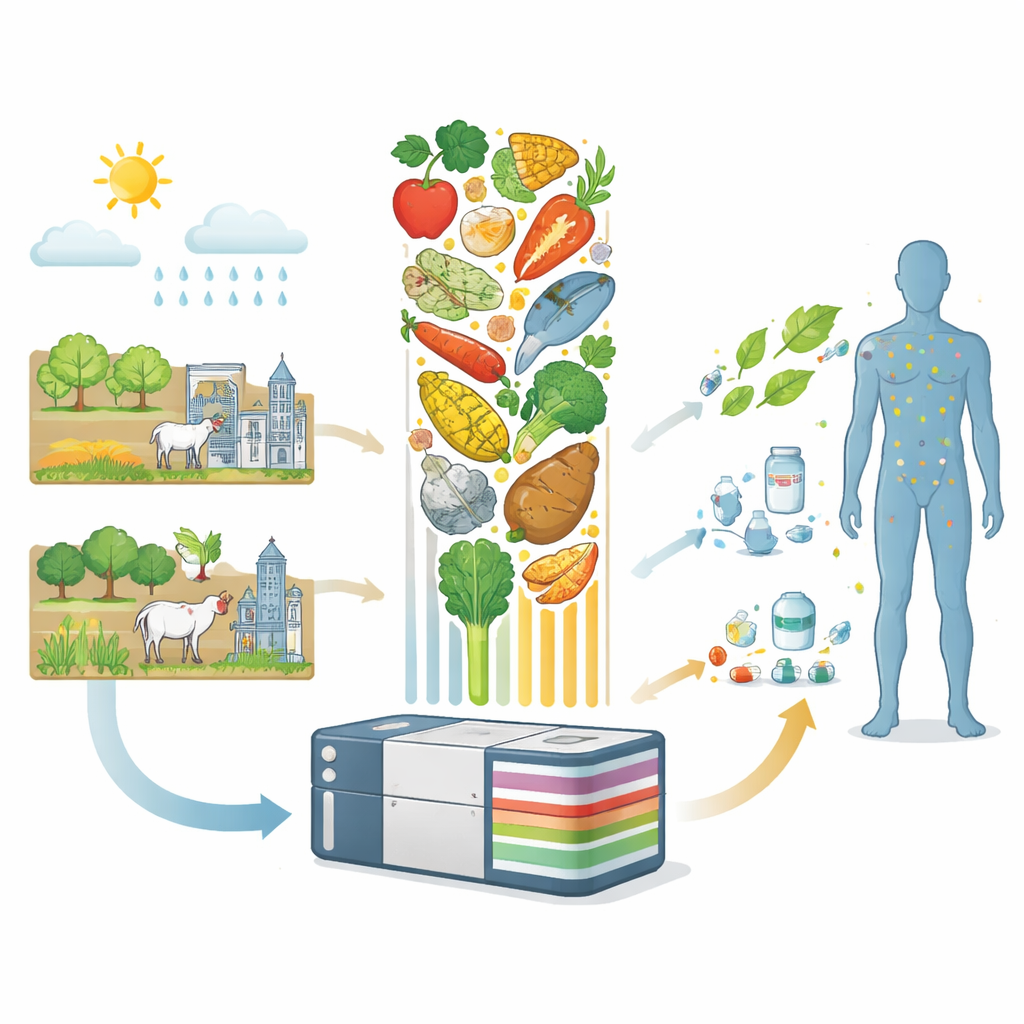
Looking at food with a molecular microscope
The researchers built on the Periodic Table of Food Initiative, a global effort to create a detailed reference library of what is in our food. Using a technique called untargeted metabolomics, they measured nearly 25,000 distinct molecular signals across 500 commonly eaten foods, from grains and vegetables to meats, dairy, algae, and fungi. Most of these signals do not yet have names or known structures. To make sense of them, the team compared both identified and unidentified signals against large curated databases of natural products, medicines, pesticides, and food-contact chemicals, treating food as a molecular crossroads between biology and modern industry.
Following chemical footprints through the food chain
Signals that matched known compounds painted a rich picture of how molecules travel through food systems. Plant foods, as expected, were full of bioactive plant chemicals, many of which overlap with drug-like space. But the team also found traces of insecticides such as rotenone in seaweed and vegetables, and even in organic oat flour, suggesting environmental drift or legacy contamination. They saw a mint-derived compound, pulegone, not in herbs but in cheeses, labneh, and sour cream, likely entering through protective cheese coatings or through animal feed and then concentrating in dairy. A well-known herbal antioxidant, rosmarinic acid, appeared in beef and salmon at levels comparable to some plants, hinting at its intentional use as a natural preservative in meat products.
Unexpected natural treasures in familiar foods and weeds
By cross-checking where natural products are usually reported in the scientific literature with where they showed up in the food dataset, the researchers highlighted plants that may harbor overlooked health-promoting compounds. Common crops and wild species such as carrot, soybean, purslane, common mallow, and especially Canada thistle stood out as potential new sources of diverse bioactive molecules. For example, Canada thistle flowers and leaves contained unusually high levels of the flavonoid chrysin and the compound tiliroside, both studied for protective effects against diseases. An herb called anise hyssop emerged as a stronger source of the isoflavone biochanin A than any previously reported food. These findings suggest that everyday and even weedy plants may hold untapped nutritional and therapeutic value.
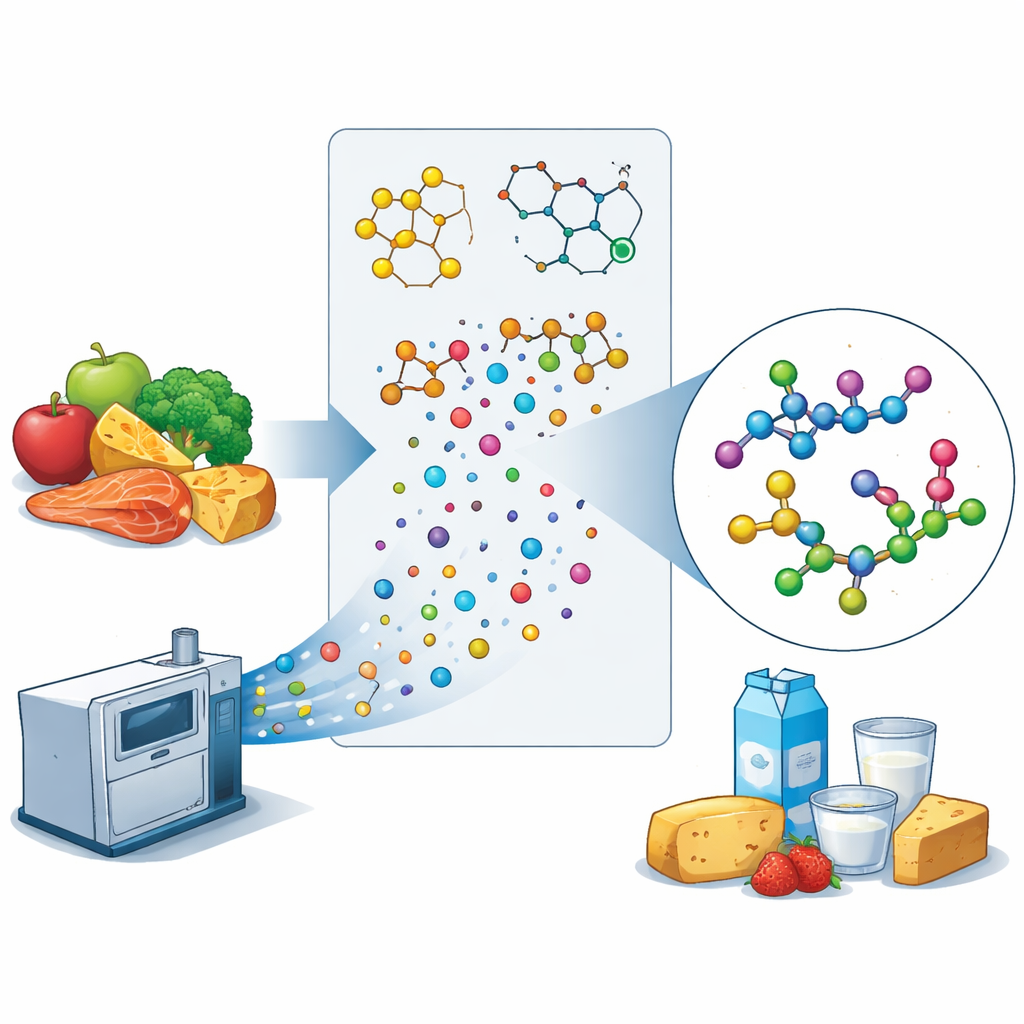
Spotting man-made chemicals hiding in food
The team also turned to the vast pool of signals that had only an elemental formula but no known structure. By asking which formulas do not exist in large natural-product collections, and by paying special attention to those containing fluorine, they isolated a subset of likely human-made chemicals, or xenobiotics. Many of these fluorine-rich signals showed patterns consistent with pesticides, industrial additives, or highly persistent pollutants such as PFAS. Dairy products, and especially aged cheeses, displayed distinct clusters of fluorinated features, including one with the formula of a well-known PFAS contaminant. These patterns hint that processes like feed choices, packaging, coatings, and concentration during cheese aging may quietly shape our exposure to synthetic chemicals.
What this means for our food and health
In everyday terms, this work shows that food is a molecular mirror of the world around it. Natural plant and animal chemistry, farming practices, pollution, industrial processing, and packaging all leave their fingerprints in the tiny molecules we ingest. By combining broad chemical surveys with smart use of databases, scientists can flag possible contamination events, trace how bioactive compounds move through the food chain, and discover promising natural molecules in unexpected foods. While many signals remain unidentified and the study has important technical limits, it demonstrates a powerful new way to watch how environment, agriculture, and industry converge on our plates—and to support a "One Health" approach that links the well-being of people, animals, and ecosystems.
Citation: Mendoza Cantu, A., Gauglitz, J.M. & Bittremieux, W. Tracing the origins of molecular signals in food through integrative metabolomics and chemical databases. npj Sci Food 10, 147 (2026). https://doi.org/10.1038/s41538-026-00802-x
Keywords: food metabolomics, food contaminants, natural bioactive compounds, PFAS in food, One Health