Clear Sky Science · en
Driving impact of organic acids on microbial community dynamics and fermentation performance in Huangjiu
Why this rice wine story matters
Huangjiu, a traditional Chinese rice wine, owes its taste and aroma to tiny microbes working in warm, fragrant vats of rice. This study asks a simple but powerful question for brewers and curious drinkers alike: how do the natural acids that build up during fermentation steer those microbes and, in turn, change the wine’s flavor and alcohol level? By following these invisible players, the work points toward gentler, more precise ways to guide traditional fermentations without abandoning their heritage.
Two kinds of fermentation, two kinds of wine
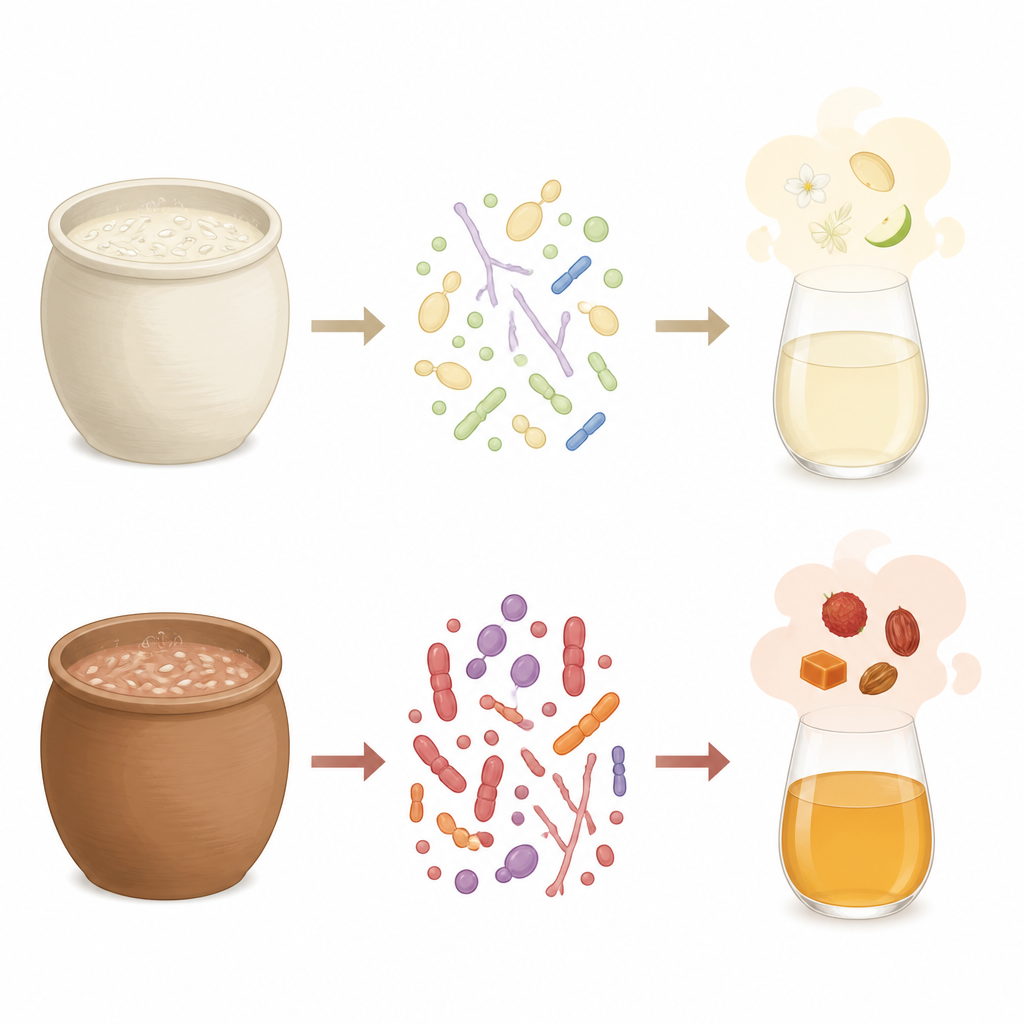
The researchers compared two sets of Huangjiu fermentations: one with naturally higher amounts of organic acids and one with lower levels. Throughout a month of brewing, they tracked sugar, alcohol, acids, and amino compounds. In the high-acid group, sugar disappeared more completely and, by the end, the alcohol content climbed higher than in the low-acid group. Total acidity was also clearly greater, while amino acid levels stayed similar. These patterns suggest that organic acids do more than adjust sourness; they help decide how efficiently microbes turn rice into alcohol.
Flavor changes in the making
To see how aromas evolved, the team used sensitive instruments to measure dozens of volatile compounds that give Huangjiu its fruity, floral, or harsh notes. They detected 44 such molecules, mostly esters and alcohols. Many increased or decreased in both groups as fermentation progressed, but some ended up at very different levels depending on how acidic the brew was. For instance, the high-acid wines contained more of certain esters and alcohols associated with richer, fruitier notes, and less of others linked to sharper or less pleasant tones. In other words, shifting the acid balance subtly rewired the scent profile of the final drink.
Microbial cast of characters under acid pressure
The scientists then looked at which microbes were present and how their communities shifted over time. In both groups, lactic acid bacteria dominated the bacterial side, churning out lactic acid and helping shape the environment. The more striking differences appeared among fungi, especially yeast and molds. In the high-acid fermentations, the wine yeast Saccharomyces and the heat-tolerant mold Thermomyces stood out as key players. Detailed analyses showed that certain acids pushed these fungi in different directions: succinic acid tended to go hand in hand with Saccharomyces and Thermomyces, while lactic and tartaric acids were linked to lower levels of these microbes.
Zooming in on how acids aid or hinder yeast
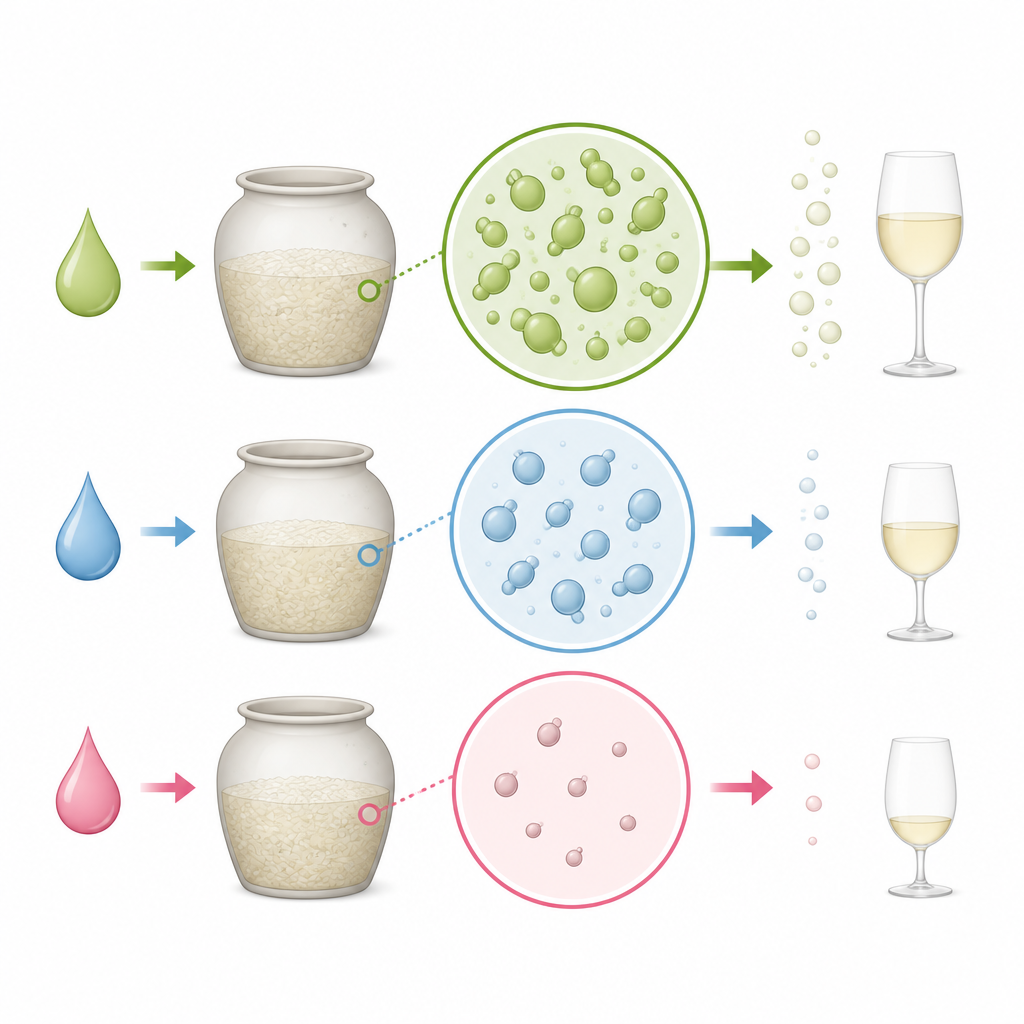
To move beyond correlations, the team ran controlled lab experiments with pure cultures. They grew Saccharomyces cerevisiae and Thermomyces lanuginosus in rice-based media spiked with single acids at different doses. High doses of lactic or tartaric acid slowed yeast growth, reflecting the stress that strong acidity can impose on cells. In contrast, small amounts of succinic acid actually boosted yeast growth and led to noticeably more ethanol. When the researchers examined which genes were active during high-acid fermentation, they found that yeast in the more acidic wines switched on many genes involved in sugar breakdown and energy production, consistent with faster fermentation and greater alcohol output.
Toward smarter control of traditional brewing
Taken together, the results paint organic acids as quiet but powerful directors of Huangjiu fermentation. By tilting the balance toward helpful acids like succinic acid and avoiding excess of harsh ones such as lactic and tartaric acids, brewers may be able to favor yeast that produce more alcohol and desirable aromas while keeping spoilage microbes at bay. The study does not offer a ready-made recipe, but it shows that carefully managing these natural acids could make traditional rice wine more consistent, flavorful, and predictable without losing the complex life inside each fermenting vat.
Citation: Cheng, S., Quan, L., Zhou, H. et al. Driving impact of organic acids on microbial community dynamics and fermentation performance in Huangjiu. npj Sci Food 10, 156 (2026). https://doi.org/10.1038/s41538-026-00786-8
Keywords: Huangjiu, rice wine fermentation, organic acids, microbial community, yeast metabolism