Clear Sky Science · en
Preparation, allergenicity analysis and nutritional evaluation of partially and extensively hydrolyzed whey protein peptides
Why Gentler Milk Proteins Matter
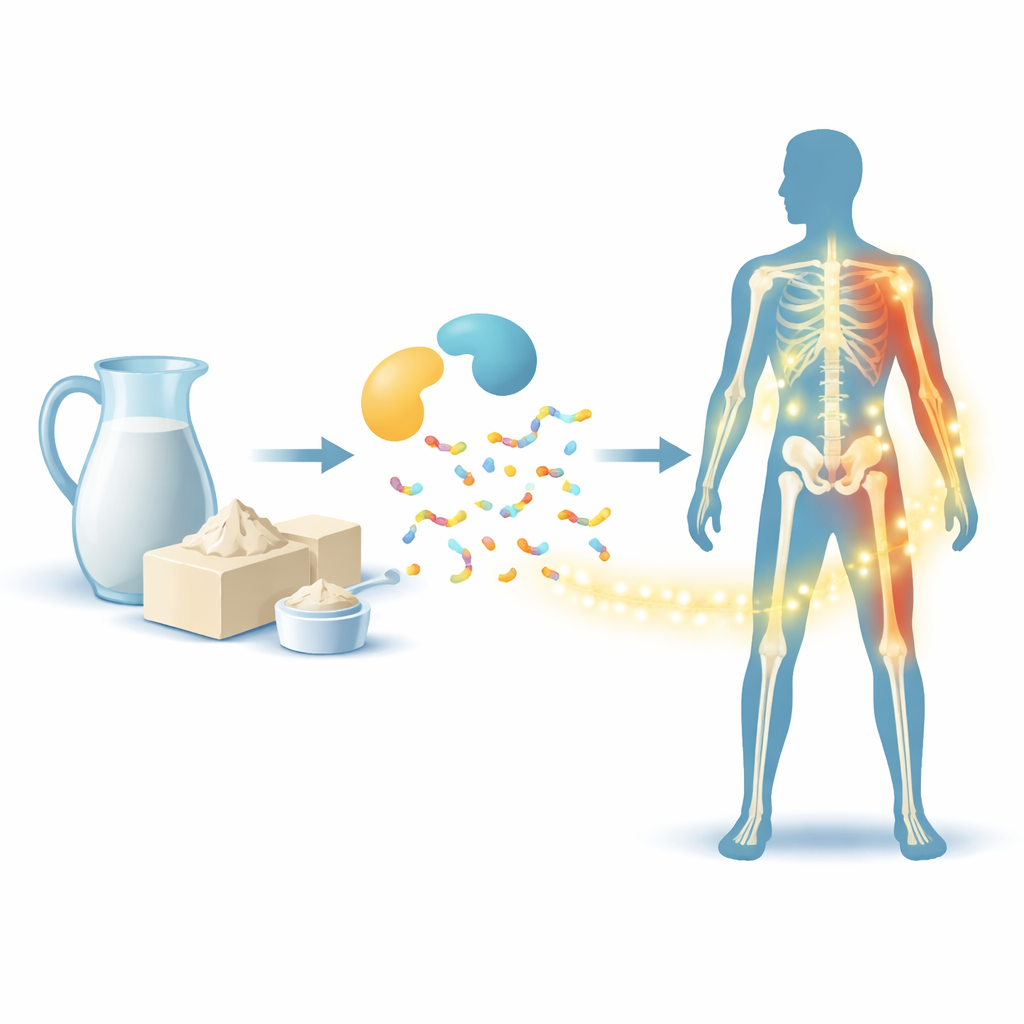
As people live longer, keeping bones strong and muscles firm has become a central health goal. Yet many who most need calcium and protein—such as older adults or those who cannot tolerate regular milk—struggle to safely consume dairy. This study explores a way to turn ordinary whey, a protein-rich by-product of cheese making, into tiny protein fragments that are easier on the immune system while helping the body absorb more calcium for bone and muscle health.
From Cheese By-Product to Helpful Ingredient
Whey protein is prized because it contains all the essential building blocks our bodies need to repair and grow tissue. However, it also carries some of the main triggers of milk allergy, particularly two proteins called alpha-lactalbumin and beta-lactoglobulin. The researchers began by comparing five common commercial whey protein concentrates to find a starting material with the best overall amino acid balance and protein quality. One brand, Glanbia, stood out for its higher total protein and essential amino acid content, making it a strong candidate for developing a new, health-focused ingredient.
Carefully Cutting Proteins Down to Size
To make whey safer and potentially more beneficial, the team used food-grade enzymes—nature’s molecular scissors—to snip long protein chains into shorter pieces, or peptides. They tested several enzymes alone and in pairs to see which combinations broke the proteins down most efficiently without damaging their nutritional value. Two conditions emerged as key: a “partial” breakdown using one enzyme, alcalase, for a short time, and a deeper “extensive” breakdown using both alcalase and another enzyme, flavourzyme, for longer. Under these carefully controlled conditions, most of the large protein molecules were converted into small peptides while the overall amino acid content was preserved.
Making Whey Less Allergenic and More Absorbable
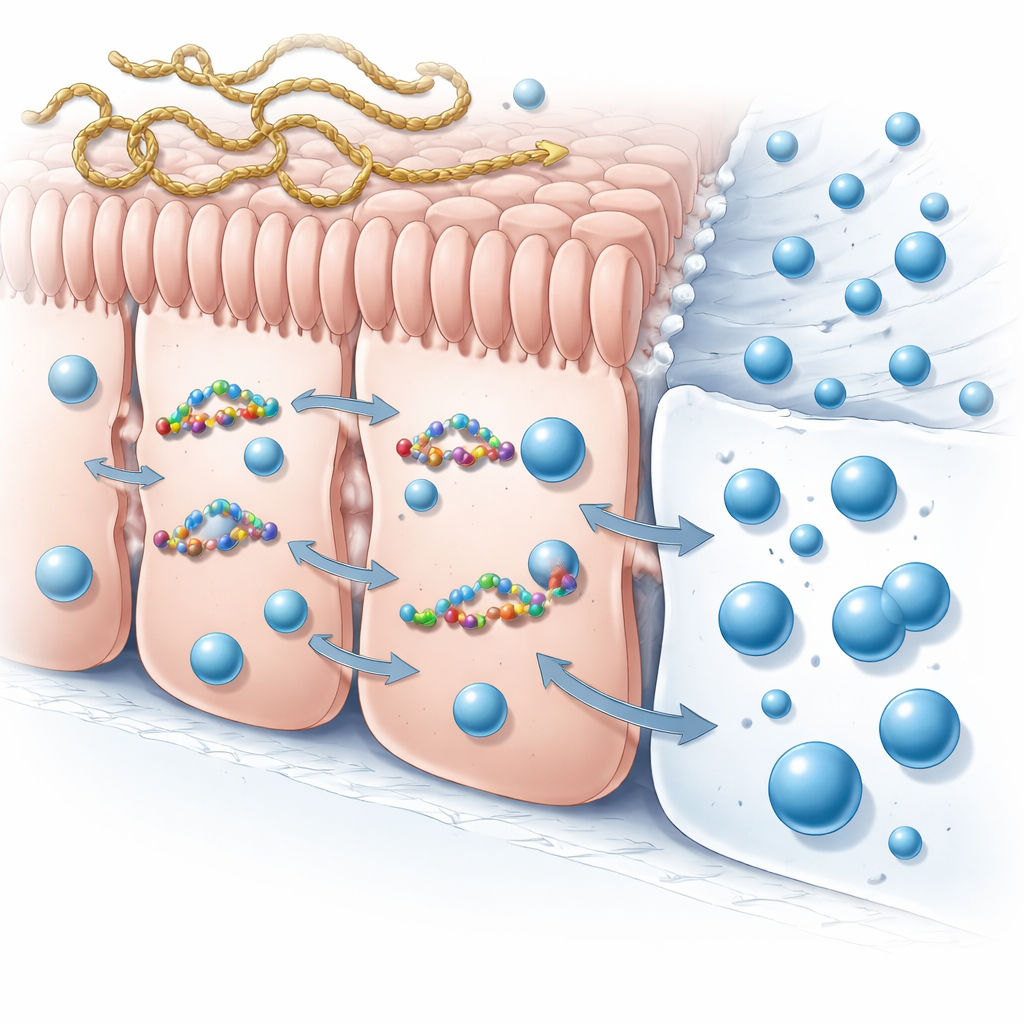
The central question was whether this enzymatic trimming could make whey friendlier to sensitive immune systems and more effective at delivering calcium. Using laboratory tests designed to detect the two major milk allergens, the researchers found that extensive hydrolysis cut the apparent allergenic signal of alpha-lactalbumin by about 91% and beta-lactoglobulin by about 70% compared with unprocessed whey. At the same time, size measurements showed that the deeply hydrolyzed whey contained a very high proportion of tiny peptides under 3 kilodaltons—far smaller than the original proteins. These miniature fragments are thought to bind calcium more tightly and stay dissolved in the gut, preventing the mineral from clumping and being lost.
Testing Calcium Uptake in a Gut-on-a-Chip Model
To see whether these new peptides actually help calcium cross the intestinal barrier, the scientists used a widely accepted lab model based on Caco-2 cells, which form a tight, gut-like lining on a porous membrane. They first confirmed that the hydrolyzed whey samples were not toxic to these cells; at practical concentrations, cell survival was equal to or greater than that of untreated controls. When they added calcium together with different whey preparations, they measured how much of the mineral appeared on the opposite side of the cell layer over two hours. Partially hydrolyzed whey increased calcium transport by about 1.7 times compared with ordinary whey, and the extensively hydrolyzed product boosted it by about 2.8 to 3.6 times. In fact, the deeply hydrolyzed whey outperformed casein phosphopeptides, a well-known commercial ingredient used to enhance calcium absorption.
What This Means for Everyday Nutrition
In simple terms, this work shows that it is possible to transform regular whey into a finely cut peptide mixture that keeps its nutritional value, triggers much less of an allergic response in lab tests, and helps calcium move more efficiently across a model of the human gut. While real-world trials in animals and people are still needed, the findings lay technical groundwork for new dairy-based or dairy-inspired products aimed at individuals with milk protein allergy, lactose intolerance, or age-related bone and muscle loss. If confirmed in future studies, such hypoallergenic whey peptides could help more people enjoy the benefits of milk’s protein and calcium without the usual drawbacks.
Citation: Zheng, S., Zhang, R., Chen, X. et al. Preparation, allergenicity analysis and nutritional evaluation of partially and extensively hydrolyzed whey protein peptides. npj Sci Food 10, 136 (2026). https://doi.org/10.1038/s41538-026-00778-8
Keywords: whey protein peptides, calcium absorption, milk allergy, functional foods, bone and muscle health